What a Real Wood Garage Door Actually Is
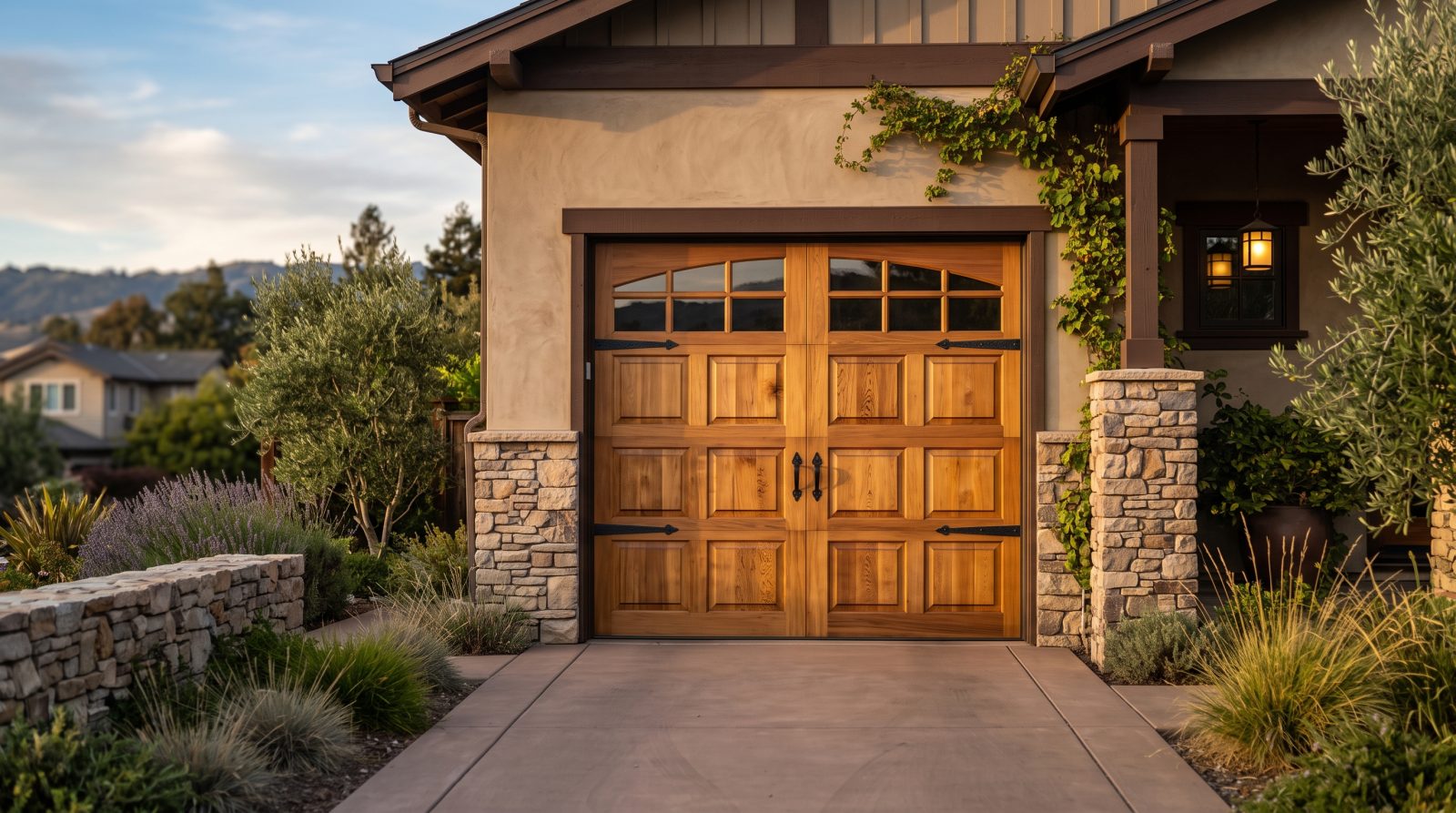
Not every door that looks like wood is wood. The category splits into a few genuinely different products, and knowing which one you have (or want) changes everything about cost, maintenance, and repair. True solid-wood doors are built from natural lumber throughout. Wood-composite or engineered-wood doors use a wood core or wood fibers bonded with resin, often wrapped in a real-wood veneer or a hardboard skin that takes stain. And faux-wood doors are steel or fiberglass printed and textured to mimic grain, which look convincing but behave like their base material, not like timber.
Genuine wood doors are typically constructed one of two ways. Frame-and-panel (stile-and-rail) doors join vertical stiles and horizontal rails around floating panels, a design that lets the wood move with humidity without cracking. Overlay or carriage-house doors mount decorative wood trim and panels onto a base layer to create that classic swing-out barn look on a modern sectional door. The species matters too: cedar and redwood are naturally rot- and insect-resistant and lighter in weight; mahogany, oak, and other hardwoods offer dramatic grain and durability at a higher price and heavier load; and clear-grade lumber costs more than knotty grades but resists movement and shows fewer defects.
This distinction is the single most useful thing a homeowner can learn before buying or repairing. A faux-wood steel door is low-maintenance and shrugs off weather, but it can dent and cannot be sanded and refinished. A real wood door delivers irreplaceable beauty and can be refinished for decades, but it demands a finishing and inspection routine. Neither is wrong, they are simply different commitments.
- Solid wood: natural lumber throughout, fully refinishable, highest beauty, most maintenance
- Wood composite/engineered: wood core or veneer with resin; more stable, often more affordable than solid
- Faux wood: steel or fiberglass with printed grain; lowest maintenance but not true timber and not refinishable
- Lighter species (cedar, redwood) ease strain on the opener; hardwoods add weight and require properly sized springs
Why Homeowners Choose Wood, and the Trade-Offs to Know
The case for wood is almost entirely about presence. A garage door can occupy a third or more of a home's front elevation, so its material sets the tone for the whole facade. Real timber reads as custom and high-end in a way that printed finishes rarely match in person, and it can be stained to highlight grain or painted to match trim. For period homes, craftsman, Tudor, ranch, and many custom builds, wood is often the design choice that ties the architecture together. It is also genuinely customizable: species, panel layout, glass inserts, and hardware can be specified to a degree that mass-produced doors cannot.
The trade-offs are honest and worth stating plainly. Wood is heavier, which means the door's springs, hinges, and opener must be correctly sized for the load; an undersized spring system wears out faster and strains the opener. Wood needs periodic refinishing, generally re-coating before the existing finish fails rather than after, and a neglected finish lets moisture in, which is what actually causes warping, cracking, and rot. Upfront cost is higher than steel for comparable size, and ongoing care is a real line item. None of this should scare off a homeowner who loves the look, it simply means budgeting time or money for upkeep is part of ownership.
- Best for: curb appeal, custom design, period-correct and high-end facades
- Plan for: heavier weight (correctly sized springs/opener), routine refinishing, higher upfront cost
- Energy note: solid wood has some natural insulating value, but insulated steel or composite often rates higher; ask about R-value if efficiency is a priority
- Resale: a well-maintained wood door can boost curb appeal, a peeling neglected one does the opposite
Maintenance That Keeps Wood Looking New, by Climate
Wood maintenance is mostly about the finish. The stain, paint, or sealer is the door's raincoat; as long as it is intact, the timber underneath stays stable. The goal is to re-coat on a schedule rather than wait for visible peeling, because once the finish breaks, moisture cycling begins and that is what leads to bigger problems. A practical rhythm is a gentle cleaning a couple of times a year, a close finish inspection each spring and fall, and re-coating on an interval that fits your exposure, which varies enormously by region.
Climate drives the schedule more than anything else. Doors in hot, sunny regions of the Southwest and the South face intense UV that fades and breaks down finishes faster, so a south- or west-facing door there may need attention more often than the same door in a shaded northern setting. Coastal areas add salt air, which is hard on both finishes and metal hardware. Cold, snowy northern climates put the door through repeated freeze-thaw and road-salt splash near the bottom rail. Humid Southeast summers encourage swelling and, where airflow is poor, mildew. The honest takeaway: there is no universal repaint interval, inspect your specific door in your specific exposure and re-coat before the finish gives out.
Beyond the finish, a few habits protect the whole system. Keep the bottom weather seal in good shape so water is not wicking up into the lowest, most vulnerable boards. Clear debris from the tracks and keep the area at the base of the door draining away from it. And treat the moving hardware as part of door care, not a separate chore.
- Clean gently with mild soap and water and a soft cloth; skip harsh solvents and pressure washing, which can drive water into joints
- Inspect the finish each spring and fall, paying attention to the bottom rail and south/west-facing sections
- Re-coat before peeling starts; UV-heavy, coastal, and freeze-thaw climates shorten the interval
- Check and replace the bottom weather seal so moisture is not wicking into the lowest boards
- Lubricate rollers, hinges, and springs periodically with a garage-door-rated lubricant (not all-purpose grease)
Common Wood-Door Problems and How They Get Fixed
Most wood-door issues trace back to moisture, weight, or normal mechanical wear, and the good news is that wood is one of the most repairable door materials. Warping and minor cracking usually start when the finish fails and the boards take on and shed moisture unevenly; catching it early often means sanding and refinishing rather than replacing a section. Surface checking (fine cracks along the grain) is partly cosmetic and can frequently be addressed with cleaning and re-coating. Rot is more serious, typically at the bottom rail where water collects, and depending on severity it ranges from a localized repair to replacing a board or panel. Because real wood can be sanded, filled, and refinished, many problems that would total a steel door are fixable on a timber one.
The mechanical side is shared with every garage door, but wood's weight makes correct setup especially important. The springs (torsion or extension) carry the door's weight, and on a heavy wood door they are working hard; a broken spring is the most common reason a door suddenly will not open and is a high-tension, professional repair, never a DIY job. Worn rollers and hinges can make a heavy door bind or sound rough. A door that comes off track, sticks, or feels unbalanced often points to spring or track issues rather than the wood itself. Openers on wood doors need to be matched to the load, an opener fighting an over-heavy or poorly balanced door wears out early.
A simple way to triage: if the problem is how the door looks (fading, checking, peeling, minor cracks), it is usually a finishing and carpentry fix you can plan calmly. If the problem is how the door moves (won't open, slams down, off track, loud grinding, visible gap in a spring), stop using it and get a pro, because those involve high tension or a heavy door that can fall.
- Fading, checking, peeling finish: clean, sand as needed, and re-coat
- Warping or minor cracks: often correctable with refinishing if caught before moisture damage spreads
- Rot at the bottom rail: localized repair to board/panel replacement depending on severity
- Broken spring, off-track, won't open, loud grinding: stop using the door and call a pro, these are high-tension or heavy-load hazards
- Sagging or binding on a heavy door: check for worn rollers/hinges and proper spring sizing for the wood's weight
DIY Care vs. When to Call a Local Pro
Plenty of wood-door upkeep is well within reach of a confident homeowner. Cleaning, inspecting the finish, light sanding and re-coating of intact wood, replacing a worn bottom seal, lubricating hardware, and tightening loose screws and hinges are all reasonable DIY tasks that genuinely extend a door's life. Staying on top of these is the single best way to avoid the expensive problems later.
Some repairs should go to a professional every time, regardless of skill, because they involve serious hazards or specialized setup. Anything to do with the springs is the clearest line: torsion and extension springs are under extreme tension and can cause severe injury if mishandled. Cable replacement, track realignment on a heavy door, opener installation or force adjustment sized to wood's weight, structural board or panel replacement, and rebalancing a door that slams or drifts all benefit from a trained technician and the right tools. Because wood doors are heavy, even tasks that feel simple can become dangerous when a panel or section is involved. The convenient part of living anywhere in the country today is that you do not need to keep a single shop on speed dial, you can get a qualified, local garage-door pro out to diagnose the issue and quote the work quickly.
Costs vary widely and should always be treated as estimates, never a fixed quote. As rough industry ranges that depend heavily on door size, species, scope, and your region: routine refinishing supplies are modest if you do it yourself and more if you hire it out; spring replacement is a common mid-range repair; and full board, panel, or hardware replacement on a custom wood door sits at the higher end because of the material and labor involved. The most reliable number is the one a technician gives you after seeing the actual door, which is exactly why a fast local diagnosis is worth getting.
- Comfortable DIY: cleaning, finish inspection, re-coating intact wood, replacing the bottom seal, lubricating and tightening hardware
- Call a pro: springs, cables, track realignment, opener sizing/installation, structural board or panel repair, rebalancing
- Heavier doors raise the stakes, when in doubt on a wood door, get a professional eye on it
- All pricing is a typical estimate that varies by door, material, scope, and region, not a guaranteed quote