Why an Annual Tune-Up Matters More Than People Think
A garage door system is a set of parts working in careful balance: torsion or extension springs counterbalance the door's weight, cables transfer that force, rollers guide it along the tracks, and the opener does very little of the actual lifting when everything is adjusted correctly. The moment one component drifts out of spec — a spring that has lost a few turns of tension, a roller that no longer spins freely, a track that has shifted a fraction of an inch — every other part starts working harder to compensate. That extra strain is what turns a quiet, smooth door into a noisy, jerky one, and eventually into a failure.
The economics strongly favor maintenance. Springs are wear items rated for a finite number of cycles, and an opener forced to drag a poorly balanced door will burn out its motor or strip its gears far sooner than it should. A tune-up costs a fraction of an emergency spring or opener replacement, and far less than the inconvenience of a door that won't open on a morning you need to leave. Catching a frayed cable during a calm scheduled visit is a minor fix; discovering it when it snaps is not.
There's also a safety dimension that's easy to overlook. The springs and cables on a residential door store enough energy to cause serious injury if a worn component lets go unexpectedly. Routine professional inspection is how those failure points get spotted and addressed in a controlled way, rather than at random.
- Extends the life of springs, rollers, cables, and especially the opener
- Restores quiet, smooth operation by re-balancing the door and reducing strain
- Catches small problems — fraying cables, worn rollers, loose hardware — before they fail
- Keeps the door's safety systems (auto-reverse, photo-eye sensors) working correctly
- Cheaper and far less disruptive than an emergency repair or full replacement
What a Professional Tune-Up Actually Includes
A real maintenance visit is a methodical, multi-point service — not just a quick squirt of lubricant. A thorough technician works through the entire system, testing how the door behaves and adjusting the parts that keep it in balance. Knowing what a proper tune-up covers helps you tell a genuine service from a rushed one, and helps you ask the right questions when a pro is at your door.
The heart of the visit is the balance test: with the door disconnected from the opener, a correctly balanced door should stay roughly in place when stopped halfway, neither slamming down nor flying up. If it doesn't, the spring tension needs adjustment — work that should always be left to a trained technician because of the energy stored in the springs. Around that core check, the tech tightens hardware that vibrates loose over hundreds of cycles, lubricates the moving metal, inspects the high-tension components, and verifies the opener's safety features.
Pricing for a standard maintenance visit varies by region, by how many doors you have, and by what gets adjusted, but a basic tune-up typically falls in a modest range as an estimate — usually well under the cost of a single major part. Treat any figure as a starting estimate that varies with your specific door and scope, not a fixed quote.
- Balance test with the opener disconnected, plus spring tension adjustment as needed
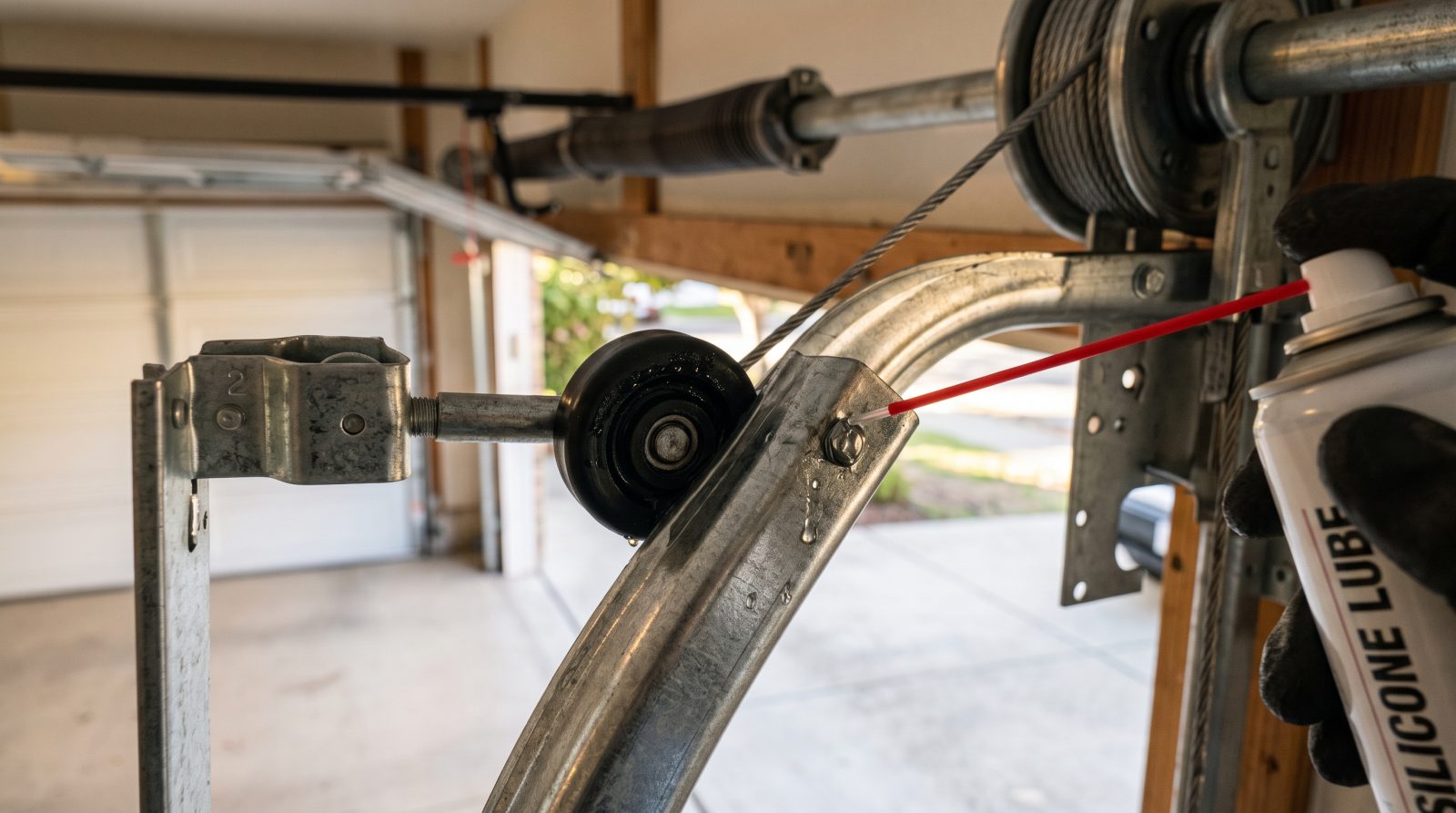
- Lubrication of rollers, hinges, springs, and the opener screw or chain with a proper garage-door lubricant
- Tightening of all nuts, bolts, brackets, and track fasteners loosened by vibration
- Inspection of cables and springs for fraying, rust, gaps, or wear
- Roller and hinge check, with worn rollers flagged for replacement
- Track alignment and cleaning to remove debris and grime
- Opener safety check: auto-reverse force, travel limits, and photo-eye sensor alignment
- Weather seal and bottom astragal inspection
How Climate and Region Change Your Maintenance Needs
Garage doors don't wear the same everywhere, and a national perspective makes the differences clear. In cold-winter regions, grease can stiffen and metal contracts in deep freezes, so the right type of lubricant matters and doors are more prone to seasonal sluggishness; many homeowners in these areas benefit from a tune-up heading into winter so the door isn't struggling on the coldest mornings. Where temperatures swing hard between seasons, the repeated expansion and contraction of metal accelerates the loosening of hardware.
Coastal and high-humidity areas face a different enemy: corrosion. Salt air and moisture attack springs, cables, and fasteners, making rust inspection and the right protective lubricant especially important, and often shortening the practical lifespan of steel components. In hot, dry, and dusty climates, airborne grit settles into tracks and rollers as an abrasive paste when it mixes with old lubricant, so cleaning and re-lubricating is the priority. In wildfire- or storm-prone regions, the door's weather seals and overall structural soundness deserve closer attention.
The other big variable is simply how hard the door works. A two-car household that cycles the door six or eight times a day is putting far more wear on the system than a home that opens it twice. The more your door runs, the more often it earns a tune-up — usage matters as much as the calendar.
- Cold climates: use cold-rated lubricant; tune up before winter to avoid frozen, sluggish operation
- Coastal/humid areas: prioritize rust inspection and corrosion-resistant lubrication on springs and cables
- Hot, dry, dusty regions: focus on cleaning grit from tracks and rollers, then re-lubricating
- Big temperature swings: expect hardware to loosen faster and check fasteners more often
- High-use households: more daily cycles mean more frequent service, regardless of climate
Safe DIY Maintenance vs. What to Leave to a Pro
There's a meaningful amount of garage door upkeep you can do safely yourself between professional visits, and doing it makes a real difference. The golden rule is simple: anything involving the springs, cables, or the bottom-bracket where cables attach is off-limits for DIY. Those components are under extreme tension and have injured plenty of well-meaning homeowners. Everything outside that high-tension zone is generally fair game with basic care and the right products.
On the safe side, you can wipe down and lightly lubricate the rollers, hinges, and springs with a garage-door-specific lubricant (never use general-purpose oils that attract dust). You can keep the tracks clear of debris — cleaning, not lubricating the inside of the tracks. You can test the door's safety features yourself: with the door open, place a roll of paper towels or a 2x4 flat under it and run the close cycle to confirm the door reverses when it makes contact, and wave an object through the photo-eye beam to confirm it stops. You can also do the balance test by pulling the manual release and lifting the door halfway by hand to see whether it holds.
If the balance test fails, if you see any fraying or rust on cables or springs, if the door is loud or jerky in a way lubrication doesn't fix, or if the safety reverse doesn't work, that's your signal to bring in a technician rather than push further. Spring and cable work, force and limit adjustments on stubborn openers, and anything that hasn't responded to basic care all belong with a pro.
- Safe to DIY: light lubrication of rollers, hinges, and springs with garage-door lubricant
- Safe to DIY: keeping tracks clean and clear (clean only — don't grease the track interior)
- Safe to DIY: monthly safety tests of auto-reverse on contact and the photo-eye sensors
- Safe to DIY: the manual balance test using the opener's release cord
- Leave to a pro: any adjustment or replacement of springs, cables, or the bottom bracket
- Leave to a pro: opener force/limit tuning, persistent noise, or a failed safety test
How Often to Schedule — and Warning Signs You Need It Sooner
For most homes, a professional tune-up once a year is the right baseline, with simple DIY checks (lubrication, a safety test) every few months in between. Step that up if your door works hard or lives in a tough climate: a busy two-car door, or one near the coast or in a deep-freeze region, often does better with service twice a year. Newer doors still benefit from yearly attention because hardware loosens and lubricant breaks down on every door regardless of age.
Beyond the schedule, your door tells you when it needs help — you just have to listen and watch. Grinding, squealing, or banging noises, jerky or uneven movement, the door sagging on one side or feeling heavy by hand, slow or hesitant operation, or visible gaps in a spring all mean something is out of balance or wearing out. A door that suddenly seems to strain the opener, or that won't reverse when it should during a safety test, deserves prompt attention rather than a wait for the next scheduled visit.
Because our focus is connecting you with help near you wherever you are, scheduling is straightforward: tell us what your door is doing, and we'll match you with a local technician who can come out — often same-day — to inspect, tune, and get it running smoothly again. There's no need to live with a noisy or worrying door.
- Baseline: one professional tune-up per year, with DIY lubrication and safety tests in between
- Twice a year for high-use doors and harsh coastal or cold-winter climates
- Schedule sooner if you hear grinding, squealing, or banging during operation
- Schedule sooner if the door is jerky, sags to one side, or feels heavy by hand
- Treat a failed safety-reverse test or visible spring/cable damage as urgent