What "Panel Replacement" Actually Means
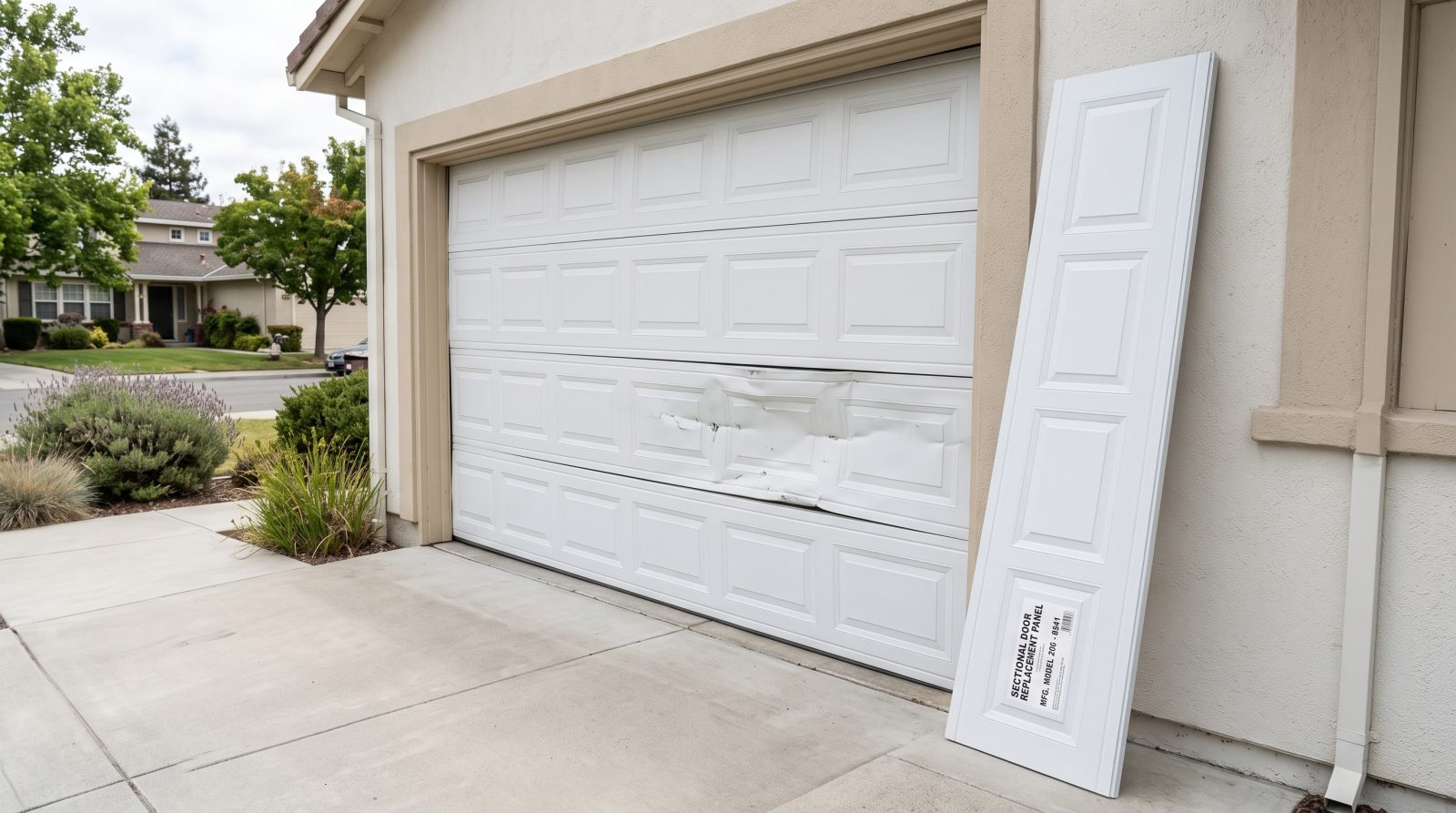
A sectional garage door — the most common type in North America — is made of several horizontal sections, or panels, hinged together so they roll up along the track. When people say "panel replacement," they usually mean swapping out one or more of these damaged sections while keeping the rest of the door, the track, the springs, and the opener in place. Because the door is modular, this is genuinely possible in a lot of situations, and it's often far less expensive than replacing the whole assembly.
It's worth separating the cosmetic from the structural. A shallow dent in a steel panel may be purely an appearance issue that doesn't affect how the door operates. A panel that's cracked, punctured, rusted through, rotted (on wood doors), or bent enough to bind in the track is a functional problem — it can throw the door off balance, strain the opener, or stop it from sealing at the bottom. A quick in-person diagnosis is what tells you which camp you're in, and that's the first thing a good technician will assess.
- Sectional doors are modular — individual panels can often be replaced without touching the rest of the door
- Cosmetic dents and structural damage are different problems with very different fixes
- A bent or cracked panel can also affect balance, sealing, and opener strain — not just looks
- Damage near a hinge, roller, or strut is more involved than damage in the middle of a flat panel
Repair the Panel, Replace the Section, or Replace the Door?
There are really three decisions on the table, and the right one depends on the extent of damage, the age of the door, and whether matching panels are still available. For minor dents in a steel door, a technician may be able to pull or massage the dent rather than replace anything — a reasonable first option for cosmetic damage. When a section is cracked, punctured, or bent badly enough to affect operation, replacing that one section is usually the smart middle path. Full door replacement makes the most sense when multiple panels are damaged, the door is old, or the model has been discontinued and no matching section can be sourced.
Age and availability are the quiet deciding factors. Garage door manufacturers update colors, panel profiles (the raised or recessed design stamped into the steel), and window styles over time, and some product lines get discontinued. On a door that's many years old, an exact-match replacement section may simply no longer be made — in which case a single new panel can stand out visibly against weathered older sections, even if the part technically fits. Sun fading is a real factor here too: a door that's spent years in strong sunlight, common across the Sun Belt and the Southwest, will have lightened from its original color, so a fresh factory-matched panel can look noticeably brighter than the rest.
One honest caveat: when you add up the cost of sourcing a matching section, labor, and the risk of a visible color mismatch on an older door, replacing two or three panels can get close enough to a full-door price that the full door becomes the better long-term value. A trustworthy pro will lay out both numbers so you can decide, rather than pushing you toward the bigger job by default.
- Minor steel dents: may be pulled or massaged out — no replacement needed
- One cracked, punctured, or badly bent section: single-panel replacement is often ideal
- Multiple damaged panels or a very old door: full replacement is frequently the better value
- Discontinued models: an exact match may be unavailable, making a clean repair hard
- Weathered or sun-faded doors: a brand-new panel can look brighter than the rest
How Panel Matching Really Works
Getting a replacement panel to disappear into the door comes down to four things: the manufacturer and model, the panel design (often called the profile or pattern), the color or finish, and any glass inserts. The most reliable way to match is to identify the door's manufacturer and series — sometimes printed on a label inside the door or on the bottom section — so the replacement section is the same product line, not just a similar-looking one. Profiles vary more than people expect: short raised panels, long raised panels, flush, and carriage-house styles are all distinct, and mixing them is immediately obvious.
Color matching is the part that surprises homeowners. Factory colors are consistent when a door is new, but real-world weathering shifts them. A panel ordered to the original factory color is technically "correct" yet can still look off next to sections that have faded over years of sun, salt air, or freeze-thaw cycles. Painted doors add another layer — a custom paint job has to be re-matched and re-applied to the new section. This is exactly why an honest assessment matters: the question isn't only "can we get the part?" but "will the finished door look right?"
Windowed sections raise the stakes again. If the damaged panel contains glass or decorative inserts, the replacement has to match the window layout, frame style, and glazing — and on older doors those inserts can be the first thing to go out of production. A good technician checks all of this before ordering anything, so you're not surprised by a mismatch after the work is done.
- Match the manufacturer and model first — not just a look-alike panel
- Profile matters: short-raised, long-raised, flush, and carriage-house are not interchangeable
- Factory-correct color can still clash with sun-faded or weathered sections
- Painted doors need the new panel color-matched and refinished to blend
- Windowed sections must match glass layout and insert style, which may be discontinued
Why Panel Replacement Is a Job for a Pro
Replacing a section sounds like swapping a part, but it intersects with the most dangerous component on the door: the spring system. Garage door springs — torsion springs above the door or extension springs along the tracks — store enormous tension to counterbalance the door's weight. Removing and reinstalling sections often requires releasing and re-tensioning that system, and a spring under load can cause serious injury if handled without the right tools and training. This is the single biggest reason panel work isn't a casual DIY project.
There's also the reassembly side. Each section is connected by hinges and rides the track on rollers; struts may be added for reinforcement on wider doors. Getting a new panel seated so the door stays balanced, travels smoothly, seals at the bottom, and lets the safety sensors and auto-reverse function correctly takes a methodical hand. A panel that's slightly off can bind in the track, wear the rollers, or make the opener work harder than it should — turning a cosmetic fix into a recurring headache.
A worthwhile technician treats the damaged panel as a starting point, not the whole story. The same impact that dented a section may have tweaked the track, bent a roller, or knocked the door out of balance. A proper visit includes checking the door's balance, the track alignment, the rollers and hinges, and the opener's force settings — so you get a door that's not just patched, but operating safely.
- Spring systems hold dangerous tension — releasing them without training risks serious injury
- Correct balance, track alignment, and roller condition all affect a successful panel swap
- An off-seated panel can bind, wear parts, and strain the opener over time
- A good visit re-checks balance, track, rollers, and opener safety — not just the panel
Preventing the Next Dent — and What to Do Right Now
Most panel damage comes from a handful of predictable sources: a vehicle backing or rolling into the door, kids' sports or yard equipment, storm debris, and in colder regions, ice that bonds the bottom section to the ground so the panel buckles when the opener pulls against it. Across the northern tier and anywhere with hard winters, that frozen-to-the-slab scenario is a leading cause of bent bottom panels, and it's avoidable — clearing snow and ice at the threshold before operating the door goes a long way. In coastal and high-humidity regions, watching for rust on steel doors (and rot on wood ones) helps you catch a small problem before a panel fails outright.
If your panel is already damaged, a few simple steps protect you while you wait for a pro. If the door still operates but looks compromised, avoid running it repeatedly — a bent section can flex worse with each cycle or bind in the track. If it won't move or seems off balance, don't force the opener; that's how you burn out a motor or worsen the damage. Take a couple of clear photos of the damage and any manufacturer label you can find, which helps a technician identify the right matching section before they even arrive.
Wherever you are, getting a knowledgeable local technician to look at it in person is the fastest path to a clear answer — repair the dent, replace the section, or replace the door — with a realistic estimate for your specific door. If you'd like a hand sorting it out, request a free quote and a local pro can assess the damage and walk you through your options.
- Common causes: vehicle impacts, sports and yard gear, storm debris, and winter ice bonding
- Cold climates: clear ice and snow at the threshold before operating to avoid buckled bottom panels
- Coastal/humid areas: watch for rust on steel and rot on wood before a panel fails
- Don't keep cycling a damaged door or force a stuck one — you can worsen it or strain the opener
- Photograph the damage and any model label to speed up identifying a matching section