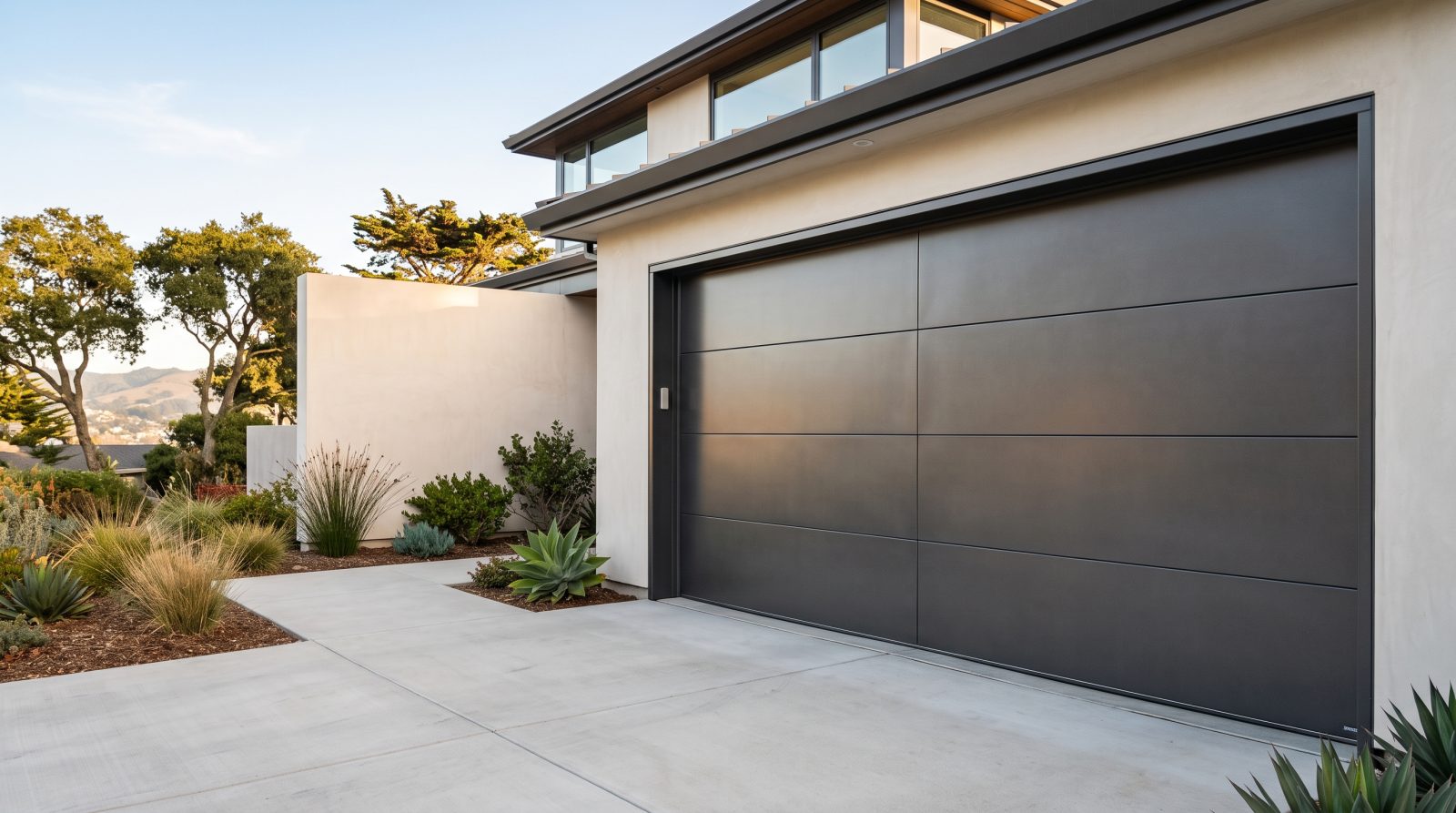
Why Steel Is the Default Choice for Most Homes
Steel earns its popularity by balancing four things most homeowners care about at once: strength, price, low maintenance, and insulation. Unlike wood, steel will not rot, crack, warp, or need repainting every few years, and unlike single-skin aluminum it resists dents far better in everyday use. Because it is manufactured in panels, a steel door can also be built up in layers — steel skin, insulation core, and an interior backer — to create a door that is quiet, rigid, and energy-efficient without a custom-carpentry price tag.
The trade-off is that 'steel door' covers an enormous range of quality. A bare, single-layer 27- or 28-gauge door from the bottom of the market behaves very differently from a heavier-gauge, triple-layer insulated door. The good news for repair is that the core mechanics are shared across almost all of them: torsion or extension springs lift the weight, rollers ride in tracks, hinges flex the sections, and an opener does the pushing. That shared anatomy is exactly why a local garage door technician can diagnose most steel-door problems quickly, regardless of the brand on the panel.
- Will not rot, warp, or crack the way wood can, and resists dents better than thin aluminum
- Available from budget single-layer panels up to premium triple-layer insulated doors
- Takes polystyrene or polyurethane insulation cleanly for better R-value and quieter operation
- Shares standard hardware (springs, rollers, hinges, tracks), so repairs are widely serviceable
Understanding Steel Gauge and Real-World Durability
Steel thickness is measured in gauge, and the rule is counterintuitive: the lower the number, the thicker and stronger the steel. Common residential doors fall roughly between 24-gauge (heavier, more dent-resistant, often found on premium or commercial-grade doors) and 27- or 28-gauge (thinner and lighter, typical of entry-level doors). Gauge is the single biggest driver of how a door handles impacts from a basketball, a backed-up bumper, hail, or wind-driven debris.
Construction layers matter just as much as raw gauge. A single-layer door is one steel skin with nothing behind it. A double-layer adds an insulation core bonded to the steel. A triple-layer sandwiches insulation between two steel skins, which dramatically increases rigidity and dent resistance while cutting noise. For durability in real conditions, a heavier-gauge triple-layer door is the gold standard; a thin single-layer door is the most likely to ding, flex, and let weather through over time.
Finish quality drives longevity too. Quality steel doors use a multi-step factory finish — galvanized or zinc coating, primer, and a baked-on topcoat — to resist rust. The weak points are scratches and the bottom edge, where moisture and road salt collect. If you live where it snows and crews salt the roads, or near the coast where salt air is constant, finish and edge protection are not cosmetic details — they are what determines whether your door is solid or rusting in a decade.
- Lower gauge number = thicker, stronger steel (24-gauge is heavier than 28-gauge)
- Single-layer = bare steel; double = steel + insulation; triple = insulation between two steel skins
- Triple-layer construction adds the most dent resistance, rigidity, and quiet operation
- Factory finish and edge protection determine rust resistance, especially in snow-belt and coastal climates
Insulation, R-Value, and What It Actually Does
Insulation in a steel door is rated by R-value: the higher the number, the more it resists heat transfer. Two cores dominate the market. Polystyrene is rigid foam board slipped between the layers — affordable and a clear upgrade over no insulation. Polyurethane is foam injected and expanded inside the door, where it bonds to both skins; it generally delivers a higher R-value at the same thickness and adds noticeable structural rigidity, which is why premium doors favor it.
Be a little skeptical of headline R-value numbers. Some manufacturers quote the R-value at the thickest center of the panel rather than an average across the whole door, so two doors with the same advertised number can perform differently. What matters in practice is the combination of core type, thickness, and how well the door seals at the perimeter and bottom — a high R-value door with a torn bottom seal still leaks air.
Whether insulation is worth it depends heavily on your situation. If your garage is attached, shares a wall with living space, sits below a bedroom, or doubles as a gym, workshop, or home office, insulation pays off in comfort, lower noise, and steadier temperatures. In hot southern climates it helps keep the garage from becoming an oven that bleeds heat into the house; in cold northern climates it helps hold warmth and reduces the freeze-thaw stress that can make hardware brittle. For a fully detached garage you rarely enter, a basic insulated or even non-insulated door may be perfectly reasonable.
- R-value measures heat resistance — higher is better, but check whether it is an average or center-of-panel figure
- Polystyrene (rigid board) is the budget upgrade; polyurethane (injected foam) gives higher R-value and more rigidity
- Most valuable when the garage is attached, under living space, or used as a room
- Bottom and perimeter seals matter as much as the core — a great door with a bad seal still leaks air
Typical Cost Ranges (Estimates That Vary)
Steel garage door pricing spans a wide band because 'steel' includes everything from a bare builder-grade panel to an insulated, windowed, carriage-style design. As a general industry guideline and not a quote, a basic single-layer steel door tends to land in the lower hundreds for the door itself, mid-range insulated double-layer doors commonly run into the four figures, and premium triple-layer insulated doors with windows or decorative styling sit at the top of that range. Professional installation is usually a separate line item, and a double-wide (two-car) door costs more than a single because of size and the heavier spring system it requires.
Several factors push any estimate up or down: gauge and number of layers, insulation type and R-value, door size, window inserts and decorative hardware, the finish or color, and whether old hardware (springs, tracks, opener) is being reused or replaced. Regional labor rates and your local cost of living also move the number, sometimes significantly between metro areas. Anyone quoting a single fixed price sight-unseen is guessing — a real figure comes after measuring your opening and inspecting the existing system.
Repairs are far cheaper than replacement and are usually the right first call. Replacing a broken spring, a few rollers, a damaged section, or worn weatherstripping costs a small fraction of a whole new door, and a sound steel door is often worth fixing rather than replacing. Treat every number here as a planning range that varies by door, material, region, and scope, and get an on-site assessment before you budget.
- Basic single-layer steel doors are the least expensive; triple-layer insulated and decorative doors cost the most
- Two-car (double-wide) doors cost more than single doors due to size and heavier springs
- Price drivers: gauge, layers, insulation, size, windows, finish, and hardware being reused vs replaced
- Repairs typically cost a fraction of replacement — fixing a sound steel door is often the smart move
The Most Common Steel Door Repairs — and Getting Help Near You
No matter how durable the steel, a garage door is a system of moving parts under high tension, and a handful of failures account for most service calls. Broken torsion or extension springs are the single most common — and most dangerous — issue; springs are wound under enormous force and should be replaced by a professional, never improvised. Off-track doors usually trace back to a damaged roller, a bent track, or a snapped cable, and forcing an off-track door open or shut can cause real damage or injury. Opener problems range from dead remotes and misaligned safety sensors to worn drive gears, and dented or rusted bottom sections are the steel-specific wear point to watch.
Many symptoms have a fast, identifiable cause. A door that will not lift at all, or that slams down, often points to a broken spring. Loud grinding or screeching usually means dry or worn rollers and bearings. A door that reverses before it closes is almost always a sensor alignment or obstruction issue. Sagging or gaps along the bottom point to failed weatherstripping or a tired bottom seal. Knowing the likely culprit helps you describe the problem clearly so a technician arrives with the right parts the first time.
This is where the 'help near you, wherever you are' approach matters. Garage door failures are not convenient — they happen when you are leaving for work or arriving home late — so the goal is a fast diagnosis followed by a local pro at your door quickly, often the same day. Because steel doors share standard hardware across brands, a qualified local technician can usually identify the issue, source common parts, and get your door working again without a long wait. Describe the symptom, share your location, and request a free quote to get matched with help nearby.
- Broken springs are the most common and most dangerous repair — always leave springs to a professional
- Off-track doors (bad roller, bent track, snapped cable) should not be forced open or shut
- Opener issues are often sensor misalignment, dead remotes, or worn drive components
- Match the symptom to the cause so the tech arrives prepared, and request a free quote for fast local help