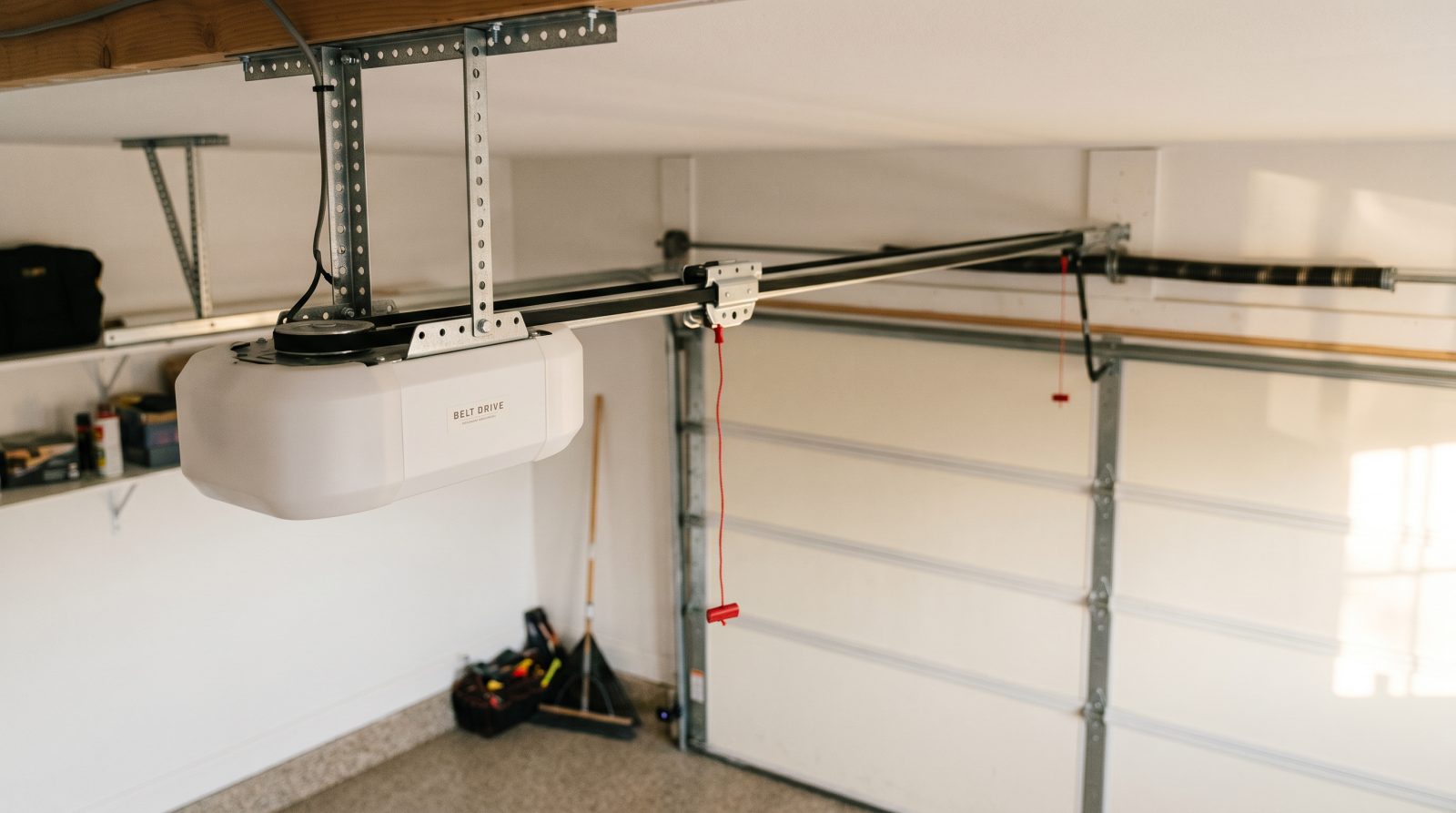
Typical Garage Door Opener Cost at a Glance
For most homeowners, a new garage door opener — the motor unit itself, before installation — falls into a fairly tight range, with the big swings coming from drive type, horsepower, and smart features. Installed (parts plus labor), a straightforward single-door opener replacement is typically a few hundred dollars, while heavier doors, premium belt-drive units, and add-ons push the total higher. Because an opener is a discrete, well-understood job, it's one of the easier garage repairs to get a clear, fast price on.
Use the ranges below as planning estimates, not fixed quotes. Actual pricing depends on the unit you choose, the weight and balance of your door, your region's labor rates, and whether old hardware or wiring needs attention. A reputable local pro will confirm the real number after a quick look or a few questions about your door.
- Opener unit only (chain-drive, basic): typically about $150–$300
- Opener unit only (belt-drive or smart/Wi-Fi): typically about $250–$500+
- Professional installation labor: typically about $100–$300 depending on region and complexity
- Typical installed total (standard single door): commonly about $300–$700
- Heavy, oversized, or high-lift doors / premium units: can run $700–$1,200+ installed
What Drives the Price: Drive Type, Horsepower & Features
The single biggest cost lever is drive type — how the opener actually moves the door. Chain-drive openers are the workhorse and the most affordable, but they're the loudest, which matters if there's living space above or beside the garage. Belt-drive openers cost more upfront but run noticeably quieter and tend to need less maintenance, making them the popular pick for attached garages and bedrooms over the garage. Screw-drive and the newer wall-mount (jackshaft) units sit at the higher end; wall-mount models free up ceiling space and pair well with tall or high-lift doors, but they carry a premium.
Horsepower (or the DC-motor equivalent) is the next factor. A light, single aluminum or steel door is usually fine with a 1/2 HP-class motor, while heavier insulated, wood, or double-wide doors call for 3/4 HP or more — and a properly sized motor lasts longer because it isn't straining on every cycle. Finally, features add up: battery backup (required for new openers in some states), Wi-Fi and smartphone control, built-in cameras, keypads, and extra remotes each nudge the price. None of these are mandatory unless local code requires them, so a good pro will tell you which actually earn their cost for your situation rather than upselling the whole catalog.
- Chain-drive: lowest cost, loudest — fine for detached garages
- Belt-drive: mid-to-higher cost, quiet — best for attached / living space above
- Wall-mount (jackshaft): premium — saves ceiling space, suits tall/high-lift doors
- Higher horsepower for heavy insulated, wood, or double doors adds cost but extends life
- Battery backup, Wi-Fi, cameras, keypads, and extra remotes are add-ons that stack up
What's Included in a Professional Opener Installation
When you pay for installation, you're paying for more than bolting up a motor. A proper job starts with checking that the door itself is balanced and the springs are sound — an opener is designed to guide a counterbalanced door, not to haul a heavy door up by brute force. Installing a new opener on an unbalanced door or worn springs is the fastest way to burn out the motor you just bought, so a careful tech tests this first.
The installation then covers mounting and securing the power unit, running and aligning the rail and trolley, setting travel limits and force settings so the door stops and reverses correctly, installing and aligning the photo-eye safety sensors, and testing the auto-reverse safety feature that protects kids and pets. Programming remotes, a wall console, and any keypad or app connectivity rounds it out. Haul-away of the old unit is often included but worth confirming. Because each of these steps is standardized, opener installs are usually quick — frequently same-day — once the right unit is on hand.
- Pre-check of door balance and spring condition before mounting
- Mounting the motor head and assembling/aligning the rail and trolley
- Setting open/close travel limits and force sensitivity
- Installing and aligning photo-eye safety sensors and testing auto-reverse
- Programming remotes, wall console, keypad, and Wi-Fi/app (if equipped)
- Often: haul-away of the old opener — confirm it's included
Repair vs. Replace: Which Makes Sense for Your Opener
Not every opener problem means buying a new unit. Plenty of 'dead' openers are actually a simple, low-cost fix — and a fast diagnosis can save you the price of a full replacement. If the door won't move but the motor hums, it may be a stripped trolley gear or a snapped chain/belt rather than a failed motor. If it reverses before closing, the culprit is usually misaligned or dirty photo-eye sensors — often a free or near-free adjustment. Dead remotes are frequently just batteries or a quick reprogram, and a non-responsive unit can come down to a tripped GFCI outlet or blown logic board.
Replacement starts to make sense when the motor itself is failing, the unit is old enough that parts are scarce, repair costs approach half the price of a new opener, or you simply want modern safety and convenience features that older units lack — like battery backup during outages or a quieter belt drive. A genuinely helpful pro will quote the repair and the replacement side by side and let you choose, instead of defaulting to the bigger ticket. The faster you get an accurate diagnosis, the cheaper the path usually is.
- Often a cheap repair: bad photo-eye alignment, dead remote battery, tripped outlet, stripped trolley gear
- Lean toward replacement when: the motor is failing, parts are obsolete, or repair nears ~50% of a new unit's installed cost
- Upgrade reasons: battery backup (and where it's required by code), quieter belt drive, smartphone control
- Ask for repair and replacement priced side by side before deciding
How Region & Climate Affect What You'll Pay
Garage door opener pricing isn't uniform across the country, and the differences are mostly real, not arbitrary. Labor rates track local cost of living, so the same installation can cost meaningfully more in high-cost metros than in smaller markets. The unit price is more consistent nationally, but availability of specific models and brands can vary, and rural or remote addresses sometimes carry a trip charge that urban customers don't see.
Climate matters too. In cold-winter regions, doors and tracks contract and grease stiffens, which strains motors and makes a properly sized, well-maintained opener more important — battery backup is also more valuable where ice storms cause outages. In hot, humid, or coastal areas, heat and salt air age electronics and hardware faster, so durability and corrosion resistance can be worth paying a little more for. And in states with battery-backup mandates for new installations, that feature is part of the baseline cost rather than an optional extra. A local pro will factor your climate and code requirements into the recommendation instead of quoting a one-size-fits-all unit.
- Labor rates rise with local cost of living — metros typically cost more than smaller markets
- Remote or rural addresses may add a trip charge
- Cold climates: sizing, maintenance, and battery backup matter more
- Hot, humid, or coastal climates: heat and salt age electronics and hardware faster
- Some states require battery backup on new installs, building it into the base price