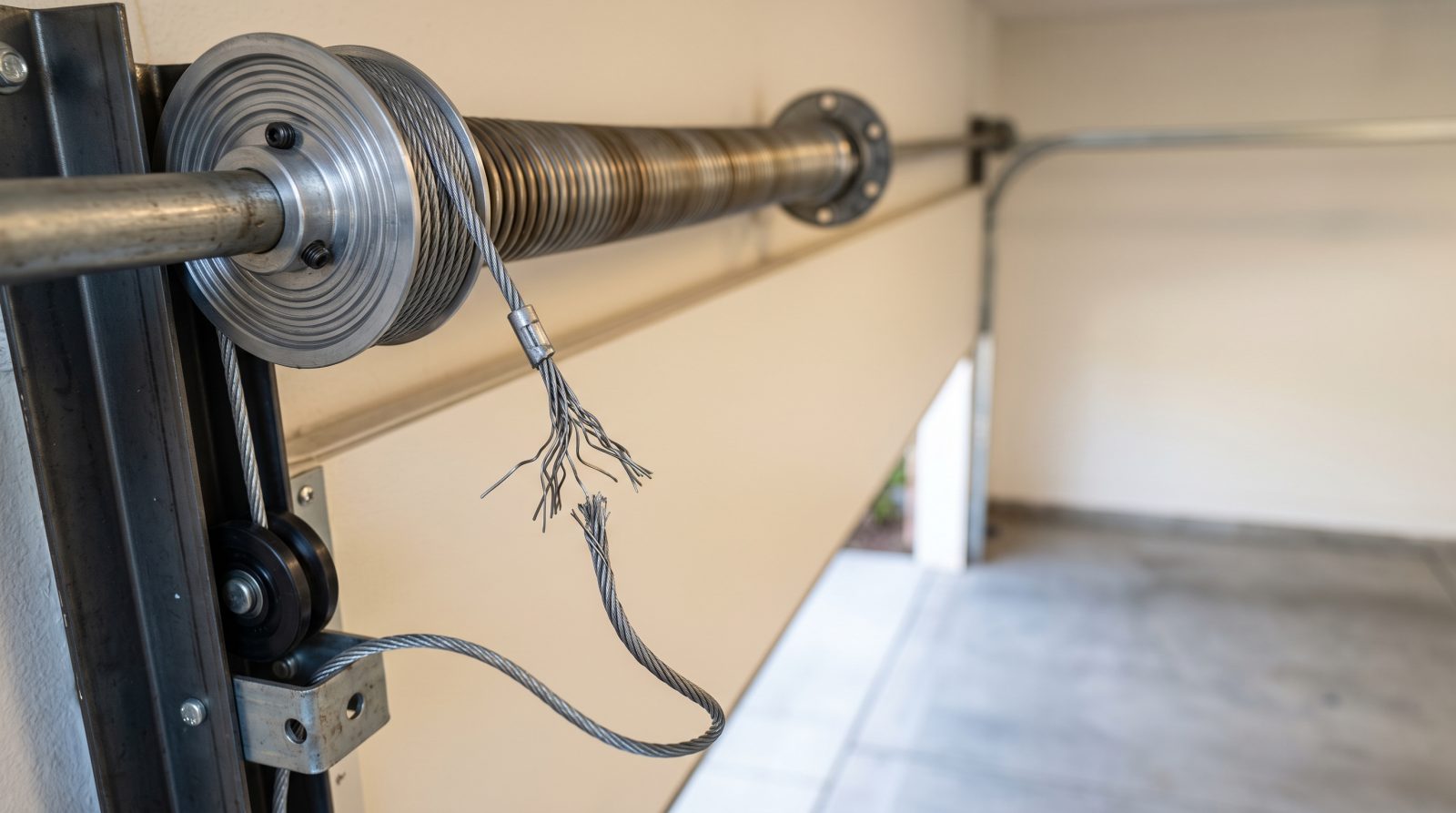
What Garage Door Cables Actually Do (and Why a Snap Is a Big Deal)
Your garage door is one of the heaviest moving objects in your home, often weighing well over a hundred pounds. It does not lift by motor strength alone. A spring system counterbalances most of that weight, and the lift cables are what transfer the spring's stored energy to the door so it rises and lowers smoothly. On the most common setup, two cables run down each side, looping from a drum at the top of the door to a fitting at the bottom bracket near the floor.
Because cables are under constant high tension every time the door moves, they take real wear. When a cable frays, stretches, or snaps, that balance is lost instantly. One side of the door may drop while the other holds, leaving the door crooked, off its track, or wedged. An opener pushed to operate a door in this state can burn out or make the situation worse.
Cable failure is a clear, common problem that needs a knowledgeable local pro at your door quickly rather than a week-long wait. Recognizing it early and getting the right help fast keeps a simple cable repair from turning into a bent-panel, off-track, or opener-damage repair.
- Lift cables transfer spring tension to raise and lower a very heavy door
- Two main lifting cables (one per side) carry the load on most residential doors
- A snapped or frayed cable throws the door out of balance immediately
- A door left unbalanced can drift, fall, or jam, and can damage the opener if forced
Warning Signs of a Frayed or Failing Cable
Cables rarely fail without warning. They usually fray strand by strand for weeks or months before letting go, which means a quick look can save you from a sudden breakdown. If you catch the early signs, you can schedule a calm, planned repair instead of dealing with a stuck door at the worst possible moment.
Take a few seconds to glance at the cables on each side of the door while it is fully closed (when the lifting cables have the least tension). Look for broken or sticking-out strands, rust, kinks, or a cable that has slipped off its drum or pulley. Pay attention to how the door behaves, too, since a struggling or crooked door is often the first clue something is going wrong with the cable or spring system.
- Visible fraying: stray wire strands poking out, like a worn rope
- The door looks crooked or one side hangs lower than the other
- The door is hard to open, sticks, or jerks unevenly as it moves
- A cable has come loose, gone slack, or unwound from the drum at the top
- Loud bang or snap sound, then the door won't move properly
- Rust, kinks, or visible wear on the cable near the bottom bracket
Why Garage Door Cables Fray and Break
Cables fail for a handful of predictable reasons, and understanding them helps you prevent the next failure rather than just patching this one. The most common culprit is simple fatigue: thousands of open-and-close cycles slowly wear the steel, especially where the cable wraps the drum or seats in the bottom bracket. Wear at a single stress point is why fraying so often starts in the same spot.
Moisture and corrosion are the second big factor, and this is where things genuinely vary by region. In coastal and humid climates, salt air and dampness rust cables faster, while areas with heavy snow, road salt, and freeze-thaw swings put extra strain and corrosion on hardware through winter. In dry regions cables may last longer, but grit and dust can still grind at moving parts. Poor or skipped maintenance, misalignment, and a door that is out of balance also accelerate wear, because a cable forced to carry an uneven load frays faster than one running true.
It is also worth knowing that cables and springs are a system. When a spring breaks or weakens, it often takes a toll on the cables, and a worn cable can stress the spring in return. A good pro inspects both together rather than swapping one part and ignoring the other.
- Normal wear and tear from years of daily up-and-down cycles
- Rust and corrosion, accelerated by coastal salt air, humidity, or road salt in snowy regions
- A door that is out of balance, forcing cables to carry uneven tension
- Misaligned drums or pulleys that chew at the cable edge
- Aging or broken springs that shift extra load onto the cables
- Skipped maintenance, leaving dirt, dryness, and small frays to grow
Why Cable Repair Is a Job for a Pro (Safety First)
A frayed cable can look like a quick fix, but cable and spring repair is genuinely high-risk work, and this is the one area where DIY is strongly discouraged. The cables are tied directly into a spring system holding hundreds of pounds of tension. A torsion or extension spring that releases unexpectedly during a repair can cause serious injury. This is not caution for its own sake; it is the single most common way home garage door repairs go wrong.
If a cable has snapped or you suspect spring involvement, the safest move is to stop using the door entirely. Do not try to force it open with the opener, and avoid yanking the emergency release on a door that may be unbalanced, since it can drop without warning. Disconnect the opener if you can do so safely, keep people and vehicles clear, and leave the tensioned parts alone until a trained technician arrives.
A qualified local technician carries the right winding bars, replacement cables sized to your door, and the experience to release and reset tension safely. Because cable failures leave you with a door you cannot use, fast local help is the whole point. The aim is to get a knowledgeable pro to your door quickly, wherever you are, so a stressful failure becomes a short, safe repair.
- Cables are under extreme spring tension that can release violently
- Stop using the door and don't force the opener if a cable has snapped
- Avoid the emergency release on an unbalanced door; it can fall fast
- Keep children, pets, and cars away from a door that won't move right
- A trained tech has the correct tools and parts to do it safely
What a Professional Cable Repair Looks Like
When a technician arrives for a cable repair, the work follows a clear sequence built around safety and balance. They start by securing the door and carefully relieving spring tension so the cables can be worked on without risk. The damaged cable is removed, and because cables wear as a matched pair, replacing both lifting cables at once is common practice, so you aren't back in a week when the second one frays.
New cables are sized and rated to your specific door and spring setup, then routed correctly onto the drums and secured at the bottom brackets. The technician re-tensions and balances the door, checks that it tracks straight, and tests that it stops, holds, and reverses as it should. A good pro also inspects the springs, rollers, drums, and bottom brackets while they're in there, since these parts fail together and catching a worn neighbor now saves a second visit later.
Pricing for cable repair depends on your door, the parts involved, and whether springs or other hardware also need attention. As a general guide, a straightforward cable replacement is one of the more affordable garage door repairs, while jobs that include spring replacement cost more. Treat any figures you see online as typical industry ranges that vary by door size, material, region, and scope, an estimate, never a fixed quote. A reputable local pro will assess your door and give you a clear price before any work begins.
- Secure the door and safely release spring tension first
- Replace cables in pairs with parts rated for your specific door
- Re-balance the door so the weight is evenly carried again
- Test that the door tracks straight, holds, and reverses safely
- Inspect springs, rollers, drums, and brackets while access is open
- Costs vary by door and scope; ask for a clear estimate up front
Keeping Cables Healthy Between Repairs
Once your cables are replaced, a little routine attention keeps them running for years and helps you catch the next problem early. Cables don't need much, but they do reward a quick seasonal look and a balanced, well-lubricated door. Because the whole system shares the load, anything that keeps the door running smoothly also takes strain off the cables.
Build a simple habit around the changing seasons, which is especially useful in climates with hard winters or salty coastal air where corrosion moves faster. Glance at the cables, listen for new noises, and watch how evenly the door moves. If you notice fraying, slack, or an off-balance door, it's worth a quick call before a strand-by-strand fray becomes a sudden snap. A short professional tune-up now is far cheaper and less disruptive than an emergency repair later.
- Visually check cables a few times a year, especially after harsh weather
- Listen for grinding, popping, or new noises during operation
- Keep rollers and moving parts lubricated so the door runs smoothly
- Test the door's balance; a door that won't stay put is a warning sign
- Schedule a professional tune-up if you spot fraying, rust, or slack
- Address worn springs promptly, since they shorten cable life