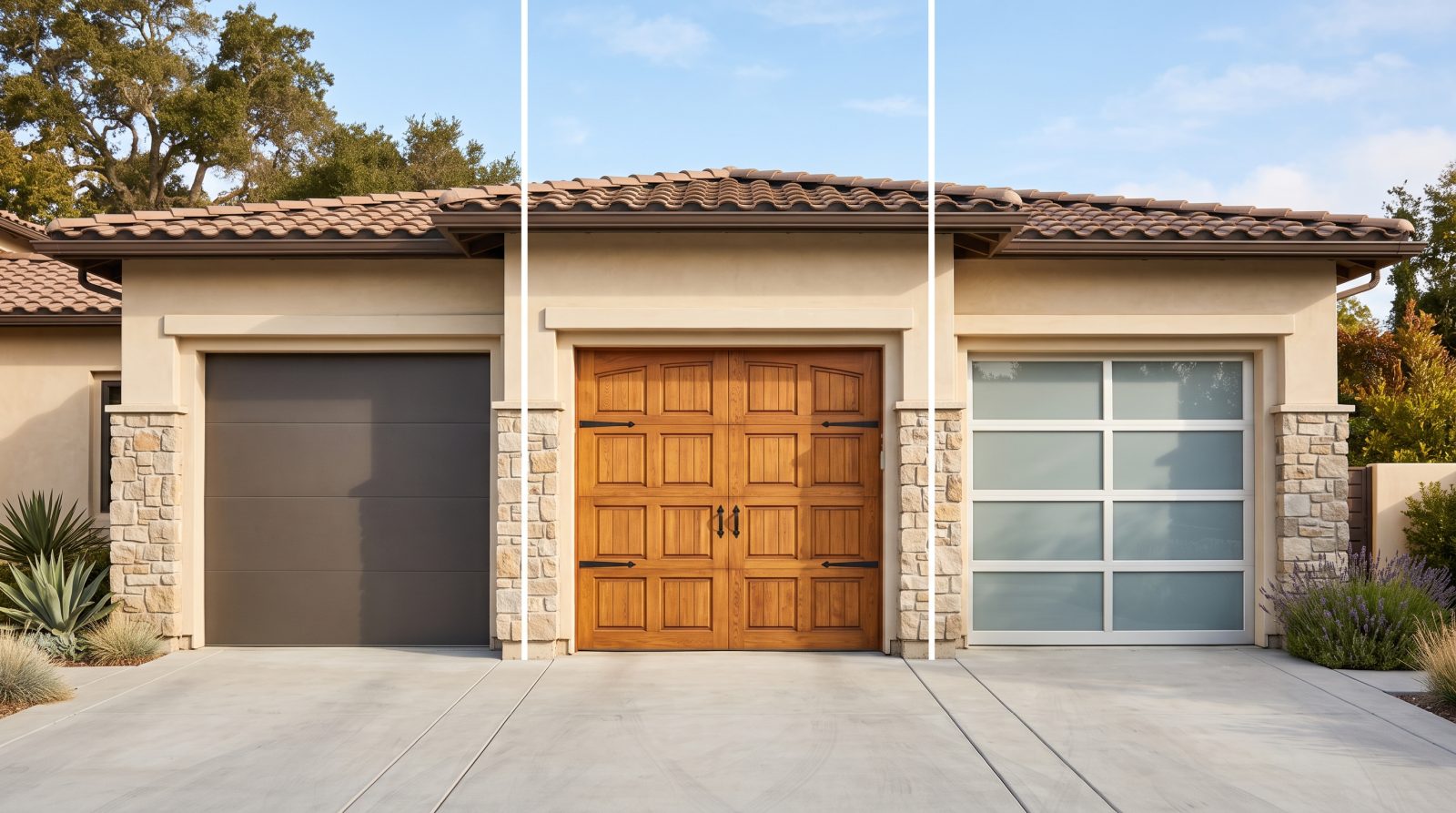
How material drives the price (and why two "garage doors" can cost wildly different amounts)
The phrase "garage door cost" hides a huge range because a door is really a system: the panels you see, the insulation behind them, the track and rollers, the springs that do the heavy lifting, and the opener that automates it. Material mostly governs the panel cost, but it ripples outward - heavier materials like solid wood need stronger springs and beefier hardware, which quietly raises the total. A bare-bones single-layer steel door and a custom carriage-house wood door are both "garage doors," yet they can differ by an order of magnitude.
Two big variables sit on top of material. The first is construction layers: single-layer (just the panel skin), double-layer (skin plus insulation), and triple-layer (insulated and backed with a finished interior skin). More layers mean more cost, more insulation value, and a quieter, sturdier door. The second is size - a standard single-car door is far cheaper than a wide double-car door or an oversized RV door, because you're buying more square footage of everything.
One thing worth saying plainly on a national resource: regional climate changes the math. In hot, humid, or coastal areas, corrosion resistance and UV stability matter more, which can nudge buyers toward aluminum, fiberglass, or vinyl. In cold-winter regions, insulation (R-value) earns its keep and pushes people toward insulated steel or composite. The same door can be a great buy in one climate and a poor fit in another.
- Panel material = the biggest single cost lever on a new door
- Construction layers (single, double, triple) raise both price and insulation
- Door size (single, double, oversized) scales every component up
- Heavier materials require stronger springs and hardware, adding cost
- Your climate can shift which material is the smart value, not just the look
Typical 2026 price ranges by material
The ranges below are typical installed costs for a standard residential door in the U.S., expressed as estimates that vary by size, insulation, hardware, finish, and region. They include the door and basic installation but assume your existing opening and framing are sound. Treat them as a planning tool, then request a free quote for a number specific to your home.
Steel is the most popular choice and usually the best value: roughly $750 to $3,500 installed depending on whether it's single-, double-, or triple-layer and whether it's insulated. It's strong, low-maintenance, and available in finishes that mimic wood. Aluminum with glass (the modern, contemporary look) typically runs $1,200 to $4,500; it's lightweight and rust-resistant, which suits coastal and humid climates, though large glass sections push the upper end.
Wood is the premium, character-rich option at roughly $1,500 to $10,000+, climbing fast for custom carriage-house designs in cedar, redwood, or mahogany - and it asks for the most ongoing maintenance. Composite and faux-wood doors deliver much of the wood look with less upkeep at about $1,200 to $5,000. Fiberglass typically lands around $1,000 to $4,000 and resists dents and salt air but can fade or crack with heavy UV and hard cold. Vinyl is the dent-and-rust-proof workhorse, often $1,000 to $3,500, popular for households with kids and for humid regions, with fewer style options. These figures exclude opener replacement, which is a separate line item if yours is also failing.
- Steel: ~$750-$3,500 - best all-round value, low maintenance, wide finish options
- Aluminum + glass: ~$1,200-$4,500 - light, rust-resistant, modern look, great near coasts
- Wood: ~$1,500-$10,000+ - premium character, highest maintenance
- Composite / faux-wood: ~$1,200-$5,000 - wood look, far less upkeep
- Fiberglass: ~$1,000-$4,000 - dent- and salt-resistant, can fade in harsh UV/cold
- Vinyl: ~$1,000-$3,500 - dent- and rust-proof, family-friendly, fewer styles
- Ranges are installed estimates that vary by size, insulation, and region - not quotes
What's inside the number: cost factors beyond the material
Even within one material, prices swing based on choices you may not think about until the estimate arrives. Insulation is the biggest: an insulated double- or triple-layer door costs more up front but is warmer, quieter, and more durable - often worth it if your garage is attached or living space sits above or beside it. Windows, decorative hardware, and custom colors or wood-grain finishes each add cost, and larger or oversized openings multiply everything.
Labor and site conditions matter too. A straightforward replacement on a clean, square opening is the cheapest scenario. If the installer has to repair rotted framing, re-square the opening, upsize the springs for a heavier door, or haul away an old door, those line items add up. Spring system upgrades are common when switching to a heavier material - the spring has to be matched to the door's weight, and getting that wrong is both unsafe and a fast path to premature wear.
Don't forget the opener. The door and the opener are separate purchases; a new door doesn't require a new opener if yours works and is rated for the door's weight. If you do replace it, a typical opener install adds a few hundred dollars depending on drive type (chain, belt, or wall-mount) and smart features. Keeping these as separate decisions helps you avoid over-buying.
- Insulation / R-value: biggest in-material price driver, pays back in comfort and noise
- Windows, hardware, custom colors and wood-grain finishes each add cost
- Oversized or double-car openings scale every component up
- Site work - framing repair, re-squaring, old-door haul-away - adds labor
- Spring system must be matched to the door's weight, especially for heavier materials
- Opener is a separate line item - don't replace a working one just because the door is new
Repair vs. replace: how to spend the smallest dollar that solves the problem
Here's the part most cost guides skip: you often don't need a new door at all. The most common garage door failures - a broken spring, a worn or snapped cable, frayed rollers, an off-track door, or a tired opener - are repairs, not replacements. A door with good panels and a sound frame can keep running for many more years on a targeted fix, and a repair almost always costs a fraction of a full replacement.
A practical rule of thumb: if the panels are structurally sound and only the moving parts have failed, repair. If multiple panels are dented through, the door is rusted or rotted across sections, or it's so poorly insulated that it's driving up your energy bills, replacement starts to make sense. Safety items - especially torsion and extension springs - should always be handled by a pro; they store enormous tension and are the leading cause of serious DIY garage door injuries. That's true everywhere, regardless of climate.
Because this is a help-near-you resource, the fastest path is usually a quick diagnosis from a local pro who can tell you, on the spot, whether you're looking at a modest part swap or a genuine replacement. A same-day visit to fix a spring or realign a track can get your door working again without committing to a four-figure project you may not need. When replacement truly is the right call, the material ranges above give you a grounded starting point for the conversation.
- Most common failures (springs, cables, rollers, off-track, opener) are repairs, not replacements
- Sound panels + sound frame = repair is almost always the cheaper, smarter spend
- Replace when panels are dented through, rusted/rotted across sections, or badly under-insulated
- Never DIY spring work - high tension, real injury risk; call a pro anywhere you live
- A fast local diagnosis tells you which dollar to spend before you commit