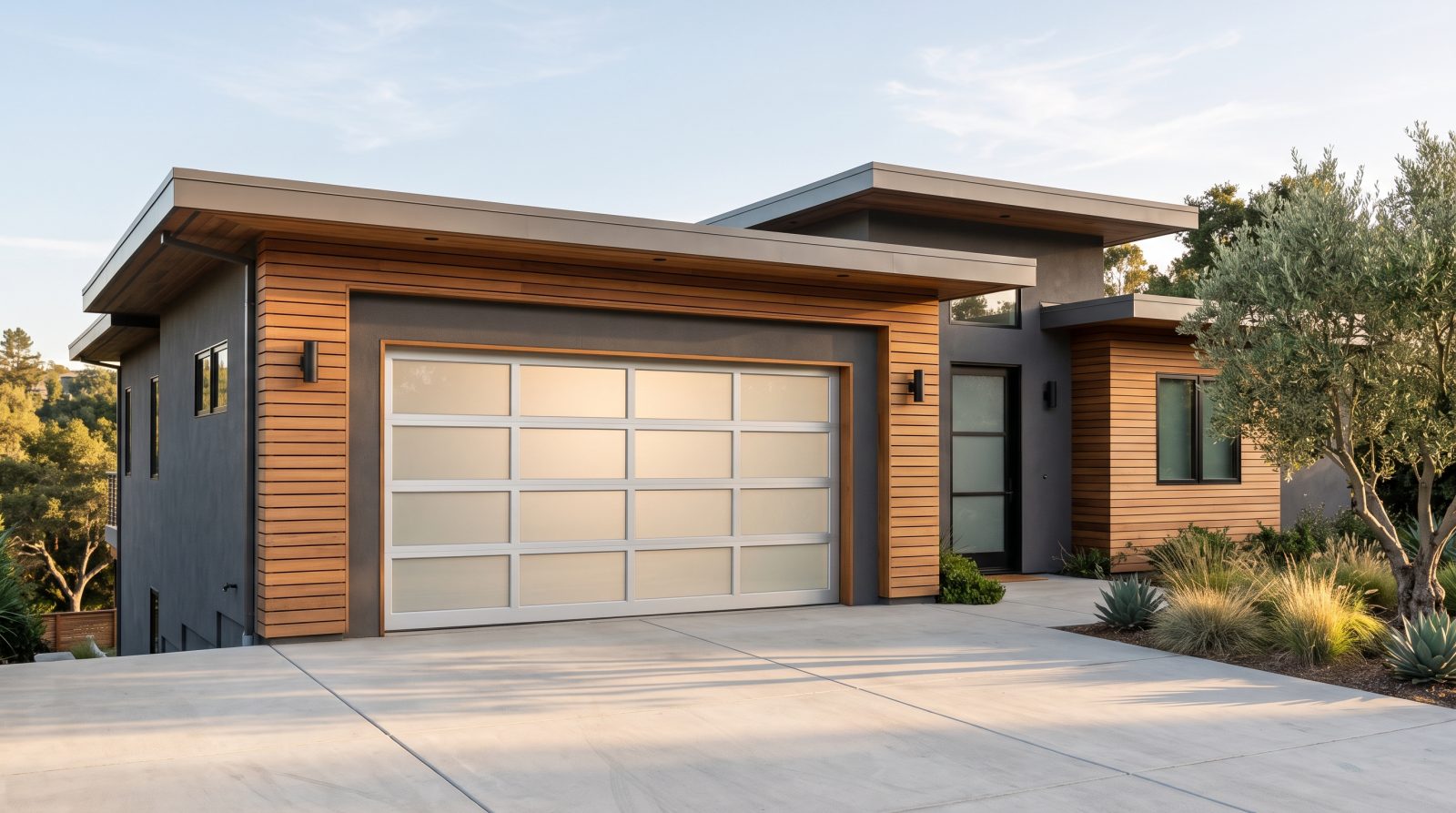
How Aluminum and Glass Garage Doors Are Built
Most aluminum and glass doors are built around a sectional aluminum frame, the same horizontal-panel design as a standard overhead door, but with the steel or composite panels swapped for aluminum stiles and rails that hold glazing. The frame is typically extruded aluminum, finished in anodized aluminum, powder coat, or a wood-look laminate. Inside each frame opening sits the glazing: clear, frosted, tinted, tempered, laminated, or insulated dual-pane glass. Some designs use translucent acrylic or polycarbonate instead of true glass, which trades a little clarity for impact resistance and lighter weight.
Because aluminum is far lighter than steel or solid wood, these doors put less load on the springs and opener, and they tend to be quieter to operate. The trade-off is rigidity. Aluminum frames flex more easily, so the door relies on properly tuned hardware, tracks, rollers, hinges, and spring balance, to stay square and move smoothly. When that hardware drifts out of adjustment, a light aluminum door shows it quickly: a slight twist in the frame, a panel that no longer seats flush, or glass that rattles in its channel.
The glazing matters as much as the frame. Single-pane glass is lighter and cheaper but offers little insulation. Insulated dual-pane units cut heat transfer and noise, which is why they are common where garages double as gyms, offices, or living space. Knowing which build you have, frame finish, glass type, single versus dual pane, helps a technician quote the right part and helps you understand why a repair on a glazed door is not the same as on a plain steel one.
- Frame: extruded aluminum, finished in anodized, powder-coat, or laminate
- Glazing options: clear, frosted, tinted, tempered, laminated, or insulated dual-pane glass, plus acrylic or polycarbonate alternatives
- Lighter than steel or wood, so it is gentler on springs and openers and runs quietly
- Flexible frame means smooth operation depends heavily on well-tuned tracks, rollers, and spring balance
- Insulated glazing adds R-value and sound control for garages used as living or work space
The Most Common Problems (and How to Spot Them Fast)
The fastest way to get the right help is to describe the symptom accurately. On aluminum and glass doors, problems usually fall into a handful of buckets, and many overlap with any overhead door: springs, openers, rollers, tracks, and the door coming off-track. The difference is that the glass and the slim frame add a few failure modes a solid door never has, and they raise the stakes when a door binds or falls out of alignment.
Spring and balance issues are the most common across all door types. Torsion or extension springs do the heavy lifting; when one weakens or breaks, the door feels heavy, opens crooked, slams shut, or refuses to lift. Because aluminum doors are light, a failing spring can be less obvious at first, but a door that drifts down on its own or jerks unevenly is a balance problem and a safety issue. Spring work is high-tension and is the clearest case for calling a pro rather than experimenting.
Roller, hinge, and track trouble shows up as grinding, a door that catches at one point, or a frame that looks slightly twisted. On a flexible aluminum frame, a worn roller or a tight track can let a panel rack out of square, which then stresses the glass channel. Opener faults, the door not responding, reversing before it closes, or running but not moving, often trace to photo-eye sensors, a stripped trolley gear, or settings, and are frequently fixable without touching the door itself.
Glass-specific problems are unique to this style. A cracked or shattered pane, a foggy insulated unit that lost its seal, loose glazing that rattles, or a chipped frame finish all call for matched replacement parts so the look stays consistent. Glass is also heavy and sharp; a broken pane in a sectional door should be stabilized and replaced by someone who handles overhead glazing, not improvised at home.
- Heavy, crooked, or self-closing door, or a visibly broken spring: a balance or spring problem, call a pro
- Grinding, catching, or a twisted-looking frame: worn rollers, dry or bent track, or loose hinges
- Door reverses, won't respond, or runs without moving: usually opener sensors, settings, or a worn drive gear
- Cracked, foggy, loose, or rattling glass: glazing or seal failure needing a matched replacement panel
- Door fully off-track or jammed at an angle: stop operating it immediately and get help before further damage
Repair or Replace? Making the Call on a Modern Door
Aluminum and glass doors sit at the premium end of the market, so the repair-versus-replace decision deserves more thought than it would on a builder-grade steel door. The good news is that these doors are modular: frames, rollers, hinges, springs, sensors, and individual glass panels can often be serviced or swapped without replacing the whole door. That keeps many repairs cost-effective and preserves the original look.
Lean toward repair when the frame is straight and sound and the issue is isolated, a single cracked pane, a worn spring, bad rollers, a faulty sensor, or a tired opener. These are routine fixes, and matching one glass panel or a set of rollers is far cheaper than a new custom door. Repair also makes sense when the finish is intact and you simply want the door operating safely and quietly again.
Lean toward replacement when the aluminum frame itself is bent, corroded, or racked beyond adjustment, when multiple panels are damaged, or when an older single-pane door is costing you comfort and energy in a garage you now use as living space. A door that has been hit by a vehicle, or one that is so out of square that panels and glass no longer seat, is often more economical to replace than to chase repair after repair.
As a budgeting frame of reference only, and not a quote: minor service calls and small parts such as rollers, sensors, and hinges typically run in the lower hundreds of dollars, spring replacement is a common mid-range repair, a single glass panel replacement varies widely with glass type and frame style, and a full custom aluminum-and-glass door is a several-thousand-dollar investment. Every one of these figures is a typical industry range that shifts with your door, glass type, finish, region, and how much labor the job takes, so treat them as ballpark estimates and get a written assessment for your specific door.
- Repair if: frame is straight, the problem is isolated (one pane, springs, rollers, sensor, opener)
- Replace if: frame is bent, corroded, or racked; multiple panels damaged; vehicle impact; or you want modern insulated glazing
- Modular design means single glass panels and individual hardware can usually be swapped without a whole new door
- Cost notes are typical industry ranges and estimates only, never a fixed quote; actual price depends on door, glass, finish, region, and scope
Climate and Region: Why Location Changes Everything
Because this is a nationwide resource, it is worth being honest about how much your climate affects an aluminum and glass door. The same door performs differently in a salty coastal town, a freezing northern winter, a humid southeast summer, or a dry, sun-baked desert, and the maintenance and repairs that matter most shift with it.
In coastal and high-humidity regions, aluminum's natural rust resistance is a real advantage over steel, which is a big reason these doors are popular near the water. The catch is salt air, which can still pit or dull finishes and corrode steel hardware such as springs, rollers, and fasteners hidden behind the aluminum. In these areas, rinsing the door, keeping hardware lubricated, and choosing corrosion-resistant components pay off.
In cold-winter climates, single-pane glass and uninsulated aluminum frames conduct heat readily, so an attached or heated garage can lose comfort fast; insulated dual-pane glazing is worth considering. Cold also stiffens lubricant and makes brittle parts more likely to fail, which is why doors often break in the first hard freeze. In hot, sunny regions, intense UV and heat can fade finishes, expand frames, and overheat openers, while big spans of clear glass turn a garage into a greenhouse, making tinted or insulated glass and proper ventilation more appealing. None of this means an aluminum and glass door is wrong for your area; it means the right glazing, finish, and maintenance schedule depend on where you live.
- Coastal and humid: aluminum resists rust, but salt air still attacks finishes and steel hardware; rinse, lubricate, and choose corrosion-resistant parts
- Cold winters: uninsulated frames and single-pane glass lose heat; insulated glazing helps, and freezes expose brittle or under-lubricated parts
- Hot and sunny: UV fades finishes, heat stresses openers, and clear glass heats the garage; tinted or insulated glass and ventilation help
- Match glazing, finish, and maintenance to your regional climate rather than assuming one spec fits everywhere
Maintenance and Getting Local Help Quickly
A modern door rewards light, regular care. A few minutes a season keeps an aluminum and glass door looking sharp and operating safely, and it heads off the small problems that become emergencies. Clean the frame and glass with mild, non-abrasive cleaners, wipe and check the photo-eye sensors near the floor, and look over the rollers, hinges, and tracks for wear or debris. Lubricate the moving metal hardware (rollers, hinges, springs) with a proper garage-door lubricant, not the glass or finish, and listen for new grinding or rattling that signals something is loosening.
Run the simple safety checks any homeowner can do. With the door closed, watch for it drifting open or shut on its own, a sign of spring imbalance. Test the auto-reverse by placing a roll of paper towels or a small board in the door's path; a properly working opener should reverse on contact. If the door is heavy by hand, opens crooked, or a panel no longer seats flush, treat that as a service item rather than something to muscle through.
Some jobs are firmly in pro territory: spring replacement and any high-tension work, a door that has come off-track, broken or cracked glass, a bent frame, and most opener internals. These involve real injury risk and parts that must match your specific door. When you reach that point, the priority is speed and the right person, an experienced overhead-door technician who works on aluminum and glass systems and can source matching panels and hardware. Describe the symptom clearly, mention that it is an aluminum and glass door, and you will get a faster, more accurate diagnosis and visit.
If your door is unsafe, off-track, stuck, or has broken glass, stop using it and get help promptly. Wherever you are, you can find a local pro who handles modern doors and request a free quote so the issue is assessed correctly and your door is back to its clean, daylight-filled best.
- Seasonal care: clean glass and frame gently, clear and check sensors, inspect tracks and rollers, lubricate metal hardware only
- DIY safety checks: watch for self-drifting (spring balance) and test auto-reverse with an object in the door's path
- Leave to a pro: spring replacement and high-tension work, off-track doors, broken glass, bent frames, and opener internals
- For speed and accuracy, tell the technician it is an aluminum and glass door and describe the exact symptom
- If the door is unsafe or off-track, stop using it and request a free quote from a local pro who services modern doors