Why Commercial Garage Doors Are a Different Animal
It is tempting to assume a commercial door is just a bigger version of a residential one, but the engineering, duty cycle, and failure modes are genuinely different. Commercial openers are rated for high cycle counts, sometimes opening and closing dozens or hundreds of times a day, where a home door might run four to six cycles. That heavy use means springs, bearings, rollers, and motors wear on a completely different timeline, and a part that lasts a decade at home may need attention far sooner on a busy dock.
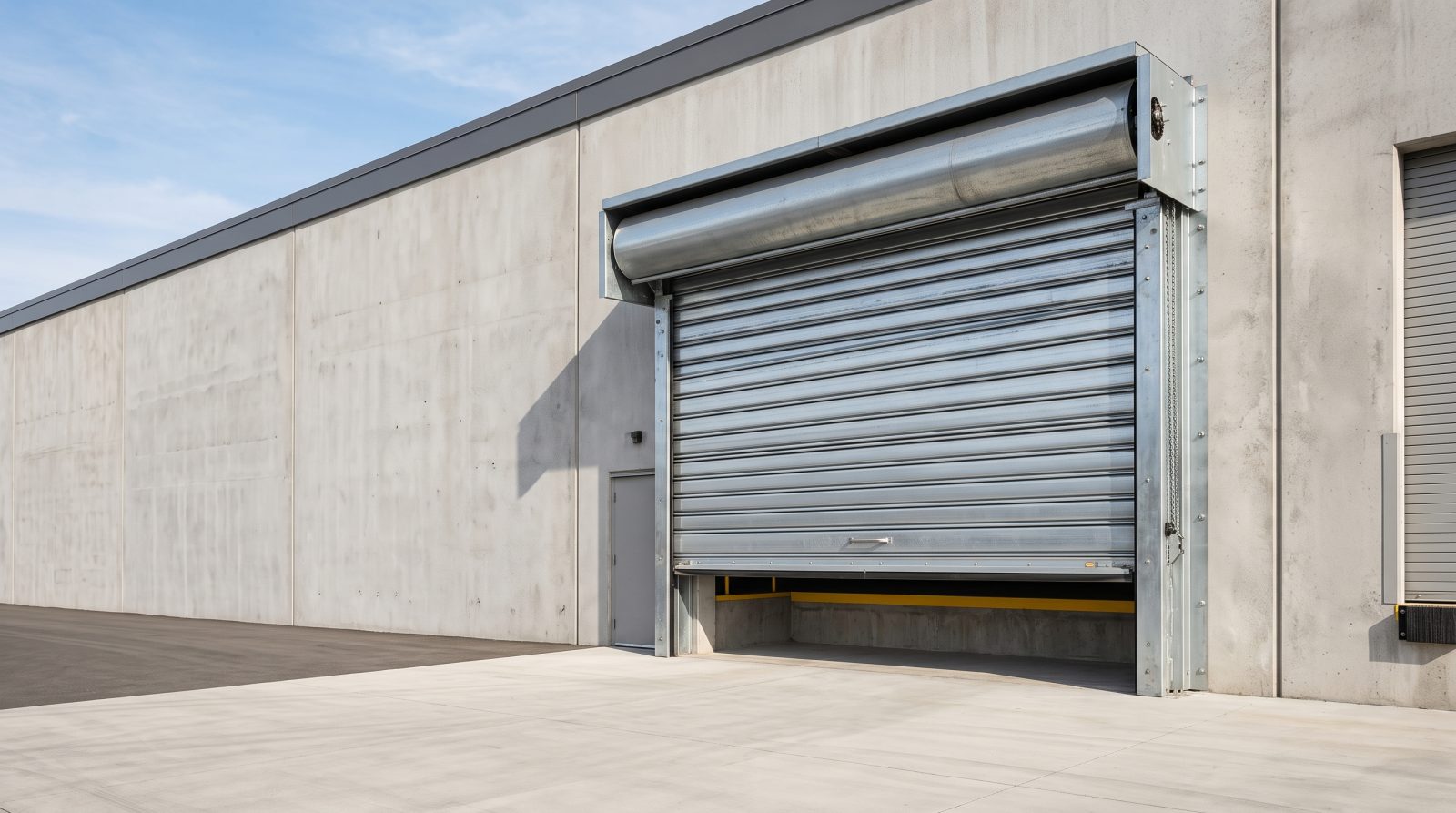
Commercial doors also come in fundamentally different styles. Rolling steel doors (also called coiling doors) wind up into a compact barrel above the opening and are common on storefronts, warehouses, self-storage, and fire-rated openings. Sectional commercial doors run on horizontal tracks much like a residential garage door but are built from heavier-gauge steel or insulated panels and often span much wider openings. Each style has its own hardware, its own adjustment quirks, and its own safety considerations, which is why a technician comfortable with home doors is not automatically the right fit for a coiling fire door.
Because the stakes are higher, commercial work also tends to involve code and safety requirements a homeowner never thinks about, from fire-door drop testing to operator safety devices on doors that the public passes under. Getting the right pro the first time matters.
- Far higher duty cycle: parts wear faster on doors that run all day
- Multiple door types: rolling steel/coiling, sectional, high-speed, and fire-rated
- Heavier components: bigger springs, larger drums, higher-torque operators
- Code and safety obligations many residential jobs never touch
- Downtime has a direct business cost, so fast, correct diagnosis is critical
Rolling Steel vs. Sectional: Knowing What You Have
The first step in any commercial repair is correctly identifying the door, because the fix for a rolling steel door is rarely the fix for a sectional. Rolling steel doors are made of interlocking horizontal slats that coil around a barrel at the top of the opening. They are prized for security and for their small footprint overhead, which is why you see them on warehouse exteriors, parking garages, retail security gates, and behind storefront glass. When they fail, the trouble is often in the barrel spring tension, the guides the slats ride in, the bottom bar, or the operator that drives the coil.
Sectional commercial doors are built from hinged panels that bend over a curved track and store horizontally along the ceiling. They are the workhorse of loading docks and drive-in bays because they insulate well and seal tightly against weather. Their failure points look more familiar to anyone who has dealt with a home garage door: torsion springs, cables, rollers, hinges, track alignment, and the opener. The difference is scale, since a 14-foot-wide insulated dock door carries far more weight and stored spring energy than a residential unit.
If you are not sure which type you have, a good technician can identify it in seconds from a photo or a quick look, then bring the right parts and the right expertise. Telling us the door style up front, along with whether it is interior or exterior and roughly how wide it is, helps the local pro arrive ready to actually fix it rather than just diagnose and reschedule.
- Rolling steel: interlocking slats coiling into an overhead barrel; great for security and tight spaces
- Sectional: hinged panels on horizontal track; great insulation and weather sealing for docks
- High-speed fabric/rubber doors: common in food, cold storage, and clean environments
- Fire-rated doors: rolling or swinging assemblies designed to close automatically in a fire event
- A quick photo of the door and its hardware speeds up an accurate, parts-ready visit
The Commercial Door Problems We See Most
Most commercial service calls trace back to a handful of recurring issues, and recognizing the symptoms helps you describe the problem clearly so a pro can triage it fast. Broken springs are at the top of the list: the torsion springs on a sectional door or the counterbalance spring inside a rolling steel barrel store enormous energy, and when one fails the door becomes extremely heavy, refuses to open, or slams shut. This is the single most dangerous DIY temptation on a commercial door and the one we most strongly recommend leaving to a trained technician.
Opener and operator failures are the next big category. Commercial operators (jackshaft, trolley, hoist, and gear-head units) take real abuse, and motors, logic boards, limit switches, and drive chains all wear out. A door that hums but won't move, opens partway and reverses, or responds intermittently to the wall control usually points here. Off-track doors and damaged slats or panels are also common, frequently caused by a forklift bump, a vehicle strike, or worn rollers and guides that finally let the door jump its path.
Cables, rollers, hinges, weather seals, and photo-eye safety sensors round out the list. On exterior doors, climate plays a real role: in cold-winter regions, hardened grease and contracted metal stress springs and cables, while in coastal and humid areas, corrosion attacks tracks, fasteners, and the bottom bar far faster. In hot, dusty regions, debris in the guides and UV-degraded seals are more common. A good local pro factors your climate into both the repair and the recommendation.
- Broken or fatigued springs, causing a heavy, stuck, or unsafe door (technician-only territory)
- Operator/opener failures: motor, logic board, limit switches, chains, or sprockets
- Off-track doors and bent slats or panels, often from forklift or vehicle impact
- Frayed cables, worn rollers and bearings, broken hinges, and misaligned tracks
- Failed weather seals and bottom astragals letting in air, water, or pests
- Malfunctioning photo-eyes or safety edges that stop the door from closing
What Commercial Garage Door Repair Typically Costs
Honest answer first: there is no single price, and anyone who quotes a fixed number sight unseen is guessing. Commercial pricing depends on the door type, the size and gauge of the steel, the specific parts, how much spring weight is involved, accessibility, and your region's labor rates. What we can offer are typical industry ranges so you can budget sensibly and recognize a fair estimate when you see one. Treat every figure below as an estimate that varies by door, material, and scope, never a guarantee.
As a rough guide, a commercial service call or diagnostic visit commonly runs in the low hundreds of dollars, and is often credited toward the repair if you proceed. Spring replacement on a heavy sectional or rolling steel door is typically a several-hundred-dollar job and sometimes more on large, high-tension units, because the parts are bigger and the labor is specialized. Operator and logic-board repairs vary widely; a worn limit switch is inexpensive, while a full commercial operator replacement is a significant capital item. Section or slat replacement, track straightening after an impact, and re-sleeving cables all sit in between and depend heavily on parts availability for your specific door.
The most cost-effective move is almost always a clear diagnosis before any parts are ordered, plus an honest conversation about repair versus replacement. A door that has already eaten through several operators or is structurally bent from repeated forklift strikes may cost less over its life to replace than to keep patching. A reputable local pro will lay out both paths with transparent estimates rather than pushing the biggest invoice.
- All figures are typical industry estimate ranges; final cost depends on your door and region
- Diagnostic/service visit: commonly low hundreds, frequently credited toward the repair
- Spring replacement: typically several hundred dollars, more on large high-tension doors
- Operator work: from inexpensive switch fixes up to a major cost for full replacement
- Panel/slat, track, and cable repairs vary with parts availability and damage extent
- Ask for a written estimate and a clear repair-vs-replace recommendation before work begins
Safety, Compliance, and Preventive Maintenance
Commercial doors carry safety responsibilities that go beyond keeping things running. Doors the public or employees pass beneath are expected to have functioning reversing devices and entrapment protection, and fire-rated rolling doors are designed to release and close during a fire, which means their drop-test and reset function is a life-safety feature, not an optional extra. If your facility has fire doors, periodic testing of the closing mechanism is something to take seriously and to document, and a qualified technician can perform and record it for you.
Beyond compliance, preventive maintenance is where commercial operators save the most money. Because these doors cycle so heavily, small problems compound fast: a slightly misaligned track wears rollers, worn rollers stress the operator, and a strained operator eventually fails at the worst possible moment. A scheduled maintenance visit, typically lubrication, hardware tightening, spring and cable inspection, balance checks, sensor testing, and seal inspection, catches the cheap fix before it becomes the expensive emergency. For high-traffic doors, many facilities benefit from more than one visit a year.
We always encourage businesses to treat the overhead door as the piece of operating equipment it is. A documented maintenance rhythm reduces unplanned downtime, extends the life of expensive operators, and keeps your team safer under a door that may weigh several hundred pounds.
- Public/employee-facing doors need working reversing and entrapment protection
- Fire-rated doors require functional drop-testing and reset; document it
- Preventive maintenance: lubrication, hardware tightening, balance and spring checks
- Sensor, safety-edge, and seal inspection at every visit
- High-cycle doors often warrant more than one maintenance visit per year
- Catching small issues early prevents costly emergency operator failures
Getting a Commercial Pro to Your Door, Wherever You Are
The whole point of Garage Door Repairs Near Me is convenience: help near you, wherever your business is located. Commercial downtime is expensive, so the priority is fast, accurate diagnosis followed by a qualified local technician who can actually service your specific door type. Whether you operate a single storefront with one rolling security grille or a distribution center with a row of insulated dock doors, the goal is the same, getting you back in operation with the right fix the first time.
To make the visit efficient, it helps to have a few details ready: the door type (rolling steel or sectional), the approximate width and height, whether it is interior or exterior, the brand of the operator if you can find it on the unit, and a short description of the symptom along with a photo or two. That information lets the responding pro show up with the likely parts rather than making a second trip. Same-day help is available in many areas, with priority given to doors that are blocking operations or creating a safety hazard.
There is no obligation to commit before you understand the problem and the cost. Tell us what is happening with your door, and we will connect you with a local commercial garage door professional who can diagnose it, explain your options in plain language, and give you a transparent estimate.
- Nationwide reach: a local commercial pro matched to your location and door type
- Same-day help available in many areas, with priority on doors that stop operations
- Have ready: door type, size, interior/exterior, operator brand, and a photo
- Clear, plain-language diagnosis and a transparent written estimate
- No commitment required to understand the problem and your options first