Diagnose the Noise: What Each Sound Is Telling You
Before you touch anything, stand inside the garage and run the door through one full cycle while you listen and watch. A garage door is a system — door, tracks, rollers, hinges, springs, cables, and opener — and the type of noise plus where it comes from narrows the cause fast. Pinpointing it first means you fix the right thing instead of throwing lubricant at a problem that's really a loose bolt or a tired spring.
Match what you hear to the likely source, then confirm by looking at that part as the door moves. Most homeowners can identify the culprit in a single cycle once they know what to listen for. The distinction that matters most is friction noise (squeaks, squeals, grinding) versus impact or mechanical noise (banging, popping, clunking) — friction is usually maintenance, while sharp impacts and pops can signal something under tension that deserves caution.
- Squeaking or squealing: dry, dirty, or worn rollers and hinges — the most common and most easily fixed noise.
- Grinding or scraping: rollers dragging in the track, a bent track section, or debris; the door may also be slightly off-track.
- Rattling or vibrating: loose nuts, bolts, hinges, or track brackets that have worked free over thousands of cycles.
- Banging or popping during travel: panels or rollers binding, an unbalanced door, or worn hinges flexing under load.
- A single loud bang when idle: a possible torsion or extension spring failure — do not operate the door; this needs a pro.
- Slapping or flapping: a loose chain on a chain-drive opener, or a chain that needs tensioning.
- Straining, humming, or grinding from the opener motor: the opener fighting a heavy or poorly balanced door, or a worn drive gear.
Quiet It Yourself: Safe DIY Fixes That Work
A large share of noisy doors are cured with twenty minutes of basic maintenance and a few dollars in supplies — no specialist tools required. Start with safety: close the door fully, then unplug the opener so it can't activate while your hands are near moving parts. These three steps resolve most everyday squeaks and rattles, and doing them a couple of times a year keeps a quiet door quiet.
First, tighten the hardware. Vibration slowly loosens the nuts, bolts, and lag screws on hinges, roller brackets, and the track. Go around the door with a socket wrench and snug everything that's loose — firmly, but don't overtighten and strip the wood or strip the bolt. Second, lubricate the moving metal. Use a garage-door-specific lubricant (a silicone or lithium-based spray) on the hinges, roller bearings, springs, and the bearing plates. Avoid heavy automotive grease and WD-40 as a lubricant — WD-40 is a degreaser and cleaner, so it can actually leave parts drier over time. Wipe the tracks clean rather than greasing them; rollers should roll, not slide through grease that collects grit.
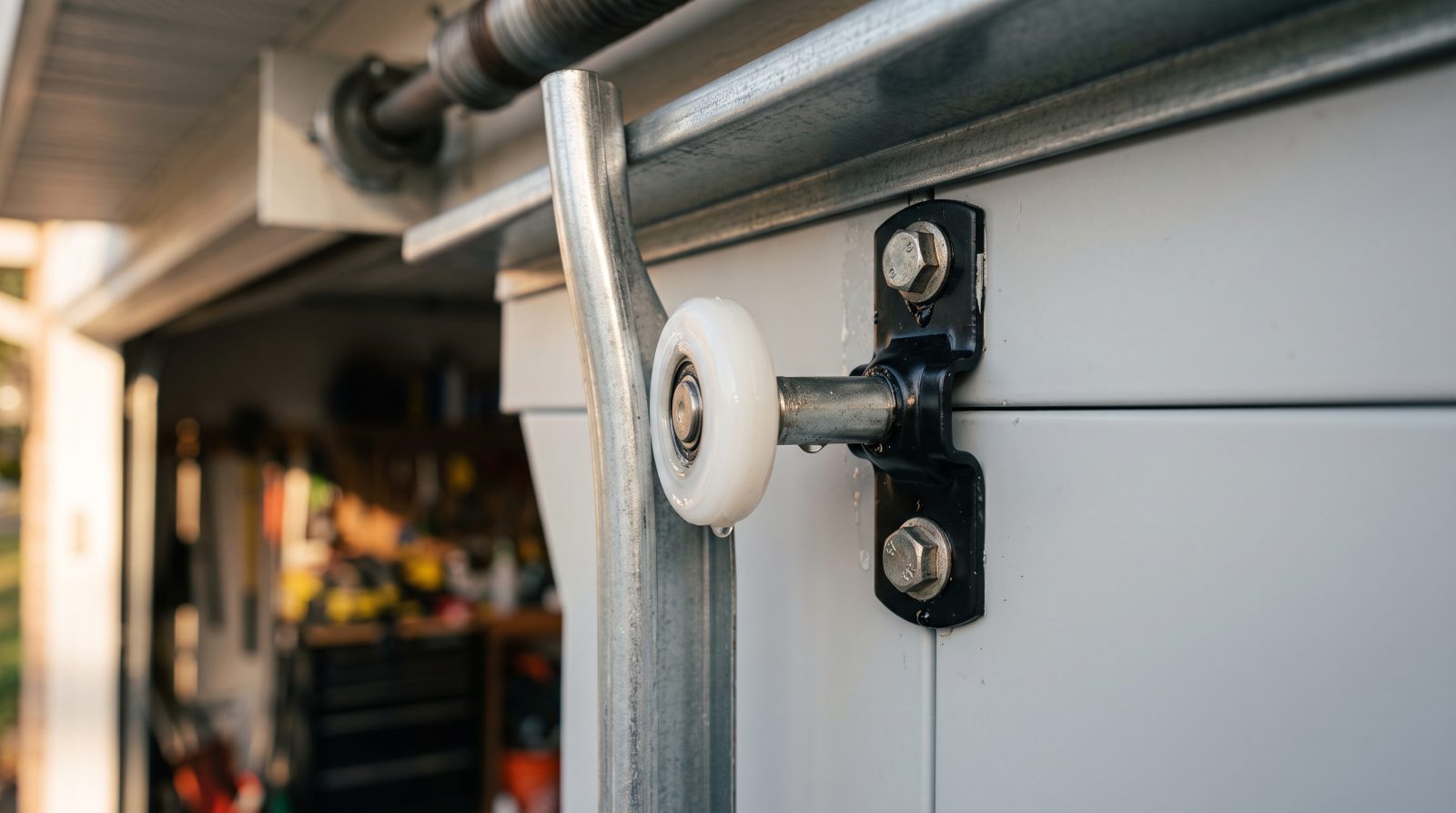
Third, look at the rollers themselves. Old steel rollers with no bearings, or rollers with worn flat spots, are a leading cause of grinding and rumbling. Upgrading to nylon rollers with sealed bearings is one of the single most effective noise reductions available and is a manageable project for a confident DIYer — but only for rollers NOT attached to the bottom brackets, which are under cable tension. If you also hear the door slapping, a chain-drive opener's chain may simply need tensioning per the opener's manual. In humid or coastal regions, plan to lubricate more often, as salt air and moisture accelerate corrosion and squeak return.
- Unplug the opener before working near any moving part — every time.
- Tighten hinges, roller brackets, track brackets, and lag screws with a socket wrench.
- Apply garage-door-specific silicone or lithium spray to hinges, roller bearings, springs, and bearing plates.
- Clean the tracks with a damp cloth — never pack them with grease.
- Consider sealed-bearing nylon rollers to replace worn steel rollers for a dramatic noise drop.
- Re-do this light maintenance every 6 months, or more often in humid, coastal, or dusty climates.
When the Noise Means Something Is Failing
Some sounds aren't a maintenance reminder — they're a warning that a high-tension or load-bearing part is wearing out or has already broken. Garage door springs and cables hold tremendous stored energy, enough to cause serious injury if they let go or are handled incorrectly. These are the jobs where the smart move is to stop using the door and bring in a trained technician with the right tools, rather than risk it.
The most important sound to respect is a single, sharp BANG — like a firecracker or a small gunshot — often heard when the garage is otherwise quiet. That is the classic signature of a torsion or extension spring snapping. After a spring break, the door becomes extremely heavy, the opener may struggle or fail to lift it, and you may see a visible gap in a coiled torsion spring above the door. Do not try to force the door open or closed, and do not attempt to replace springs yourself; spring replacement is the most common cause of serious garage-door injuries and is squarely professional work.
Other failure sounds to take seriously include a persistent grinding from the opener (a stripped drive gear or a motor straining against a door that's out of balance), repeated loud popping as the door moves (worn hinges, a panel issue, or the door coming off-track), and any sound paired with the door moving unevenly, sagging on one side, or jerking. An off-track door — where a roller has jumped its rail — can fall and should not be operated. When you hear these, the safest, fastest path is a local garage door technician who can diagnose springs, cables, and balance in person.
- A single loud bang: likely spring failure — stop using the door and call a pro; never DIY spring replacement.
- Door suddenly very heavy or opener can't lift it: a broken spring is the usual cause.
- Grinding from the opener motor: possible stripped gear or a door so unbalanced the opener is overworking.
- Door off the track, sagging, or jerking: stop operating it — an off-track door can fall.
- Frayed, loose, or hanging cables: cables are under tension and pair with springs — leave them to a technician.
The Hidden Cause Behind Many Noisy Doors: Balance
Plenty of noisy doors aren't suffering from a single bad part — they're out of balance, which forces the opener and every component to work harder and noisier than designed. A properly balanced door, with its springs correctly counteracting the door's weight, should feel almost weightless to lift by hand and hold position when raised halfway. When the springs weaken or fall out of adjustment, the door gets heavy, the opener grinds and strains, hinges and rollers take extra load, and the whole system runs louder and wears faster.
You can perform the balance test safely yourself, and it tells you a lot. With the door closed, pull the opener's manual release cord (usually a red handle) to disconnect the door from the opener. Then lift the door by hand to about waist or chest height and let go. A balanced door stays roughly in place. If it slams down or shoots up, the spring tension is off — the door is unbalanced. Re-engage the opener afterward by following your opener's instructions.
Here's the key safety line: a failed balance test points to spring adjustment, and adjusting or replacing torsion springs is a job for a professional with winding bars and proper training, not a DIY task. The test is the homeowner's part; the correction is the pro's. Catching imbalance early — before it grinds out your opener's gears or breaks a spring — is one of the best ways to keep both noise and repair costs down.
- A balanced door feels nearly weightless and holds position when raised halfway.
- Test it: pull the manual release, lift the door to chest height, and see if it stays put.
- A door that slams down or rises on its own is unbalanced — the springs need attention.
- Balance correction (spring adjustment) is professional work; the test is the safe DIY part.
- Fixing balance early protects the opener and prevents louder, costlier failures.
What Repairs Typically Cost — and When to Get Help Near You
Costs for quieting a garage door vary widely by the parts involved, your door type and size, your region, and the scope of work, so treat any number as a typical industry estimate rather than a quote. Basic DIY maintenance — lubricant and a wrench — runs only a few dollars in supplies. A professional tune-up that includes lubrication, hardware tightening, roller and hinge inspection, and a balance check is generally an affordable, modest service and is often the smartest first call when you're unsure what's wrong, because the technician diagnoses everything at once.
Parts-based repairs scale up from there. Replacing rollers or hinges is typically a moderate cost; spring replacement is a larger job because of the parts, tension, and skill involved, and replacing both springs at once is commonly recommended since they wear together. Opener repair or replacement depends heavily on the model and whether it's a gear, circuit, or full-unit issue. Because prices shift with local labor rates, door weight, material, and how many parts are worn, the only reliable figure is one a local pro gives after seeing your door — anyone quoting an exact price sight-unseen should be treated with caution.
The convenience advantage of finding help near you is real: a local technician can often come out the same day, arrive with common springs, rollers, and opener parts already on the truck, and fix the noise in a single visit. If your door is making a warning sound — a bang, heavy lifting, grinding opener, or off-track movement — don't keep cycling it; that's how a cheap fix becomes an emergency replacement. When in doubt, the fastest path to a quiet, safe door is to request a free quote from a qualified local garage door pro.
- DIY lube and hardware fixes: a few dollars in supplies — best for routine squeaks and rattles.
- Professional tune-up (lube, tighten, inspect, balance): a modest service and a smart first call when unsure.
- Roller/hinge replacement: typically moderate; springs and openers cost more and need a pro.
- All figures are typical estimates that vary by door, material, region, and scope — not a fixed quote.
- Same-day local help means parts on the truck and the noise gone in one visit — request a free quote.