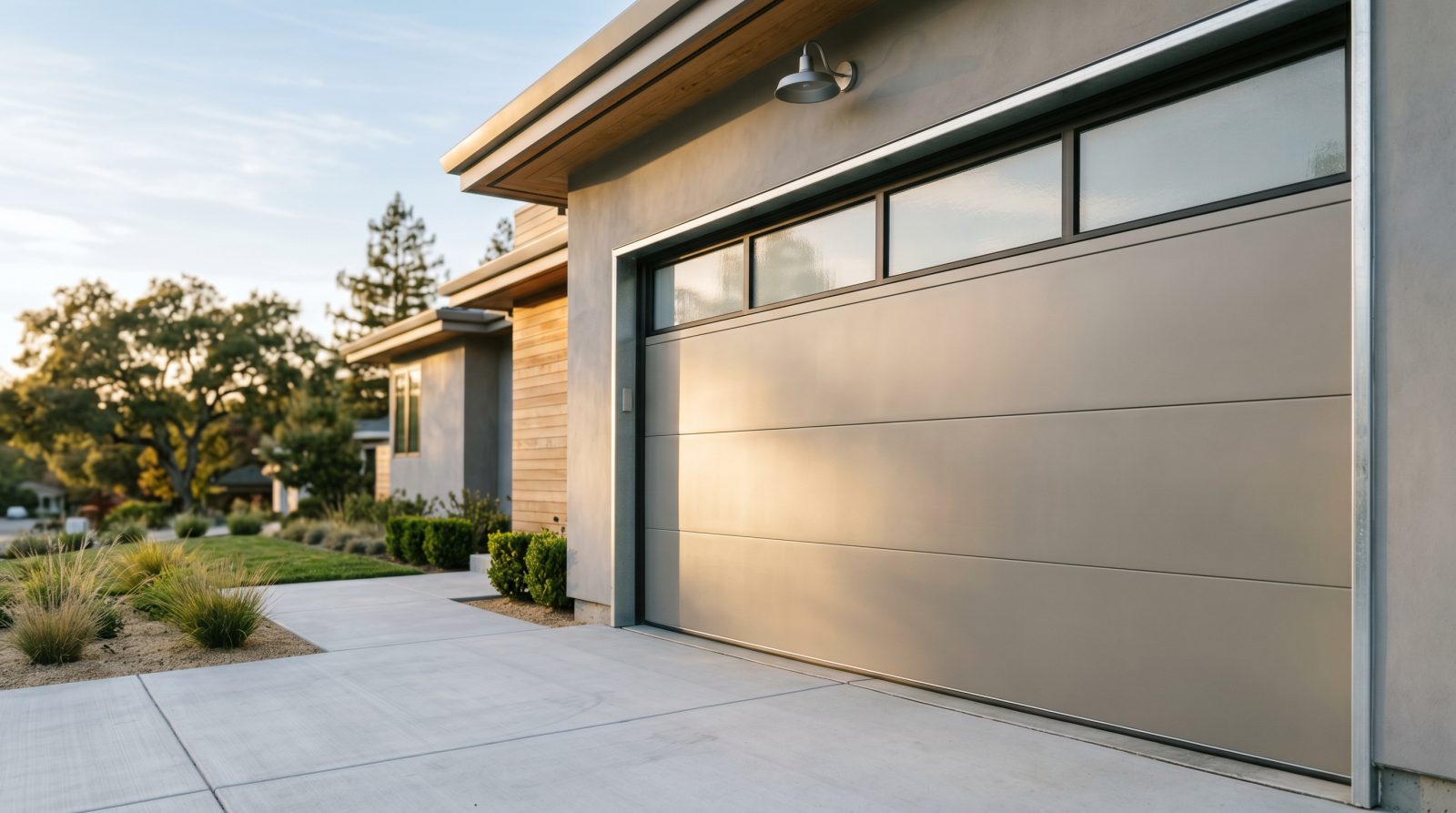
Typical Garage Door Replacement Cost Ranges (Installed)
The single biggest variable is door size. A single-car door (roughly 8 to 9 feet wide) uses less material and installs faster than a double-wide two-car door (typically 15 to 16 feet wide), so it almost always costs less for the same material and features. Beyond size, the material and insulation level swing the price more than anything else. The figures below are typical national ranges for the door plus standard installation labor; they are estimates that vary by door, material, region, and scope, not fixed quotes.
Keep in mind that the cheapest advertised numbers usually reflect a basic, non-insulated steel panel with no windows and standard hardware. As soon as you add insulation, decorative glass, custom color, or upgraded tracks and springs, you move up the range quickly. It's normal for two homes on the same street to get very different quotes simply because one owner chose a builder-grade door and the other chose an insulated carriage-house style.
- Single-car steel door, non-insulated: roughly $750–$1,500 installed (estimate)
- Single-car insulated steel door: roughly $1,000–$2,000 installed (estimate)
- Two-car steel door, non-insulated: roughly $1,200–$2,500 installed (estimate)
- Two-car insulated steel door: roughly $1,800–$3,500 installed (estimate)
- Premium materials (wood, full-view glass/aluminum, custom carriage-house): commonly $3,500–$10,000+ installed (estimate)
- Just the labor portion of a straightforward swap typically runs a few hundred dollars and up, bundled into the totals above
What Actually Drives the Price
When you see a wide range, it's because a handful of factors stack on top of each other. Understanding them helps you tell the difference between a fair quote and an inflated one — and lets you decide where it's worth spending and where it isn't.
Material is the first big lever. Steel is the most popular choice nationwide because it's durable, low-maintenance, and affordable; it spans from thin builder-grade panels to thick, multi-layer insulated doors. Aluminum and full-view glass doors look modern but cost more. Wood and wood-composite doors deliver the highest curb appeal and the highest price, and real wood needs ongoing maintenance. Insulation (measured as an R-value) adds cost but pays back in comfort, energy efficiency, and quieter operation — especially if the garage is attached or used as a workshop or gym.
Hardware and mechanics matter too. New torsion springs, heavier-duty tracks, and rollers are often included or recommended with a full replacement, and the springs in particular are safety-critical, high-tension components that should be sized to the door's weight. If your old opener is also failing, replacing it at the same time is efficient but adds to the total. Finally, anything non-standard — an unusual opening size, a steep or finished ceiling, low headroom requiring a special track, or removal and disposal of the old door — adds labor.
- Material: steel (budget to mid), aluminum/glass (mid to high), wood/composite (highest)
- Insulation / R-value: single-layer (lowest cost) up to triple-layer insulated (highest comfort and price)
- Door size and weight: single-car vs. two-car, plus tall or oversized openings
- Hardware: torsion vs. extension springs, track gauge, rollers, and reinforcement
- Opener: reusing your existing one vs. installing a new belt/chain/smart opener
- Customization: windows, decorative glass, custom color/finish, carriage-house hardware
- Site factors: old-door removal and disposal, low headroom, finished ceilings, electrical work
How Region and Climate Change the Number
This is a nationwide market, and where you live genuinely affects both what you pay and what you should buy. Labor rates track local cost of living, so the same door installed in a high-cost metro can cost noticeably more than in a smaller rural market — that alone explains a lot of the spread you'll see in any national range.
Climate should also shape the door itself, not just the price. In cold northern regions and anywhere with an attached or heated garage, a well-insulated door (higher R-value) is usually worth the upgrade for warmth, energy savings, and to keep pipes and stored items from freezing. In hot, sunny climates, insulation helps keep the garage and adjacent rooms cooler. Coastal and high-humidity areas favor corrosion-resistant materials and finishes, since salt air is hard on hardware and untreated metal. In high-wind and hurricane-prone regions, local building codes may require wind-rated (reinforced) doors, which legitimately cost more — that's a code and safety requirement, not an upsell. Snow-load and storm regions also put more stress on springs and openers over time, which is why a quality replacement can outlast a bargain one.
- Labor rates rise with local cost of living, so metro quotes often exceed rural ones
- Cold climates: insulated, higher R-value doors pay back in comfort and energy
- Hot climates: insulation helps control garage and adjacent-room temperatures
- Coastal/humid areas: choose corrosion-resistant materials and finishes
- High-wind/hurricane zones: wind-rated doors may be required by local code
Repair or Replace? How to Decide
Because this site is built around fast diagnosis of the most common problems, it's worth being honest: a new door isn't always the right call. Many issues that feel catastrophic — a door that won't open, a loud bang from the garage, a door stuck halfway or hanging crooked — are repairs, not replacements. A broken spring, a snapped cable, a door off its track, or a dead opener can usually be fixed for a fraction of replacement cost and restore the door to like-new operation.
Replacement makes more sense when the panels themselves are dented, rusted, rotting, or cracked; when the door has been hit by a vehicle and the structure is compromised; when you're chasing repair after repair on an old, worn-out door; or when you want better insulation, security, or curb appeal. A useful rule of thumb: if a single repair costs more than about half the price of a comparable new door, replacement is often the smarter long-term spend. If you're unsure, get the door looked at first — a quick professional assessment can usually tell you whether you're looking at a same-day fix or a full replacement, and that saves you from paying for a new door you didn't need.
- Usually a repair: broken spring, snapped cable, off-track door, failed opener, worn rollers
- Usually a replacement: dented/rotted/rusted panels, collision damage, repeated breakdowns
- Upgrade-driven replacement: you want more insulation, security, quieter operation, or curb appeal
- Rule of thumb: if one repair tops ~50% of a new door's price, replacement often wins
- Get a diagnosis first — many 'the door is dead' situations are a fast, affordable fix
How to Read a Quote and Avoid Overpaying
A trustworthy garage door quote is itemized. You should be able to see the door (with its material, insulation/R-value, and size), the hardware and springs, the opener if included, removal and disposal of the old door, and labor. Vague, lump-sum pricing makes it impossible to compare bids and easy to hide markups. Ask whether new springs, tracks, and rollers are included or extra, since those are common add-ons on a 'door-only' price.
Get more than one quote so you can compare apples to apples — the same nominal door can be quoted very differently depending on insulation level and hardware quality. Beware of numbers that look far below the typical range; that usually signals a thin builder-grade panel, reused worn hardware, or labor that doesn't include disposal. On the safety side, torsion springs and door balance should only be handled by someone equipped for high-tension work. A good installer will also confirm the door is properly balanced and the opener's safety reversal is working before they leave.
- Insist on an itemized quote: door, insulation/R-value, size, hardware, springs, opener, disposal, labor
- Confirm whether new springs, tracks, and rollers are included or billed separately
- Compare at least two quotes at the same material and insulation level
- Treat suspiciously low bids as a red flag for thin panels or reused hardware
- Verify the installer balances the door and tests the safety auto-reverse before finishing