The Big Picture: A Counterbalanced System, Not a Motor That Lifts
The most important thing to understand about a garage door is that the opener motor does not actually do the heavy lifting. That job belongs to the spring system. A properly adjusted door is counterbalanced, meaning the springs store and release just enough energy to offset the door's weight. When everything is in balance, you should be able to lift the door by hand (with the opener disconnected) and have it hover roughly in place at waist height rather than slamming down or flying up.
The opener's real job is far smaller: it moves the door the last bit, holds it in position, and provides convenience, security, and safety features. This is why a door with broken springs feels like it weighs a ton even though the motor is fine — and why running an opener against an unbalanced door burns out motors and strips gears prematurely. Nearly every common garage door problem traces back to this balance relationship being disturbed, whether by a worn spring, a stretched cable, or a track that has shifted out of alignment.
Thinking in terms of balance also explains the order in which a technician diagnoses a door. Before touching the opener, a good pro checks the door's balance, the springs, and the hardware, because a struggling motor is usually the symptom and not the disease. Understanding this hierarchy helps you describe symptoms accurately and avoid paying to replace the wrong component.
- Springs counterbalance the door's weight; the motor mainly moves and secures it.
- A balanced door hovers near waist height when lifted by hand with the opener disconnected.
- Most failures stem from a disturbed balance, not the opener itself.
- Running an opener against an unbalanced door is a leading cause of premature motor failure.
Springs: The Engine of the System
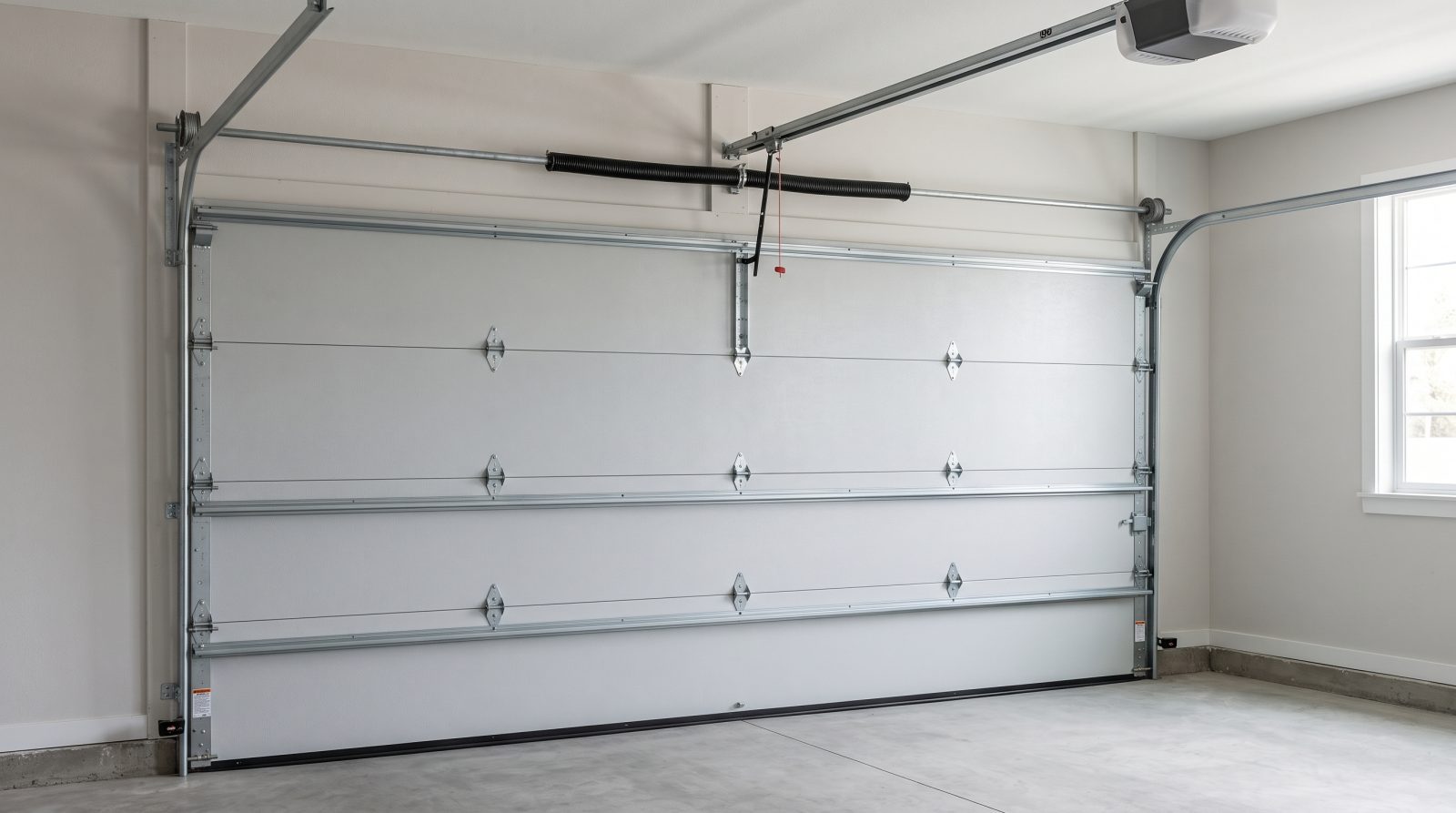
Springs are where the stored energy lives, and they come in two main types. Torsion springs mount horizontally on a steel shaft above the door opening and wind up tightly to store energy; as the door lowers, they wind tighter, and as it rises, they unwind to assist the lift. Extension springs run parallel to the horizontal tracks along each side and stretch and contract to do the same work. Torsion systems are generally smoother, longer-lasting, and safer when properly installed, which is why many modern and heavier doors use them, while extension springs remain common on older and lighter single-car doors.
Springs are rated by cycle life — one cycle is a full open and close. A standard spring is often rated around 10,000 cycles, which can mean anywhere from about seven years for a lightly used door to just a few years for a busy household that opens the door many times a day. Higher-cycle springs exist and cost more up front but can dramatically extend service life. Because springs are under enormous tension, they are the single most dangerous component in the system to service, and a sudden break can happen with a loud bang even when the door is sitting still.
When a spring breaks, the symptoms are usually unmistakable: the door becomes extremely heavy, the opener strains or only lifts the door a few inches before stopping, or you see a visible gap in a coiled torsion spring. This is the one repair we strongly recommend leaving to a trained technician. The tools, winding bars, and technique required to safely wind a torsion spring are specialized, and improper handling causes serious injuries every year. If you suspect a broken spring, the safest move is to stop using the door and request help.
- Torsion springs mount on a shaft above the door; extension springs run alongside the tracks.
- Cycle ratings (often around 10,000) determine lifespan; heavy use shortens it significantly.
- A broken spring makes the door feel extremely heavy or stops it after a few inches.
- Spring replacement is high-tension, high-risk work best left to a professional.
Cables, Drums, Tracks, and Rollers: Guiding the Door's Path
While springs supply the force, a network of hardware translates that force into smooth, controlled motion. Lift cables — steel aircraft-grade cables — connect the bottom of the door to cable drums on the torsion shaft (or directly to extension springs). As the springs wind and unwind, the drums spool the cables to raise and lower the door evenly on both sides. If a cable frays, slips off its drum, or snaps, the door can become crooked, jam, or come off its tracks entirely.
The tracks are the steel channels that guide the door, curving from vertical at the opening to horizontal along the ceiling. Rollers — small wheels at the edge of each panel — ride inside these tracks. Quality rollers with sealed bearings roll quietly and last for years; cheap or worn rollers grind, squeal, and can pop out of alignment. A door that is 'off-track' usually means a roller has left the channel, often after an impact, a broken cable, or a bent track, and continuing to operate it can cause cascading damage.
Hinges connect the individual panels so the door can flex around the curve in the track, and they take real stress with every cycle. Loose, rusted, or cracked hinges create the rattles and uneven movement many homeowners notice first. Regional climate plays a genuine role here: humid coastal air and road salt in snowy regions accelerate corrosion on cables, springs, hinges, and rollers, while dry, dusty climates can leave grit in tracks and bearings. Wherever you live, this hardware benefits from periodic light lubrication and a quick visual inspection.
- Lift cables spool around drums on the spring shaft to raise the door evenly on both sides.
- Rollers ride inside curved steel tracks; worn rollers grind, squeal, or jump the track.
- A frayed or snapped cable can leave the door crooked, jammed, or off its tracks.
- Coastal humidity and road salt speed corrosion; dusty climates clog tracks and bearings.
The Opener: Brains, Drive, and Safety
The opener is the motorized unit mounted to the ceiling, and it has three jobs: drive the door the final distance, hold it closed for security, and manage the safety and convenience features. The motor turns a drive mechanism — most commonly a chain, a belt, or a screw drive — that moves a trolley along a rail. The trolley connects to the door arm, which pushes and pulls the top of the door. Chain drives are durable and economical but noisier; belt drives run quieter, which matters when there is living space above or beside the garage; screw drives sit in between. A newer category, the wall-mounted jackshaft opener, drives the torsion shaft directly and frees up ceiling space.
Crucially, the door arm has a manual release — usually a red cord. Pulling it disconnects the door from the opener so you can operate the door by hand during a power outage or to test balance. Knowing where this cord is and how to use it is one of the most useful things any homeowner can learn, and it is also how a technician isolates the door from the motor during diagnosis.
Modern openers are required to include reversing safety systems. Photo-eye sensors mounted a few inches above the floor on each side of the opening project an invisible beam; if anything breaks that beam while the door is closing, the door reverses. Openers also sense resistance through force settings, reversing if the door hits an obstruction. Many units now add rolling-code remotes for security, battery backup, and smartphone connectivity. When a door refuses to close and the opener lights blink, misaligned or dirty photo-eyes are one of the most common and easily fixed culprits.
- Drive types: chain (durable, louder), belt (quiet), screw (middle ground), jackshaft (wall-mounted).
- The red manual-release cord disconnects the door for hand operation during outages or testing.
- Photo-eye sensors and force settings reverse the door to prevent crushing people or objects.
- Blinking opener lights plus a door that won't close often mean misaligned or dirty photo-eyes.
How the Parts Work Together in a Single Cycle
Tracing one open-and-close cycle ties the whole system together. When you press the remote, the opener motor engages the drive and moves the trolley, gently nudging the door upward. Almost immediately the springs take over the load — torsion springs unwind, releasing stored energy, while the cables spool onto the drums and lift both sides of the door in unison. The rollers guide each panel around the curve of the track as the hinges let the panels pivot, and within seconds the door rests overhead, with the springs now relaxed and the door's weight supported by the horizontal tracks.
Closing reverses the choreography. The motor lets the door descend under its own controlled weight, the springs wind back up to store energy for the next lift, the cables unspool evenly, and the photo-eyes stand guard across the threshold. If anything interrupts the beam or the door meets unexpected resistance, the safety system reverses it before it can close on an obstruction. Every part has a role, and the smoothness you feel in a healthy door is the product of all of them staying in balance and alignment.
Because the components are interdependent, a failure in one place often shows up as a symptom somewhere else. A weak spring makes the opener strain; a worn roller can knock a door out of square and stress the cables; a misaligned track makes everything bind. This is exactly why accurate diagnosis matters and why a quick professional assessment can save money: fixing the true root cause prevents the same problem from returning a month later.
- Opening: motor nudges, springs unwind and carry the load, cables and rollers lift the door evenly.
- Closing: door descends under controlled weight, springs rewind, photo-eyes guard the threshold.
- One worn part stresses the others, so symptoms often appear away from the real cause.
- Root-cause diagnosis prevents repeat failures and avoids replacing the wrong component.
Maintenance, Warning Signs, and When to Call a Pro
A little routine attention keeps the whole system healthy and helps you catch trouble before it becomes a breakdown. A few times a year, watch and listen as the door cycles, look for fraying cables and loose hardware, and apply a light, garage-door-rated lubricant to the rollers, hinges, and spring coils — but never to the tracks themselves, which should stay clean and dry so rollers can grip. Test the balance by disconnecting the opener and lifting the door halfway by hand; if it slides down or jumps up rather than holding, the spring tension needs professional adjustment. Test the photo-eye reversal by waving an object through the beam as the door closes.
Some symptoms are clear signals to stop and get help. A door that won't lift or only rises a few inches usually points to a broken spring. Grinding, popping, or a door that looks crooked suggests roller, cable, or track trouble. A door that reverses for no reason, won't close, or makes the opener hum without moving points to sensors, force settings, or a worn drive. Loud bangs, visible gaps in a coiled spring, or a door that has come off its tracks should be treated as urgent — keep people and vehicles clear and avoid forcing it.
The good news is that most of these problems are routine for a trained technician and can typically be diagnosed and repaired the same day. Spring and cable work in particular should always go to a professional because of the tension involved. No matter where you are, a local garage door pro can get to your door quickly, identify the real cause, and restore that quiet, balanced operation. Repair and replacement costs vary widely by door size, material, spring type, and your region, so treat any figures you see online as typical industry estimates rather than a fixed quote — the most reliable number comes from an on-site assessment. If your door is showing any of these warning signs, you can request a free quote and get expert eyes on it fast.
- Lubricate rollers, hinges, and spring coils with a garage-door-rated product; keep tracks clean and dry.
- Test balance by hand and test the photo-eye reversal a few times a year.
- Stop and call a pro for broken springs, frayed cables, off-track doors, or loud bangs.
- Costs vary by door, material, spring type, and region — treat online figures as estimates, not quotes.