Why Garage Door Insulation Matters More Than You Think
The garage is often the largest uninsulated opening in a house. A standard single-layer steel door is essentially a thin metal sheet, and in summer it can radiate heat into the garage like a giant oven panel; in winter it sheds warmth just as fast. If your garage shares a wall - or worse, a ceiling - with living space, bedrooms, or a bonus room, that temperature swing leaks straight into your home and quietly drives up your energy bills.
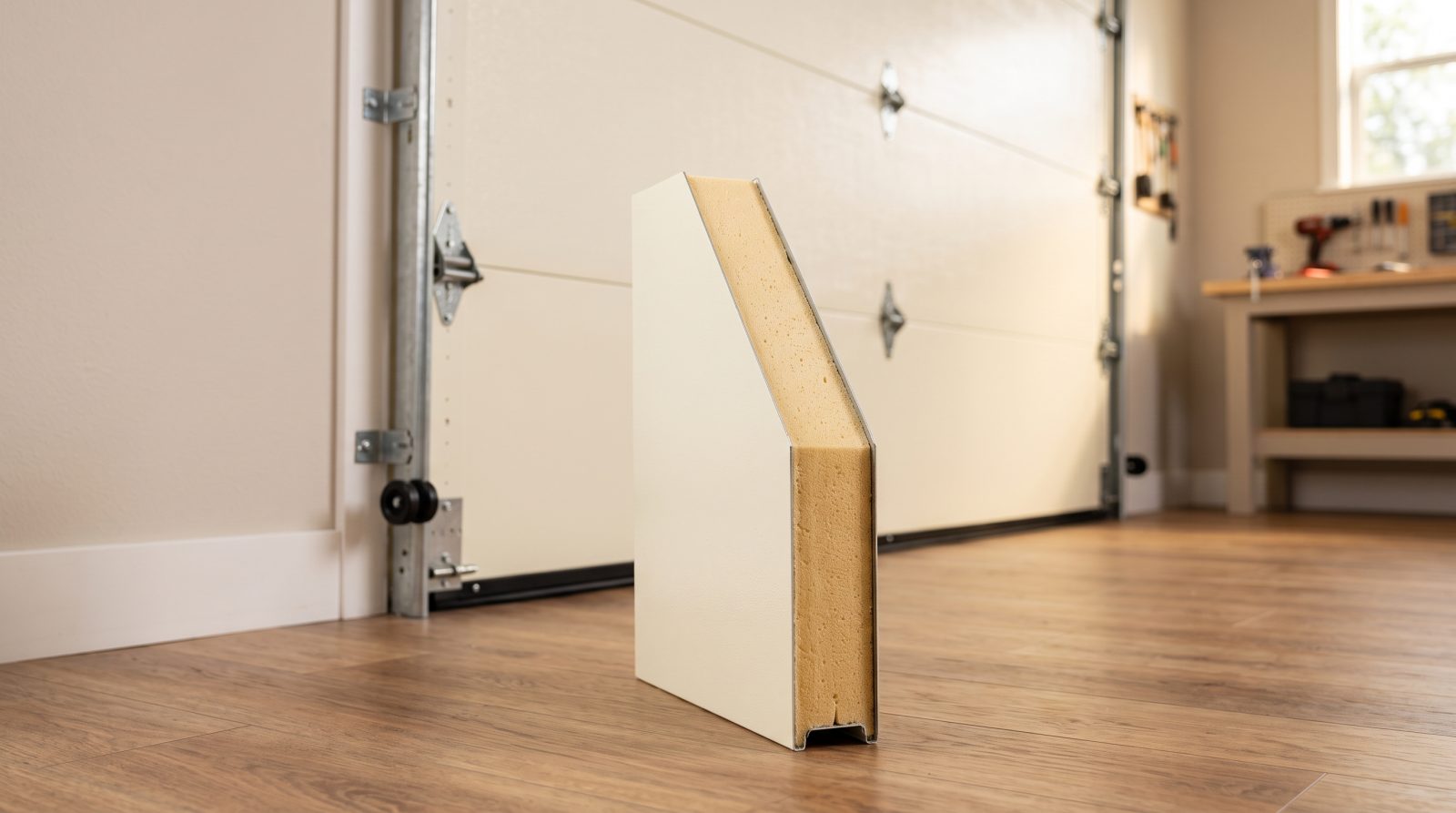
An insulated door changes the equation. By sandwiching foam (polystyrene or polyurethane) between layers of steel or other facing material, the door slows the transfer of heat in both directions. The practical result is a garage that stays closer to a usable temperature year-round, an HVAC system that doesn't have to fight a constant heat leak through the wall, and rooms above or beside the garage that feel noticeably less drafty in winter and less stifling in summer.
There's a comfort and durability story too. Insulated doors are typically stiffer and quieter - the foam dampens vibration and rattling, so the door operates with a more solid, muffled sound instead of the hollow bang of a thin single-layer panel. That added rigidity also helps the door resist dents and flexing over years of daily cycling, which is part of why insulation matters even in mild climates where energy savings alone might not justify it.
- Lower energy strain: less heat gain in summer and heat loss in winter, especially where the garage adjoins living space
- Year-round comfort: a more usable garage for a workshop, gym, home office, or laundry area
- Quieter operation: foam cores dampen vibration and reduce the hollow rattle of single-layer doors
- Added strength: layered construction resists dents and flexing better than a thin steel panel
- Protection for stored items: paints, electronics, and supplies fare better in a more stable temperature
R-Value Explained (And Why Higher Isn't Always the Whole Story)
R-value measures how well a material resists heat flow - the higher the number, the better the insulation. Garage doors are commonly marketed anywhere from around R-6 on the low end to the high teens or low twenties for premium polyurethane doors. As a rough orientation: a single-layer door has effectively no meaningful R-value, mid-range insulated doors often land somewhere in the R-9 to R-13 range, and high-performance polyurethane doors can climb into the R-16 to R-18+ territory. Treat any single figure as a starting point, not a guarantee.
The important caveat is that the headline R-value usually describes the insulation at the center of a panel - not the door as a complete, installed system. Real-world performance is reduced by the gaps around the perimeter, the seams between panels, the seal at the floor, and the simple fact that a garage door has to move and therefore can never be sealed as tightly as a fixed wall. Two doors with the same advertised R-value can perform differently depending on how well they're built and weatherstripped. This is why a door that's properly installed and well-sealed often beats a higher-rated door that's poorly fitted.
There's also a difference in how the foam is made. Polystyrene insulation typically comes as rigid panels slid into the door sections, while polyurethane is injected as a liquid that expands and bonds to the steel skins. Polyurethane generally delivers more insulation per inch and creates a stiffer, more tightly bonded panel, which is why premium doors lean on it. For most homeowners, the smarter question isn't simply 'what's the highest R-value I can buy' but 'what level of insulation actually matches how I use this garage and the climate I live in.'
- R-value = resistance to heat flow; higher means better insulation
- Common ranges run roughly R-6 to R-13 for mid-tier doors and R-16+ for premium polyurethane
- Center-of-panel ratings overstate real performance once seals, seams, and gaps are factored in
- Polyurethane (injected foam) usually outperforms polystyrene (panel foam) per inch and adds rigidity
- A well-sealed mid-range door can outperform a poorly installed high-R door
Matching Insulation to Your Climate and How You Use the Garage
Because this is a national resource, it's worth being honest that the 'right' amount of insulation genuinely varies by region. In hot southern and southwestern climates, the main enemy is heat gain - an insulated door keeps the garage from becoming a heat trap and reduces the load on adjacent cooled rooms. In cold northern climates, the priority flips to retaining heat and avoiding the deep chill that can affect water lines, vehicles, and any heated space nearby. In mixed and coastal climates, you're balancing both, and you may care as much about humidity, noise, and comfort as raw energy numbers.
How you actually use the garage matters just as much as your zip code. If the space is purely for parking and the room above it is unfinished or unused, a moderate insulation level is often plenty. If you've turned the garage into a gym, workshop, home office, studio, or laundry area - or if there's a bedroom directly above it - it's usually worth stepping up to a higher-R, polyurethane door and paying close attention to weather sealing. An attached garage that buffers your living space justifies more insulation than a detached, rarely entered structure.
A practical way to decide: think about the temperature difference you're trying to manage and how often you're in the space. The bigger the gap between outdoor extremes and the comfort you want inside, and the more time the garage is occupied, the more insulation earns its keep. Climate, attachment to living space, and daily use together point you toward the right tier far more reliably than chasing the single biggest number on the spec sheet.
- Hot climates: prioritize blocking heat gain into the garage and adjacent cooled rooms
- Cold climates: prioritize heat retention and protecting nearby plumbing and heated space
- Mixed/coastal climates: balance heat, humidity, and noise - comfort often drives the choice
- Living space above or beside the garage strongly favors a higher-R, well-sealed door
- Detached, rarely used garages can do fine with moderate insulation
Beyond the Door: Seals, Gaps, and the Details That Decide Real Performance
The most overlooked truth about garage door insulation is that a great door with poor sealing is a half-measure. Heat and cold sneak in through the perimeter, the bottom of the door, and the joints between sections - the very places an R-value rating ignores. Addressing these is often the highest-return, lowest-cost part of improving comfort, and in many cases it's the difference between an insulated door that 'works' and one that simply looks the part.
The bottom seal (the flexible strip along the base) is the single biggest gap-closer, and it wears out with use - cracking, flattening, or letting daylight through at the corners. Perimeter weatherstripping around the sides and top of the opening blocks drafts that slip past the door's edges, and the seals between panels keep the sections from leaking at the seams. On uneven garage floors, a worn or wrong-sized bottom seal can leave a surprisingly large gap that undermines everything the foam is doing. These components are normal wear items, not signs of a bad door.
It's also worth knowing how insulation interacts with everyday repairs. A heavier, layered insulated door puts more demand on the springs and opener, so when those parts are serviced they need to be matched to the door's actual weight. Insulation can hide or muffle early warning signs - a worn roller or a fraying cable may be quieter behind a foam-cored door - which makes periodic inspection worthwhile. If your garage feels drafty despite an insulated door, the culprit is usually the seals and gaps, not the foam, and that's a fast, affordable issue to diagnose.
- Replace a worn bottom seal first - it's the biggest single gap and a common wear item
- Add or refresh perimeter weatherstripping around the sides and top of the opening
- Check panel-to-panel seals for daylight, especially on older or impact-dented doors
- Match springs and opener to the heavier weight of an insulated door when servicing
- Inspect rollers, cables, and balance periodically - a quiet insulated door can mask early issues
Repair, Retrofit, or Replace? A Practical Way to Decide
Not everyone needs a brand-new door to get the benefits of insulation. The right move depends on the condition of what you already have. If your current door is structurally sound and operating well but simply uncomfortable, the most cost-effective path is often to seal it properly and, where appropriate, add a retrofit insulation kit to the existing panels. This won't match the performance of a purpose-built polyurethane door, but it can meaningfully improve comfort and quiet at a fraction of the cost.
Replacement makes more sense when the existing door is damaged, badly out of balance, riddled with dents, or so thin and worn that retrofitting would be putting effort into a failing structure. It's also the better choice if you're upgrading the garage into a living or working space, where you want the rigidity, sealing, and insulation of a true insulated door from the start. In that case, choosing the right R-value tier, foam type, and weather sealing up front pays off for years.
As for cost, treat any figure as a typical industry range that varies widely by door size, material, insulation type, hardware, and local labor - never a fixed quote. A retrofit and reseal is generally the least expensive option; a quality insulated replacement door is a larger investment that reflects its construction and longevity. The honest answer for your specific door usually comes from a hands-on look: a local pro can assess balance, seal condition, panel integrity, and how you use the space, then tell you whether sealing, retrofitting, or replacing is the smart call. Wherever you are, the fastest way to a confident decision is to have someone nearby diagnose it - request a free quote to get started.
- Sound door, just uncomfortable: seal it and consider a retrofit insulation kit first
- Damaged, dented, or unbalanced door: replacement is usually the wiser investment
- Converting the garage to living/work space: choose a true insulated door from the start
- All costs are typical ranges that vary by size, material, and region - never a fixed quote
- A hands-on local diagnosis is the fastest route to the right repair-or-replace decision