What Makes a Garage Door "Modern"
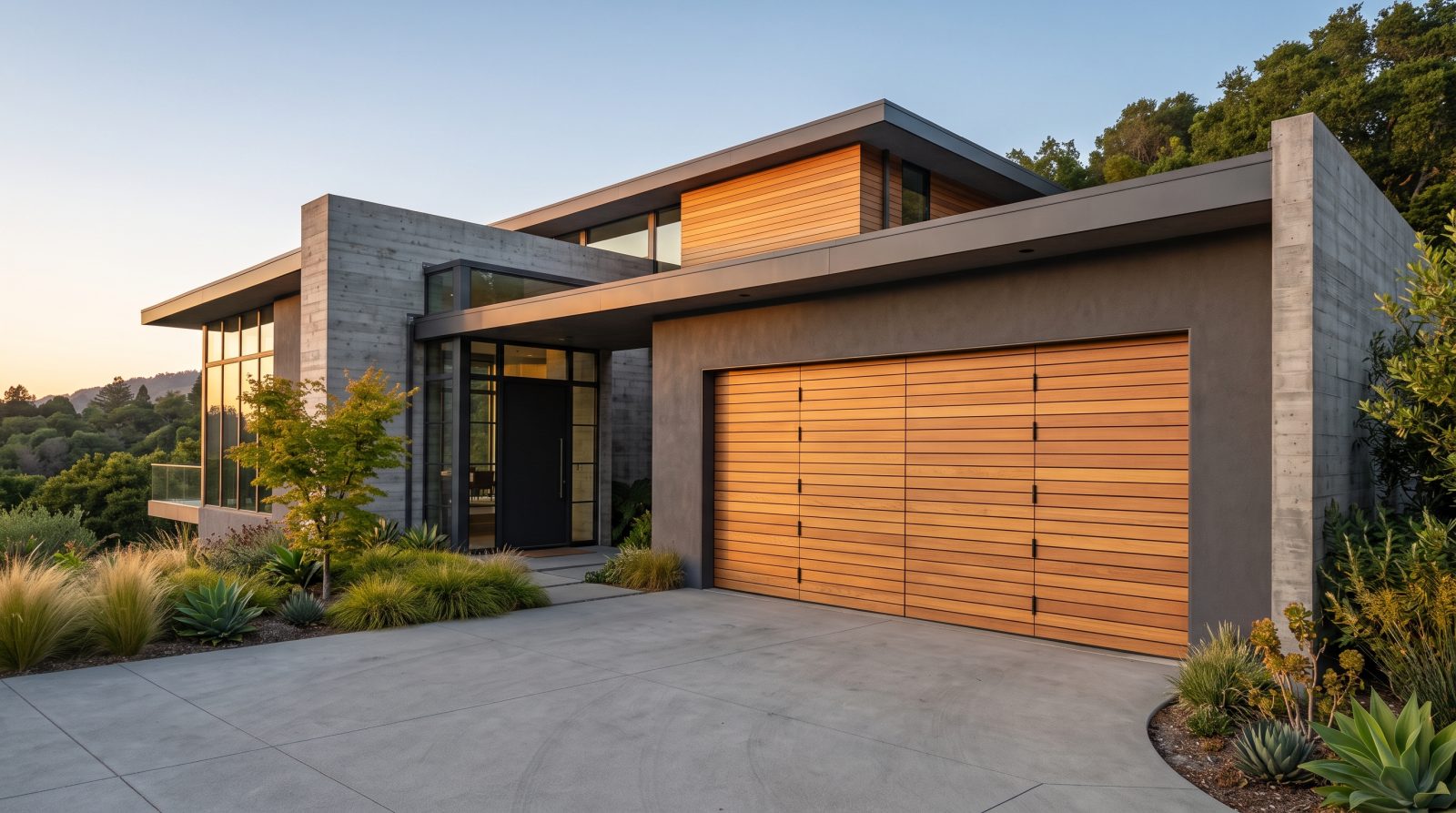
The word "modern" gets used loosely, but in the garage door world it points to a specific design language. Contemporary doors emphasize clean geometry over ornamentation: long horizontal lines, flush or near-flush surfaces, and an absence of the decorative stamping found on traditional raised-panel doors. Many modern doors integrate glass in repeating bands or as full-view panels, and they tend to use slimmer rails and minimal visible hardware so the door reads as a single calm plane rather than a busy collection of squares.
Underneath the styling, modern doors are still sectional doors that roll up on tracks, balanced by springs and driven by an opener, which means the core mechanics you'd repair are familiar. What changes is the emphasis. A full-view aluminum-and-glass door weighs and balances differently than a stamped steel one. A flush finish shows dings and scuffs more readily. A matte powder coat protects differently than a baked-on factory paint. Knowing these differences up front helps you choose a door that will look right for years and stay easy to service.
- Horizontal-line designs: long, slim sections that emphasize width and a low, grounded look
- Full-view aluminum and glass: maximum daylight and a showroom feel, popular on contemporary and mid-century homes
- Flush steel: smooth, panel-free faces that read as minimalist and pair well with bold colors
- Frosted, tinted, and clear glass options that balance light, privacy, and street-facing aesthetics
Contemporary Materials and How They Behave Over Time
Material is the single biggest factor in how a modern door looks, what it costs, and how it ages, so it deserves more thought than the color. Each common material carries its own trade-offs between appearance, weight, insulation, and long-term maintenance, and those trade-offs vary meaningfully with regional climate.
Aluminum-and-glass doors deliver the signature contemporary look and resist rust, which makes them a frequent choice in coastal and humid regions where steel can corrode. The trade-off is that aluminum frames are softer and can dent, and large glass packages add weight and reduce insulation unless you specify insulated glazing. Steel remains the workhorse: strong, available in flush and woodgrain-embossed faces, and easy to insulate, though in salty coastal air it needs a quality finish to fend off rust. Faux-wood composite and fiberglass options chase the warmth of timber without the constant upkeep real wood demands, and they tolerate humidity swings better than solid wood, which can warp or crack in regions with hard freeze-thaw cycles or intense dry heat.
From a repair standpoint, the material dictates the failure modes you should watch for. Aluminum panels are more prone to cosmetic denting; steel can develop rust at the bottom edge where moisture collects; glass panels can crack and usually need section or pane replacement rather than a patch; and heavier glass doors put more demand on springs and opener systems, which makes correct balance and spring sizing more important, not less.
- Aluminum + glass: rust-resistant and bright, but softer and heavier with large glazing; favored in coastal and humid climates
- Insulated steel: strong, affordable, and easy to insulate; protect the finish in salt-air regions to prevent rust
- Composite and fiberglass faux-wood: warmth without the upkeep of real timber; handles humidity better than solid wood
- Solid wood: premium and customizable, but the most maintenance-intensive and sensitive to freeze-thaw and dry-heat extremes
Finishes, Colors, and Glass: The Details That Define the Look
Once the material is set, the finish is what carries the modern aesthetic. Matte and satin finishes have largely replaced high-gloss for contemporary builds because they hide minor surface imperfections and read as more architectural. Powder-coat and baked-on factory finishes are generally more durable and color-stable than field-applied paint, an advantage worth weighing if your door faces strong sun, which fades color faster in high-UV regions of the South and Southwest.
Color choice on modern doors tends toward confident neutrals and darks: charcoal, deep bronze, matte black, and off-white are perennial contemporary picks, while woodgrain laminates let a steel or composite door mimic walnut, oak, or cedar without the maintenance of real wood. Dark colors look striking but absorb more heat, which in hot, sun-exposed climates can stress finishes and, over time, the door's components, so insulation and a quality finish matter more when you go dark.
Glass is where contemporary doors earn their reputation. Clear glass maximizes light and shows off the interior; frosted or obscure glass keeps the bright look while adding privacy; and tinted or low-E glazing helps manage heat gain in sunny regions. Tempered or insulated glass costs more but adds safety and energy performance. Whatever you choose, remember that glass changes the door's weight and serviceability: a cracked pane is a glass repair, not a body-shop fix, and the added mass means the spring system has to be matched correctly to keep the door balanced and safe to operate.
- Matte and satin finishes hide minor imperfections and suit the contemporary look better than gloss
- Factory powder-coat and baked-on finishes resist fading better than field paint, which matters most in high-UV regions
- Woodgrain laminates deliver a timber appearance on low-maintenance steel or composite
- Glass options trade light against privacy and heat: clear, frosted, tinted, and insulated/low-E each serve a different priority
Repairing and Maintaining a Modern Door: What's Different
A common misconception is that a sleek modern door is somehow harder to repair than a traditional one. In practice, the mechanical heart of the door, the springs, cables, rollers, tracks, and opener, is the same family of parts you'd service on any sectional door. The most frequent repairs on modern doors are the same ones that top the list everywhere: a broken torsion or extension spring, a door off its track, frayed or snapped cables, worn rollers, and opener faults. Those are the bread-and-butter fixes a competent local technician handles routinely.
Where modern doors differ is in the cosmetic and material-specific details. A dented aluminum panel or a cracked glass insert is usually addressed by replacing the affected section or pane rather than repairing the face, because the clean look depends on an unblemished surface. Flush and matte finishes also show scuffs more readily, so handling and alignment during any repair matters more for the final appearance. And because glass-heavy doors weigh more, getting the spring tension and balance exactly right is essential, both for safety and to avoid prematurely wearing the opener.
Maintenance is straightforward and pays off. Keep tracks clear and rollers lubricated with a proper garage door lubricant (not a general-purpose spray that gums up), wipe down finishes to prevent grime buildup, inspect the bottom seal and weatherstripping seasonally, and watch for early warning signs: a door that jerks, sags on one side, gets noticeably louder, or reverses unexpectedly. Two safety points apply to every door regardless of style: torsion springs hold dangerous tension and should be adjusted or replaced by a trained technician, and you should test the auto-reverse safety feature periodically by placing an obstruction in the door's path. When a repair is beyond routine DIY, the fastest path is a qualified local pro who can diagnose the specific material and system on your door.
- Most common modern-door repairs are the universal ones: springs, cables, off-track, rollers, and openers
- Cosmetic damage on aluminum or glass is typically a section or pane replacement, not a surface repair
- Heavier glass doors demand correct spring sizing and balance for safe, long-lasting operation
- Routine care: lubricate rollers and hinges, clean tracks and finishes, inspect seals seasonally, and test auto-reverse safety
Smart Features, Insulation, and Choosing a Door That Lasts
Modern doors increasingly arrive paired with modern openers. Wi-Fi-connected openers let you open, close, and check the door's status from your phone, get alerts if it's left open, and grant temporary access to family or deliveries. Battery backup keeps the door operable during a power outage, which is genuinely useful in storm-prone regions, and quieter belt-drive openers are worth considering for attached garages with living space above or beside them. These features add convenience but also add components, which is one more reason to keep the opener firmware updated and the mechanical system properly maintained.
Insulation deserves attention even if you don't heat the garage. An insulated door is more rigid (helpful for large modern panels), quieter in operation, and far more comfortable in climates with hot summers or cold winters, especially when the garage shares a wall or ceiling with conditioned living space. Insulation values are described by an R-value, and a higher number means better thermal performance; the right level depends on your climate and how the garage is used, so it's a place where matching the door to your region genuinely matters.
When you're choosing, think past the showroom photo to the full life of the door. Match the material and finish to your local climate, specify insulation appropriate to your use, choose a glass package that balances light and privacy for your street, and confirm the spring system is sized for the door's actual weight. Get the design right and a modern door is both a striking upgrade and a reliable, serviceable piece of equipment. If you're weighing options or already dealing with a door that isn't working the way it should, a local specialist can assess your specific door and help you decide whether to repair, upgrade a section, or replace, request a free quote to get matched with a pro near you.
- Smart openers add phone control, open-left alerts, and access sharing; battery backup helps in outage-prone areas
- Insulation improves rigidity, noise, and comfort, especially where the garage adjoins living space
- R-value indicates thermal performance; the right level depends on your climate and how you use the garage
- Match material, finish, insulation, glass, and spring sizing to your region and door weight for a door that lasts