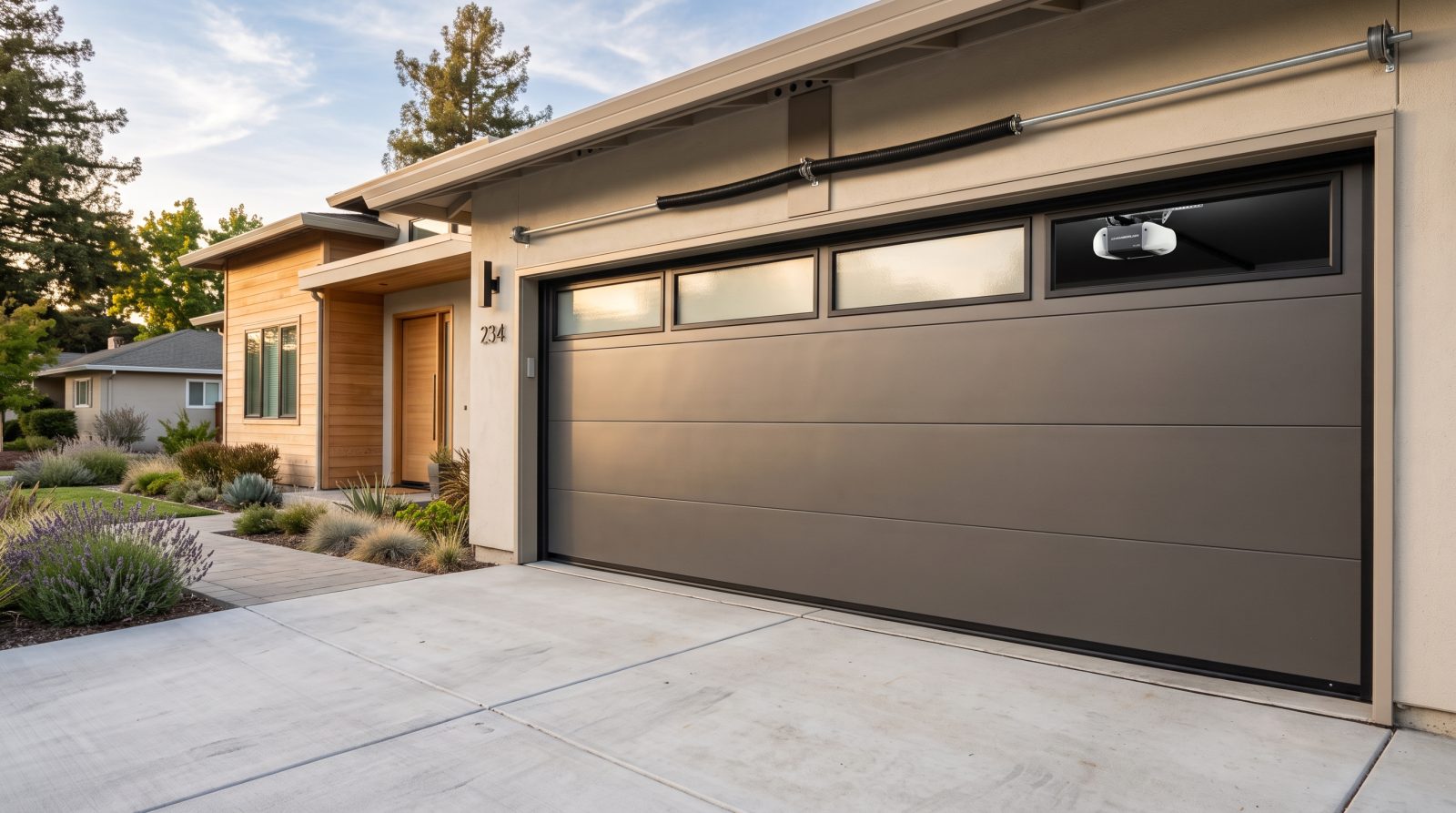
When a new door makes more sense than another repair
Most of what we help people with is fast repair work: a broken spring, a dead opener, a door that jumped its track, a frayed cable. Those are usually worth fixing because the door itself is sound. But there is a tipping point where repairs stop being the smart money, and recognizing it early saves you from paying twice.
A few honest signals that point toward replacement rather than repair: the door has structural rust or rot in the panels or bottom section; multiple sections are cracked or dented through; the door is a single-layer steel or older wood door with no insulation and your garage is attached to living space; or you are facing several major repairs at once (springs, rollers, cables, and an aging opener) whose combined cost approaches the price of a new door. Safety matters too. Older one-piece tilt-up doors and very old hardware can lack modern reinforcement and may be harder to service safely.
There is also the practical, everyday reason: a door you have to baby, lift by hand, or fight every cold morning is a door that has already failed at its one job, which is to open and close reliably the moment you need it. If you are not sure which side of the line you are on, a local pro can inspect the door and give you a straight repair-versus-replace recommendation before you commit.
- Replace when: panels are rusted/rotted through, multiple sections are cracked, or the door is uninsulated next to living space
- Replace when: several big repairs stack up at once and rival the cost of a new door
- Repair when: the door body is solid and the problem is an isolated part like a spring, cable, roller, or opener
- Get an inspection first: a pro can confirm repair-versus-replace and document why before you spend
How garage doors are measured (and why DIY measuring goes wrong)
Measuring is where a good installation is won or lost, and it is more involved than measuring the door opening. A correct measurement set tells the installer not just what size door you need, but whether your garage even has room for the hardware and which spring system and track type will fit.
Six measurements drive the order. First, the rough opening width and height (the actual finished opening the door has to cover). Second, the side room, the space to the left and right of the opening, which the vertical track and spring hardware live in. Third, the headroom, the distance from the top of the opening to the ceiling or lowest obstruction, which determines whether a standard, low-headroom, or high-lift track system is required. Fourth, the backroom, the depth from the opening back into the garage, which has to clear the fully open door plus the opener rail. Fifth and sixth, the location of the studs, electrical, and any obstructions like pipes, lights, or shelving that sit in the path of the tracks.
This is the most common place homeowners trip up. People measure the existing door rather than the opening, forget that headroom and side room dictate the hardware, or assume a 'standard' size when their opening is slightly off. Single-car openings commonly run around eight to nine feet wide and double-car openings around sixteen feet, but 'common' is not 'yours,' and ordering on assumption leads to gaps, returns, and delays. A professional measure-up before ordering is cheap insurance, which is why reputable installers do it as a standard step rather than quoting blind.
- The six measurements: opening width, opening height, side room, headroom, backroom, and obstructions
- Headroom and side room decide the hardware (standard vs. low-headroom vs. high-lift track and spring placement)
- Backroom must clear the open door plus the opener rail, so deep shelving or a low ceiling can change the plan
- Measure the opening, not the old door, and confirm with a pro before ordering to avoid a wrong-size door
The installation process, step by step
A typical single-door replacement is usually a same-day job for an experienced crew, though larger doors, custom sizes, or tricky hardware can run longer. Knowing the sequence helps you understand what you are paying for and what a quality job looks like.
First comes removal: the old door is taken down section by section, and the old springs are carefully unwound and removed. Spring removal is genuinely dangerous because the springs are under high tension, which is the single biggest reason this is not a recommended DIY job. Next, the installer inspects and preps the opening, checks that the frame and jambs are sound, and replaces or shims anything that is out of square. Then the new track is mounted plumb and level, because everything downstream depends on the tracks being true.
With tracks set, the door sections go in from the bottom up, each one leveled and connected with hinges and rollers as the panels stack. The spring system is installed and wound to the correct tension for the weight of that specific door, then the cables and safety components are connected. If you are adding or reusing an opener, it is mounted, the rail and travel limits are set, and the force settings are adjusted so the door reverses properly. The job finishes with the part that protects your family: testing the auto-reverse and the photo-eye safety sensors, checking the manual release, balancing the door so it holds at the halfway point, and walking you through how to operate and maintain it. A good installer leaves the door balanced, quiet, and safe, not just hung.
- Remove old door and safely unwind/remove the old springs (high-tension, not a DIY step)
- Inspect and prep the opening; correct anything out of square before mounting hardware
- Mount tracks plumb and level, then stack and connect door sections from the bottom up
- Install and tension springs to the exact door weight, connect cables, then set the opener
- Finish with safety testing: auto-reverse, photo-eyes, manual release, and a balance check
Choosing the right door: materials, insulation, and climate
The best door for your home depends heavily on where that home is, which is something a national perspective makes clear. The same door that is ideal on a mild coast can be the wrong call in a region with hard freezes or relentless heat, so it is worth matching the material and insulation to your climate rather than just the color.
Steel is the most popular choice nationwide because it is durable, low-maintenance, and available in a wide range of insulation levels. Aluminum and full-view glass doors are lighter and modern-looking but conduct more temperature. Wood and wood-composite doors deliver a premium look, with real wood needing more upkeep, especially in humid or sun-baked regions where finishes break down faster. Fiberglass and composite resist dents, rust, and moisture, which can be a smart fit in coastal or high-humidity areas.
Insulation is measured by R-value, and it matters most if your garage is attached to the house, shares a wall with a bedroom, or sits in a climate with cold winters or hot summers. In northern and mountain regions, a well-insulated door helps hold heat and resists warping through freeze-thaw cycles; in the Sun Belt, insulation keeps the garage from turning into an oven and eases the load on anything cooled nearby. Insulated doors are also noticeably quieter, which homeowners with rooms above or beside the garage tend to appreciate immediately. There is no single 'best' door, only the best door for your climate, your home, and how you use the garage, and a local installer who knows your region can steer you well.
- Steel: durable, low-maintenance, widely available in multiple insulation levels (the common default)
- Wood/composite: premium look; real wood needs more upkeep in humid or high-sun regions
- Fiberglass/composite: resists dents, rust, and moisture, a strong coastal/humid-climate option
- Insulation (R-value) matters most for attached garages, shared bedroom walls, and hot or cold climates
- Insulated doors are also quieter, a real benefit when there is living space above or beside the garage
Cost expectations, timeline, and getting it done right
Pricing varies widely and any honest answer has to be a range rather than a quote. As a general industry guide, many standard single-car door installations fall in the rough neighborhood of several hundred to roughly fifteen hundred dollars installed, while larger double doors, premium materials like wood or full-view glass, custom sizes, high-insulation builds, and added smart openers can push a project well higher. Treat any number here as a typical estimate that varies by door, material, region, and the condition of your existing opening, not a price you are being promised. Things like a rotted frame, electrical work for a new opener, or hauling away the old door can also affect the final figure.
On timeline, a straightforward replacement is frequently completed in a few hours to most of a day. The longer waits are usually on the front end: custom or specialty doors are ordered and can take days to weeks to arrive, while many in-stock standard doors can be scheduled quickly, often with same-day or fast turnaround for the install itself once the door is on hand. When you reach out, asking about door availability up front sets realistic expectations.
To get a result you will be happy with for years, three things matter most: an accurate professional measure-up before ordering, correct spring and balance setup for your specific door, and a real safety test at the end. Those are exactly the steps a quality installer treats as non-negotiable. When you are ready, the simplest next move is to request a free quote and have a local pro confirm your measurements, walk through door and insulation options suited to your area, and give you a clear written estimate before any work begins.
- Costs are estimates, not quotes: standard single doors often run several hundred up to roughly $1,500 installed, with larger/premium/custom builds higher
- Final price shifts with material, door size, insulation level, opener, frame condition, and old-door haul-away
- Install itself is often a few hours to a day; the wait is usually ordering a custom or out-of-stock door
- Insist on three things: a pro measure-up before ordering, correct spring/balance setup, and an end-of-job safety test
- Request a free quote to confirm measurements and get a clear written estimate before work starts