What a Sectional Garage Door Is — and Why It's the Most Common Type
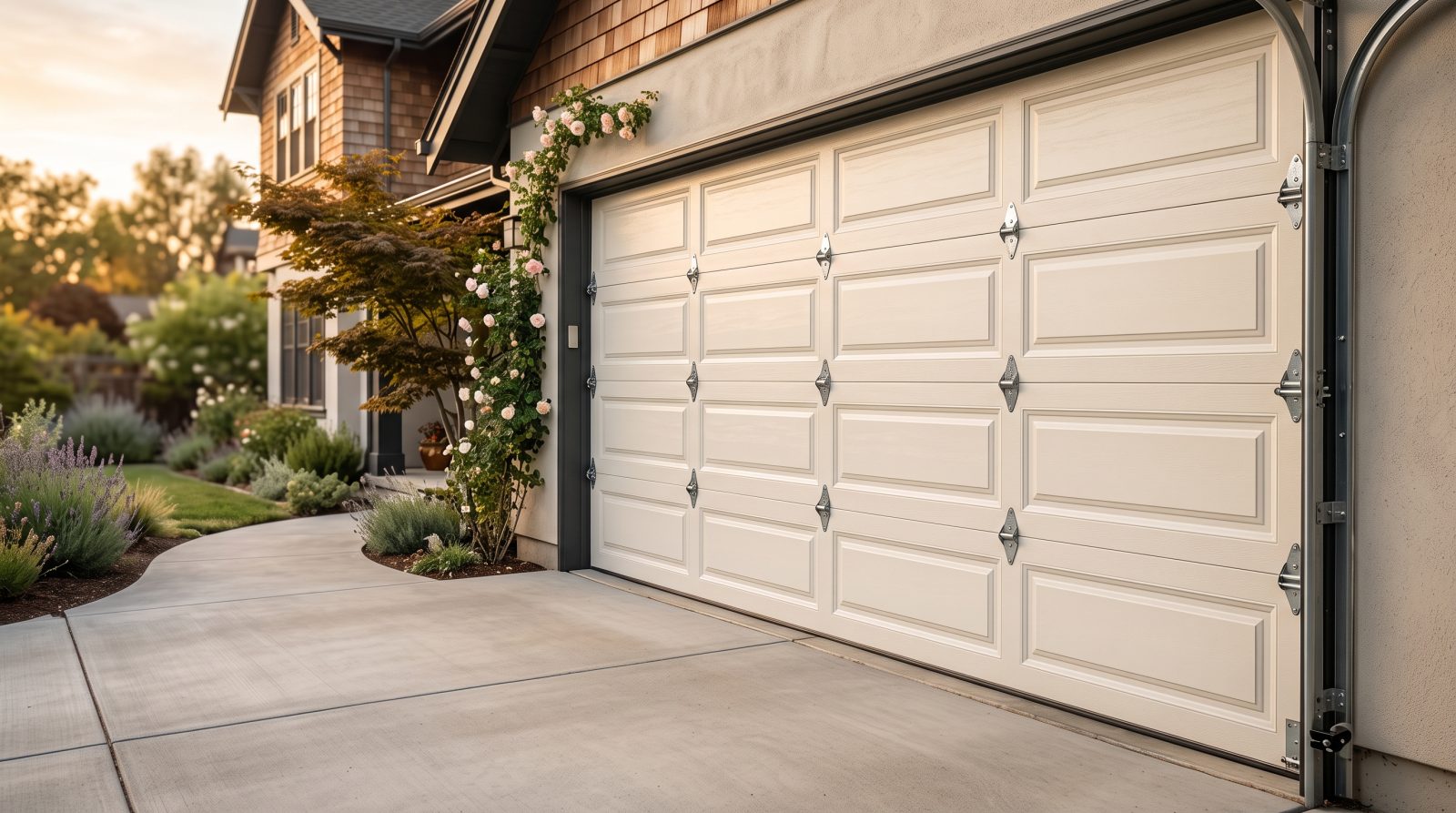
A sectional garage door is made up of several horizontal sections, or panels, connected to each other by hinges along their top and bottom edges. When the door opens, those hinges let each panel pivot relative to the one above it, so the whole door can bend around the curved part of the track and travel from vertical (closed) to horizontal (open, parked under the ceiling). When closed, the panels line up flat to form a single weather-tight wall. This panel-and-hinge construction is the defining feature that sets sectional doors apart from one-piece tilt-up doors, swing-out carriage doors, and roll-up coiling doors more common on commercial buildings.
The reason sectional doors dominate residential garages comes down to practicality. Because the door rolls straight up rather than swinging outward, you can park right up to it without losing driveway space, and there's no arc of door sweeping into the garage interior. The sectioned design also handles insulation extremely well — manufacturers can fill each panel with polystyrene or polyurethane foam — which matters a great deal in regions with cold winters or hot summers where the garage shares a wall with living space. Panels are commonly made from steel, aluminum, wood, or composite, in single-layer, double-layer (with backing), or triple-layer (insulated and backed) constructions.
Understanding that your door is a system of independent panels riding on rollers, guided by tracks, and counterbalanced by springs is the key to understanding why it fails the way it does — and why a fix to one part so often restores the whole door to smooth operation.
- Panels (sections): horizontal segments that make up the door face, hinged together so the door can bend around the track curve
- Hinges: connect panels and allow them to pivot; some also hold the roller stems
- Rollers: small wheels (steel or nylon) that ride inside the tracks and let the door glide
- Tracks: vertical and horizontal rails, joined by a curve, that guide the door's path
- Springs (torsion or extension): store energy to counterbalance the door's weight so it's easy to lift
- Cables, drums, and bottom brackets: transfer spring force to the door and connect everything safely
How a Sectional Door Actually Moves: Panels, Rollers, Tracks and Springs
When you press the opener button or lift the door by hand, you're not really lifting the full dead weight of the door — a properly balanced sectional door is doing most of that work for you through its counterbalance system. The heart of that system is the spring. Most modern residential doors use a torsion spring mounted on a shaft above the opening; as the door closes, the spring winds up and stores energy, and as the door opens, it releases that energy to assist the lift. Older or lighter doors may instead use a pair of extension springs running along the horizontal tracks that stretch and contract. Either way, cables connect the spring system to the bottom of the door so the force is delivered evenly to both sides.
As the door travels, the rollers on each panel ride inside the tracks. The vertical track keeps the door aligned while it's closed, the curved section lets it change direction, and the horizontal track holds it overhead when open. The hinges between panels flex precisely at the curve, which is why a single bent panel or a misaligned hinge can throw the whole door off. The opener itself, when present, mostly provides convenience and a controlled, motorized lift — but it relies entirely on the springs being correctly balanced. An opener forced to do the spring's job will wear out fast.
This is why a good technician always checks balance first. A quick test — disconnecting the opener and lifting the door by hand to about waist height — tells an experienced eye a lot. A balanced door stays roughly in place; one that slams down or flies up is signaling a spring or cable problem that's putting strain on every other component.
- Torsion springs (above the opening) are the most common on newer and heavier doors; extension springs (along the tracks) appear on lighter or older setups
- The opener provides convenience and control, not the lifting power — springs do the heavy work
- A balanced door should hold its position when raised halfway by hand with the opener disconnected
- Most failures trace back to the counterbalance system or to something interrupting the door's path along the tracks
The Most Common Sectional Door Problems (and What They Usually Mean)
Because sectional doors are everywhere, the same handful of issues come up again and again — which is reassuring, since it means an experienced local pro has almost certainly seen yours before. The single most common serious failure is a broken torsion or extension spring. Springs are under enormous tension and are rated for a finite number of cycles (each open-and-close is one cycle), so they eventually fatigue and snap, often with a loud bang. A door with a broken spring may refuse to open, feel impossibly heavy, or open a few inches and stop. This is not a DIY repair — spring tension can cause serious injury — and it's the clearest case for calling a professional.
The next cluster of problems involves the door coming off-track or binding. A roller that jumps the rail, a bent track, a loose bracket, or a snapped lift cable can leave the door crooked, jammed, or hanging at an angle. Off-track doors should be stopped immediately and not forced, because running the opener against a misaligned door can bend panels and worsen the damage. Opener-related issues are also frequent: the remote stops working, the door reverses before closing, or the motor hums but the door doesn't move. Many of these come down to misaligned or dirty safety photo-eye sensors near the floor, dead remote batteries, worn drive gears, or limit settings that have drifted. Finally, noise and rough movement — grinding, squealing, or shuddering — usually point to dry or worn rollers and hinges, loose hardware, or a door that's slipping out of balance.
Climate plays a real role in which of these you'll see. In cold northern regions, metal contracts and lubricant thickens, so doors are more likely to feel stiff, stick to the floor in ice, or stress springs in winter; insulated panels and the right cold-weather lubricant help. In hot, humid, or coastal areas, corrosion on springs, cables, hinges, and steel panels accelerates, and salt air can shorten hardware life. In storm-prone regions, wind and debris can dent panels or knock doors off-track. None of this changes how the door works — but it does change how often parts wear and what a technician will inspect first.
- Broken spring: loud bang, door won't open or feels extremely heavy — call a pro, do not attempt yourself
- Off-track or broken cable: door is crooked, jammed, or hanging at an angle — stop using it immediately
- Opener won't close (reverses): often misaligned or blocked safety photo-eyes near the floor, or a sensitivity/limit setting
- Remote or keypad dead: frequently batteries, a tripped lock mode, or a programming/range issue
- Noisy or jerky operation: dry or worn rollers and hinges, loose bolts, or a door drifting out of balance
- Damaged panel: dents from cars, weather, or impact can affect alignment and the door's seal
Sectional Door Repair vs. Replacement, and What It Typically Costs
One of the practical advantages of a sectional door is that it's modular — so you can often repair just the failed component rather than replacing the whole door. A single broken spring, a set of worn rollers, a frayed cable, or even one damaged panel can frequently be swapped out while keeping the rest of the door intact, especially if the door is otherwise sound and parts for the model are still available. Replacement of the entire door usually makes sense when there's widespread corrosion or rot, multiple crushed panels, a track system that's badly bent, or when you simply want a meaningful upgrade in insulation, security, or appearance.
Costs vary widely and should always be treated as estimates, not quotes — actual pricing depends on your door's size and weight, the spring type, panel material, the brand and availability of parts, your region, and the scope of the work. As rough industry ranges, spring replacement commonly falls somewhere in the low-to-mid hundreds of dollars per spring (and doors with two springs are often serviced as a pair), roller and hinge replacements tend to be more modest, cable and track repairs sit in a similar mid-range, opener repairs depend heavily on the cause, and a full opener or full door replacement runs substantially higher. These figures are typical industry ranges only — they are not quotes — and the sole way to know your real number is an inspection of your specific door.
A trustworthy technician will diagnose the root cause rather than just treating the symptom, explain whether a repair or replacement is the better value for your situation, and check the door's overall balance and safety before leaving — because fixing a spring while ignoring tired cables, or replacing rollers without correcting balance, just sets you up for the next breakdown. When you reach out for help, describing what you're seeing and hearing (a loud bang, a crooked door, a gap in a spring, an opener that hums) helps a local pro arrive prepared with the right parts.
- Repairable individually: springs, rollers, hinges, cables, sensors, opener parts, and often a single damaged panel
- Lean toward full replacement when: panels are widely damaged or rotted, the track is badly bent, or you want a major insulation, security, or look upgrade
- Cost drivers: door size and weight, spring type, panel material, parts brand and availability, scope, and region
- Treat all prices as estimated ranges that vary — never a fixed quote until your door is inspected
- Ask any pro to verify overall balance and safety, not just fix the one obvious part
Getting Help Near You, Wherever You Are
The convenience of a sectional door cuts both ways: when it's stuck, your car may be trapped inside, your garage is wide open to the weather, or your home's security is compromised — so speed matters. The advantage of sectional doors being the most common type in North America is that qualified repair help is widely available, and a local technician can often offer same-day or fast service for the everyday failures like springs, rollers, cables, and openers. Whether you're in a dense city, a suburb, or a rural area, the goal is the same: get an experienced pro to your door quickly to diagnose the problem accurately and restore safe operation.
While you wait, a few simple, safe steps help. If the door is off-track, crooked, or you suspect a broken spring, stop operating it — don't keep pressing the opener, which can compound the damage or be dangerous. If the door is partly open and you can't close it safely, prioritize securing the opening as best you can. Don't attempt to adjust or release spring tension yourself; that's the one area where doing it wrong leads to serious injury. For minor issues like a dead remote battery or a sensor knocked out of alignment, those are reasonable to check, but anything involving the springs, cables, or a door that won't move belongs with a professional.
No matter where you are, the fastest path to a working door is connecting with a local garage door pro who can come out, diagnose the real cause, and fix it right. If your sectional door is acting up, request a free quote and get matched with help near you.
- Sectional doors are common everywhere, so qualified repair help is widely available across regions
- For urgent failures — broken spring, off-track, won't open — fast or same-day service is often achievable
- Safe-while-you-wait: stop using an off-track or stuck door, check easy items like remote batteries or sensor alignment
- Leave springs, cables, and any high-tension parts to a trained professional
- Describe the symptoms (sound, position, what's broken) so the pro arrives with the right parts