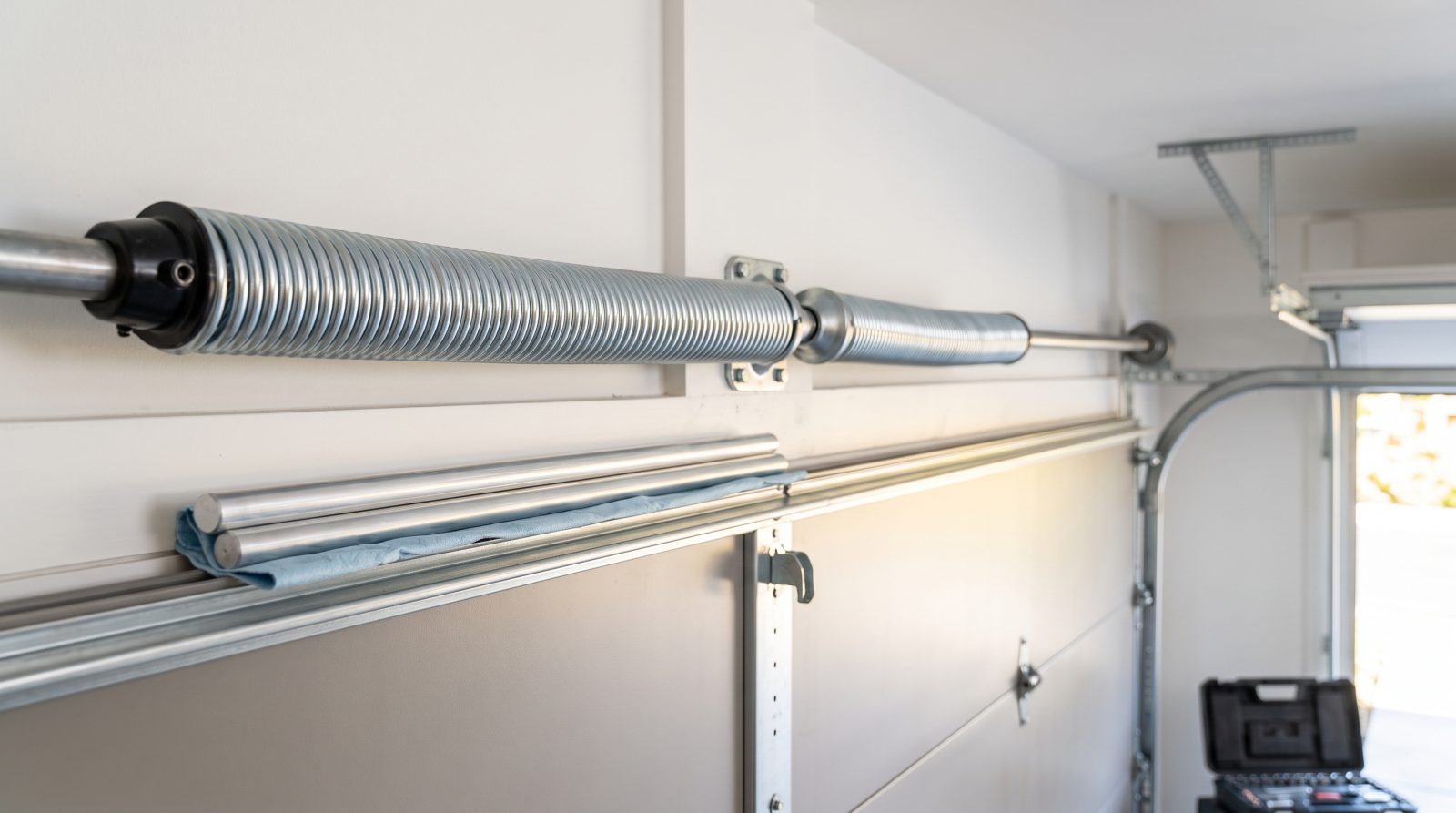
Typical garage door spring replacement cost ranges
For most homeowners, replacing a garage door spring falls within a predictable band — but the right number depends heavily on the spring type, how many springs you replace, and where you live. The figures below are typical industry estimate ranges, not quotes; actual pricing varies by door size and weight, spring quality, your region, and the company you hire.
A single torsion spring (the type mounted on a bar above the door) commonly runs roughly $200 to $350 installed, while a full torsion job replacing both springs typically lands around $300 to $600. Extension springs (the lighter springs that run along the horizontal tracks on either side) are usually a bit less, often around $150 to $350 for a pair installed. Heavy, oversized, or insulated doors, high-cycle springs built to last longer, and double-car doors all push toward — and sometimes past — the top of these ranges.
One important rule of thumb that affects cost: most professionals recommend replacing springs in matched pairs when your door uses two. If one spring has failed from age and metal fatigue, the other is usually close behind, and replacing both at once saves a second service visit. It also keeps the door balanced, which protects your opener from extra strain.
- Single torsion spring (installed): roughly $200–$350 (estimate, varies)
- Pair of torsion springs (installed): roughly $300–$600 (estimate, varies)
- Pair of extension springs (installed): roughly $150–$350 (estimate, varies)
- High-cycle / heavy-door upgrade: often adds $50–$150+ to the spring cost
- Service or diagnostic call fee: sometimes $50–$100, often waived or credited toward the repair
What you're actually paying for
The price of a spring replacement isn't just the spring itself — the part alone is a relatively small share of the total. A large portion of the cost reflects skilled, hazardous labor. Torsion springs in particular store an enormous amount of energy under tension; winding and unwinding them with the proper bars and technique is genuinely dangerous for an untrained person, which is why this is one repair most homeowners are better off leaving to a pro.
A typical spring replacement visit usually includes diagnosing the door, removing the broken spring, installing the correct replacement rated for your door's weight and cycle life, re-balancing the door, lubricating moving parts, and testing the opener's force and safety reverse. Many technicians also do a quick safety check of the cables, rollers, and hardware while they're there, since those components wear alongside the springs.
Spring quality matters too. Springs are rated by cycle life — one cycle is a single open-and-close. A standard spring is often rated around 10,000 cycles, while high-cycle springs can be rated for 20,000 or more. If your household uses the garage as a main entrance and the door goes up and down many times a day, paying a bit more upfront for a higher-cycle spring can mean fewer replacements over the life of the door.
- The physical spring is usually the smaller part of the bill; skilled, high-risk labor is the larger part
- A proper visit re-balances the door and tests the opener's safety reverse, not just swaps the part
- Cycle rating (e.g., ~10,000 vs 20,000+) affects both price and how long the spring lasts
- Bundling related worn parts (cables, rollers, bearings) during the same visit can save on future labor
What makes the price go up or down
Two homeowners can get very different quotes for what sounds like the same job, and there are real reasons for that. Understanding the variables helps you judge whether a number is fair and lets you describe your door accurately when you request a quote.
Door size and weight are the biggest single factor. A heavy double-car door, a thick insulated door, or a custom wood door needs stronger springs and more careful balancing than a light single-car aluminum door. Spring type matters next: torsion systems generally cost more than extension systems but tend to be more durable and safer. Beyond that, the count of springs, the cycle rating you choose, and any additional worn parts discovered during the repair all move the total.
Region and timing play a role as well. Labor rates differ from one metro area to the next, and parts of the country with harsh winters or coastal salt air can see faster spring wear from cold-stiffened metal and corrosion — which is why springs sometimes fail in clusters during the first hard freeze of the season. Demand spikes in cold snaps can also affect availability. None of this changes the fundamentals of the repair, but it does explain why a local estimate is the only number that truly applies to your door.
- Door weight and size: double-car, insulated, and custom doors cost more
- Spring system: torsion typically costs more than extension, but lasts longer
- Number of springs and chosen cycle rating
- Extra parts found worn during service (cables, rollers, bearings, drums)
- Local labor rates and regional climate wear (cold snaps, coastal corrosion)
Repair vs. replace, and getting help fast near you
When a spring breaks, you're really facing two decisions: fix the spring, or — if the door itself is old and tired — consider whether a larger overhaul makes more sense. For most doors, replacing the spring is by far the more economical choice and restores normal operation immediately. A spring replacement is a fraction of the cost of a new door and is the right call when the door, panels, and tracks are otherwise in good shape.
If you're staring at a stuck door right now, resist the urge to force it open or to fully crank the opener — a broken spring leaves the full weight of the door on the opener and cables, which can cause further damage or injury. The safer move is to leave it alone and get a qualified local technician out to assess it. Because broken springs are such a common and well-understood repair, same-day help is often available, and a good pro can diagnose it quickly over a short conversation about what happened (the bang, the gap in the spring, the door that won't lift).
Wherever you are, the fastest path is a straightforward one: describe your door (single or double, roughly how old, what failed), get a clear estimate range before work begins, and confirm the technician will re-balance and safety-test the door, not just swap the part. That's how you turn a stressful, stuck-door morning into a routine same-day fix.
- Replacing the spring is usually far cheaper than replacing the whole door
- Don't force a door with a broken spring — the weight strains the opener, cables, and you
- Same-day help is commonly available because broken springs are a routine repair
- Ask for an estimate range up front and confirm the door will be re-balanced and safety-tested