How Rollers and Tracks Actually Work Together
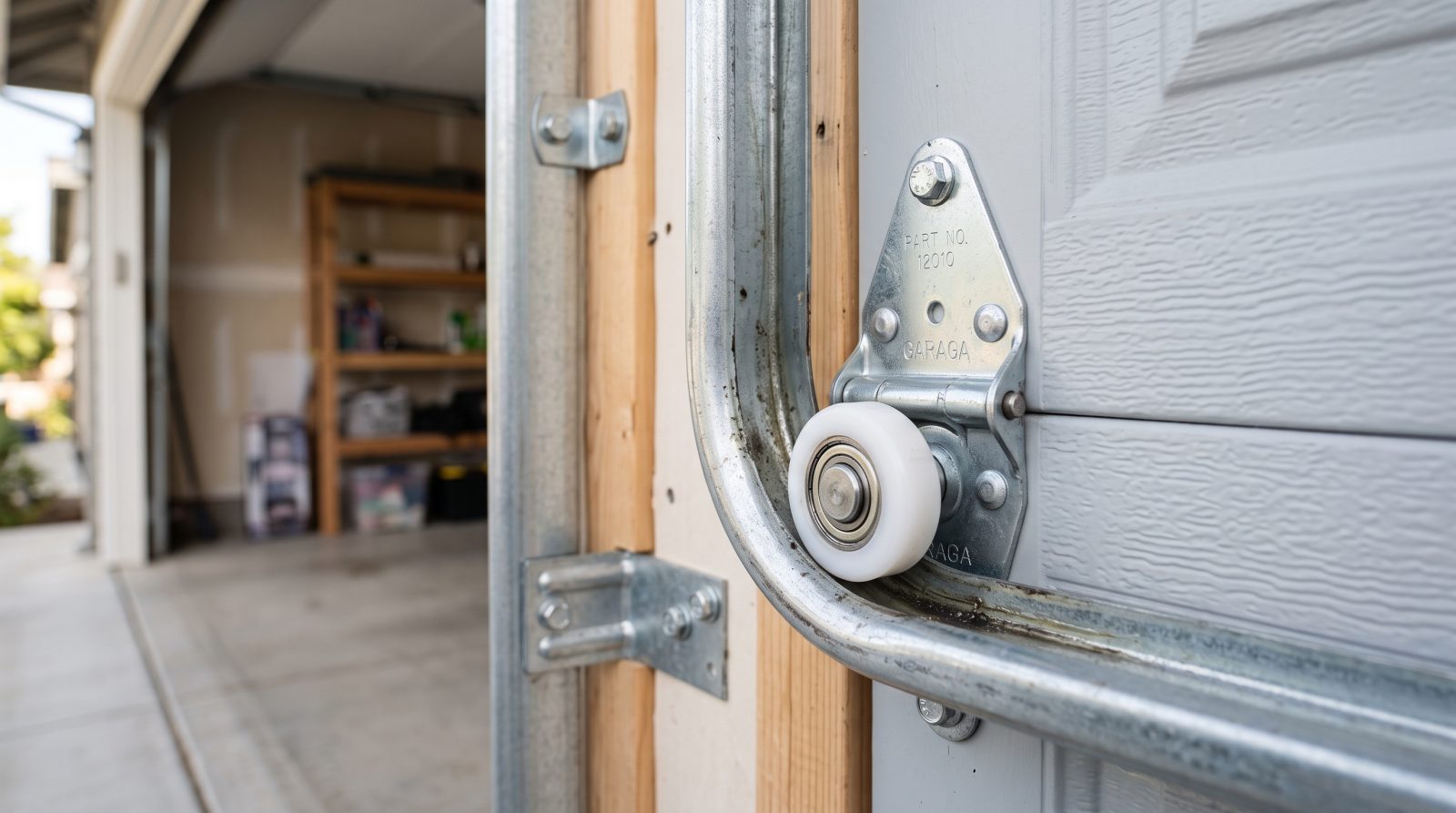
A residential garage door is essentially a series of hinged panels that ride on small wheels called rollers. Each roller has a stem that seats into the door's hinges and a wheel that rolls inside a steel track running up each side of the opening and curving back along the ceiling. When everything is aligned and the rollers spin freely, the door moves with surprisingly little effort, which is exactly why a healthy door feels smooth and quiet.
The track is not just a passive rail. It holds the door's weight in the horizontal section, controls the path as the panels transition from vertical to overhead, and keeps the whole assembly square. If the track is bent, dented, or pulled away from the wall even slightly, the rollers bind against it, the door fights the opener, and stress gets transferred into hinges, cables, and the opener motor itself. That is why a small tracking problem left alone tends to snowball into a bigger, more expensive repair.
Rollers and tracks are also where a door shows its age first. Friction, dust, temperature swings, and thousands of open-close cycles a year all wear these parts down gradually, so the decline is easy to miss until the day the door suddenly sounds terrible or stops moving cleanly.
- Rollers: small wheels (nylon or steel) that let each panel glide inside the track
- Vertical track: carries the door up the sides of the opening
- Horizontal track: supports the door overhead when open and sets the back pitch
- Curved section: the transition where most binding and noise problems appear
- Track brackets: fasten the rails to the wall and ceiling and hold alignment
Signs Your Rollers or Track Need Attention
Most roller and track problems announce themselves through sound and movement well before the door fails outright. Learning to read those early signals can be the difference between a quick, affordable repair and a door that comes off its track and damages panels. The most reliable warning sign is new or worsening noise: grinding, squealing, popping, or a rhythmic clunk as the door passes a specific point in its travel.
Movement tells the rest of the story. A door that shudders, hesitates, or speeds up and slows down unevenly is usually fighting friction from worn rollers or a section of track that is no longer true. If you can see daylight between a roller and the track, watch a roller wobble on its stem, or spot a visible bend, kink, or dent in the rail, those are clear cues to stop using the door and have it looked at.
Because conditions vary across the country, the underlying cause can differ by region. In humid coastal and southern climates, corrosion on steel rollers and track hardware is a frequent culprit. In colder northern regions, freeze-thaw cycles and contracting metal can stiffen old rollers and make a marginal track misalignment far worse on the coldest mornings. A local pro who knows your climate will factor that in rather than guessing.
- Loud grinding, squealing, or popping that is new or getting worse
- The door shaking, jerking, or pausing at the same spot each time
- Visible bends, dents, gaps, or rust in the steel track
- Rollers that wobble, lean, or have worn flat spots or cracked wheels
- The door looking crooked or sitting unevenly when closed
- A roller that has popped out of the track (stop using the door immediately)
What a Professional Roller and Track Repair Includes
A proper repair starts with diagnosis, not replacement. A good technician runs the door through its full travel by hand and under power, watching where it binds, listening for where the noise originates, and checking whether the track is plumb, level, and the correct distance from the door at every point. This matters because noisy operation can come from rollers, track, loose hardware, or dry hinges, and only an accurate diagnosis prevents paying to replace parts that were never the problem.
If rollers are the issue, worn or damaged ones are swapped out, often as a complete set so the door rides evenly and you are not back in a few weeks chasing the next failed wheel. Many homeowners notice a dramatic drop in noise simply from upgrading tired steel rollers to quality nylon rollers with sealed bearings. When the track is involved, the technician may realign and re-secure it, gently correct a minor bend, or replace a section that is too damaged to true up safely. Brackets and fasteners are tightened, and the system is lubricated at the correct points.
A thorough visit also includes a safety-minded once-over of the parts that share the load with rollers and tracks, like hinges and the door's balance, so the real source of strain gets addressed. Crucially, this is also where a trained pro draws a hard line: track and roller work near the door's high-tension springs and cables can be dangerous, and certain adjacent repairs should only be done by someone with the right tools and training.
- Hands-on and powered diagnosis to pinpoint the true source of noise or binding
- Replacement of worn rollers, often as a full set, including quieter nylon options
- Track realignment, re-securing, careful straightening, or section replacement
- Tightening of brackets, hinges, and fasteners that drift loose over time
- Correct lubrication of rollers, hinges, and bearings (not the track surface)
- A safety check of related hardware before signing off the door as repaired
Repair, Replace, or Maintain: Making the Right Call
Not every noisy door needs a major repair, and not every problem is worth patching. The right call depends on how worn the parts are, the door's age, and whether the track damage is cosmetic or structural. A handful of worn rollers on an otherwise sound door is a straightforward, economical fix. A track that has been struck by a vehicle, is rusted through, or is bent at the curve usually warrants replacing that section rather than trying to coax a damaged rail back into service.
Maintenance is the lever most homeowners underuse. Rollers and tracks reward routine care: keeping the track clear of debris, lubricating moving parts a couple of times a year with a proper garage door lubricant, and tightening hardware can extend roller life significantly and head off alignment drift. A light annual or twice-yearly service visit is far cheaper than an emergency repair after a roller fails and the door binds shut.
As for cost, treat any figure as a typical industry range and an estimate, not a quote. Roller replacement is generally one of the more affordable garage door repairs, while track straightening or partial track replacement sits higher depending on the extent of the damage, the door size and weight, and your region's labor rates. The honest answer to 'what will it cost' is that an on-site look gives you a real number, because doors, materials, and damage vary too much for a one-size-fits-all price.
- Repair when rollers are worn or track damage is minor and localized
- Replace track sections that are crushed, badly rusted, or bent at the curve
- Maintain with periodic lubrication, cleaning, and hardware checks to delay wear
- Expect ranges, not fixed prices: door size, materials, and region all move the cost
Why a Local Pro and the Safety Line You Should Not Cross
The reason this site leads with getting a qualified local pro to your door is simple: garage doors are heavy, and the systems closest to the rollers and tracks store a lot of energy. The torsion or extension springs that counterbalance the door are under extreme tension, and the lift cables that run alongside the tracks carry the door's full weight. Roller and track work often happens inches from these components, which is exactly where do-it-yourself attempts go wrong and people get seriously hurt.
There are sensible things a homeowner can do safely: keep the track clean, listen for new noises, and visually inspect for obvious bends or wobbly rollers. The line you should not cross is adjusting or removing anything tied into the springs or cables, or forcing a door that has jumped its track back into place under power. If a roller has come out of the track or the door is hanging crookedly, the safest move is to stop operating it and get a professional out, because a door under load can shift suddenly.
Because Garage Door Repairs Near Me is a nationwide resource, the priority is matching you with a local repair pro who can get to your door quickly, diagnose the rollers and track in person, and fix it correctly the first time, wherever you are. Same-day help is often available, and an in-person assessment means you get a real answer and a safe repair rather than a guess over the phone.
- Springs and cables near the track store dangerous tension: leave them to a pro
- Safe DIY is limited to cleaning the track and spotting problems early
- Never force an off-track or crooked door back into motion under power
- A local pro means fast, in-person diagnosis and a repair done right the first time