The Most Common Garage Door Problems (and What They Mean)
A residential garage door is the largest moving object in most homes, and it cycles thousands of times a year. Wear shows up in predictable places. Knowing the symptom usually points to the cause, which is the first step toward a fast, fairly priced fix. Below are the failures a local technician sees most often, what they typically sound and look like, and why they happen.
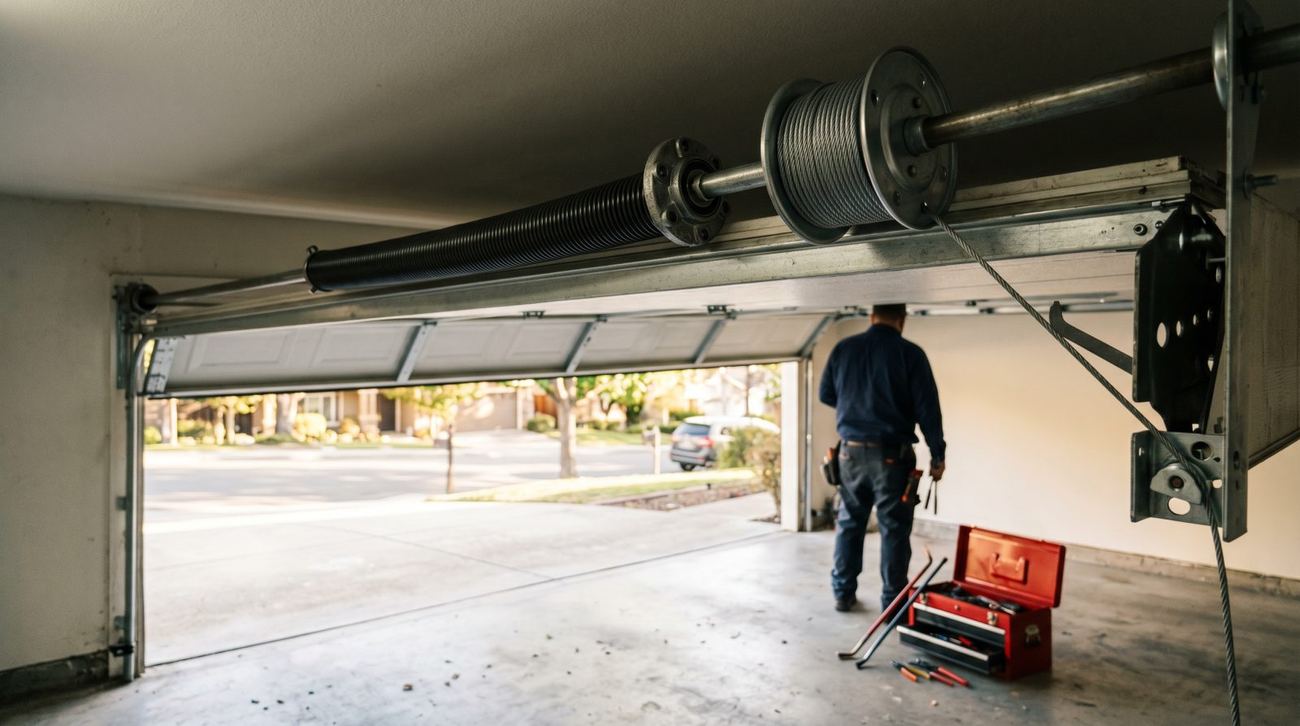
One important truth that shapes everything else: the springs, not the opener, do the heavy lifting. A properly balanced door is so well counterweighted by its springs that you can lift it by hand with two fingers. The opener is really just a guide and a convenience. That's why a broken spring leaves even a powerful opener straining or refusing to move the door at all.
- Broken spring: A loud bang from the garage (often mistaken for something falling), a door that won't lift or only rises a few inches, or a visible gap in the coiled torsion spring above the door. This is the single most common major failure.
- Opener won't respond: The door won't budge from the remote or wall button, the light blinks, or the motor hums without moving. Causes range from a dead remote battery to a stripped drive gear, a misaligned safety sensor, or a failed logic board.
- Off-track door: A roller has popped out of the metal track, leaving the door crooked, jammed, or visibly leaning. Often caused by a snapped cable, a hard bump from a vehicle, or worn rollers.
- Frayed or broken cables: The steel lift cables on either side fray, snap, or come loose from the drum, causing the door to hang unevenly or drop on one side. This is a high-tension component and a frequent companion to spring failure.
- Grinding, squealing, or rattling: Usually worn rollers, dry hinges, loose hardware, or bearings that need attention. Often a maintenance issue caught before it becomes a breakdown.
- Door reverses before closing: Almost always the photo-eye safety sensors near the floor are misaligned, blocked, or dirty, telling the opener it's unsafe to close.
Why a 'Near You, Wherever You Are' Approach Matters
A broken garage door is a local problem with a local solution. You don't need a national call center; you need someone who can actually get to your door and has the right spring, cable, or opener part for it. That's the whole idea behind Garage Door Repairs Near Me. We focus on getting a qualified pro to your address fast, with the diagnosis already pointed in the right direction so the visit is efficient.
It also matters because garage doors don't fail the same way everywhere. Climate and region genuinely change what breaks and how often. In cold-winter states, steel springs become more brittle and tend to snap on the coldest mornings, and metal tracks can stiffen. In hot, humid, or coastal areas, salt air and moisture accelerate rust on cables, hinges, and rollers, and heat can shorten the life of opener electronics. In dry, dusty climates, grit works into rollers and bearings and wears them out faster. A local technician understands the failure patterns common to your area, which makes for a more accurate first visit.
Because we're built around "wherever you are," the experience is the same whether you're in a dense city neighborhood or a rural property: describe the symptom, get a clear sense of the likely fix and a realistic cost range, and have a local pro come do the work, often the same day.
What a Professional Repair Visit Actually Looks Like
Good repair is methodical, not guesswork. A competent technician starts by testing the door's balance and inspecting the whole system, because a single symptom often has an upstream cause. A door that grinds, for example, might just need new rollers, or it might be telling you a spring is fatiguing and the door is fighting itself.
Here's the sequence you should expect from a thorough visit, and what each step protects you from. Used correctly, it means you pay to fix the real problem once, instead of treating a symptom and seeing the door fail again a month later.
- Full system inspection: springs, cables, rollers, tracks, hinges, drums, opener, and safety sensors are checked, not just the part that obviously broke.
- Balance test: the door is disconnected from the opener and moved by hand to confirm the springs are correctly counterbalancing the weight.
- Clear explanation before work begins: you should hear what's wrong, what it will take to fix, and an honest estimate range before anyone starts.
- Replacement with correctly rated parts: springs and cables are sized to your specific door's weight and height; a mismatched spring is unsafe and fails early.
- Safety component check: the auto-reverse force setting and photo-eye sensors are tested so the door stops and reverses on contact, as required for safe operation.
- Final cycle test: the door is run through several full open-and-close cycles to confirm smooth, quiet, balanced operation.
A Critical Safety Note: What to Leave to a Pro
Garage doors include components under extreme tension, and this is the one area where do-it-yourself goes wrong fast. The torsion and extension springs store enormous energy to offset the door's weight. When they're adjusted or replaced without the right tools and technique, they can release that energy violently and cause serious injury. The same is true of the lift cables, which are wound under high tension on the drums.
There's plenty a homeowner can safely do, and we encourage it: keep the tracks clear of debris, wipe down and lightly lubricate rollers and hinges with a garage-door-rated lubricant, replace remote batteries, gently clean the photo-eye sensors, and make sure nothing is blocking the door's path. These small habits genuinely extend a door's life.
But spring replacement, cable repair, track realignment on a door that's off its rollers, and opener internal repairs belong with a trained technician. The cost of professional repair is almost always far less than the cost of an injury or a door that's been made more dangerous by a rushed fix. If your door dropped suddenly, won't stay open, or makes a banging or snapping sound, stop using it and request help rather than forcing it.
What Garage Door Repairs Typically Cost
Cost is the first thing most people want to know, and honesty matters more than a single number. The figures below are typical industry ranges, offered as estimates only. What you actually pay depends on your door's size and weight, the materials and spring type, how many parts are involved, your region, and the scope of the work. A heavy insulated double door, for example, uses larger, costlier springs than a light single door, and emergency or after-hours visits can run higher. Treat these as a way to set expectations, not a quote.
The smartest money move is rarely the cheapest patch. Replacing both springs at once when one breaks, for instance, usually makes sense because they wear at the same rate and a second failure visit costs you another trip charge. A good technician will tell you when a repair is genuinely worth it versus when an aging door or opener is better replaced, and will give you the trade-offs rather than just the bill.
- Broken spring replacement: commonly one of the more frequent repairs; pricing varies widely by spring type (torsion vs. extension), door weight, and whether you replace one spring or both.
- Cable repair or replacement: typically a moderate, accessible repair, often done alongside spring or roller work.
- Roller and hinge replacement: usually an affordable maintenance-level fix that quiets and smooths the door.
- Opener repair vs. replacement: minor fixes (sensors, remotes, gears) are usually inexpensive; a failed motor or board may make full replacement the better value, especially on an older unit.
- Off-track realignment: cost depends on whether rollers, cables, or bent track also need attention.
- Service or diagnostic visit: many providers charge a trip or diagnostic fee that may be credited toward the repair; ask up front so there are no surprises.